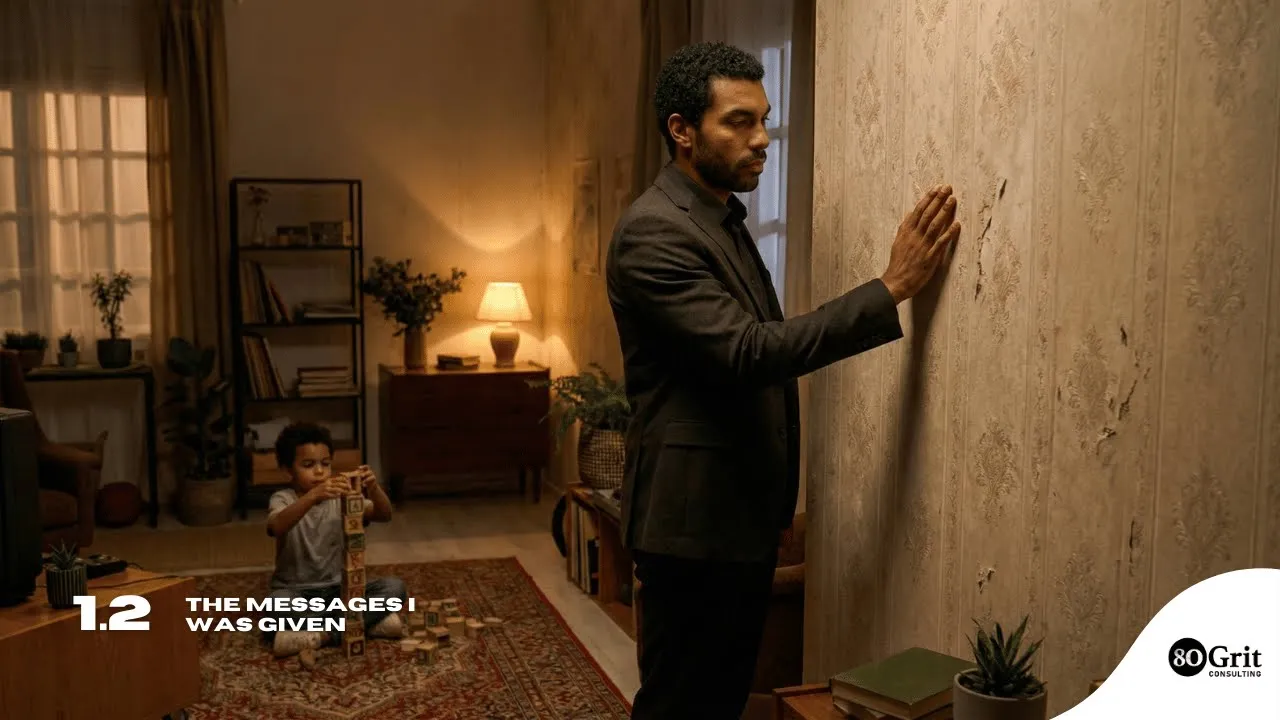

Welcome to Lesson 1.2, The Messages I Was Given. In the last lesson, you mapped the rooms that raised you. Now you are mapping the messages that shaped how you think, love, work, and protect yourself. This lesson is about noticing the spoken messages you heard and the unspoken messages you learned from people’s actions, especially when those two did not match. The goal is not to blame your past, it is to understand what trained you so you can stop living on autopilot and start choosing your own rules.
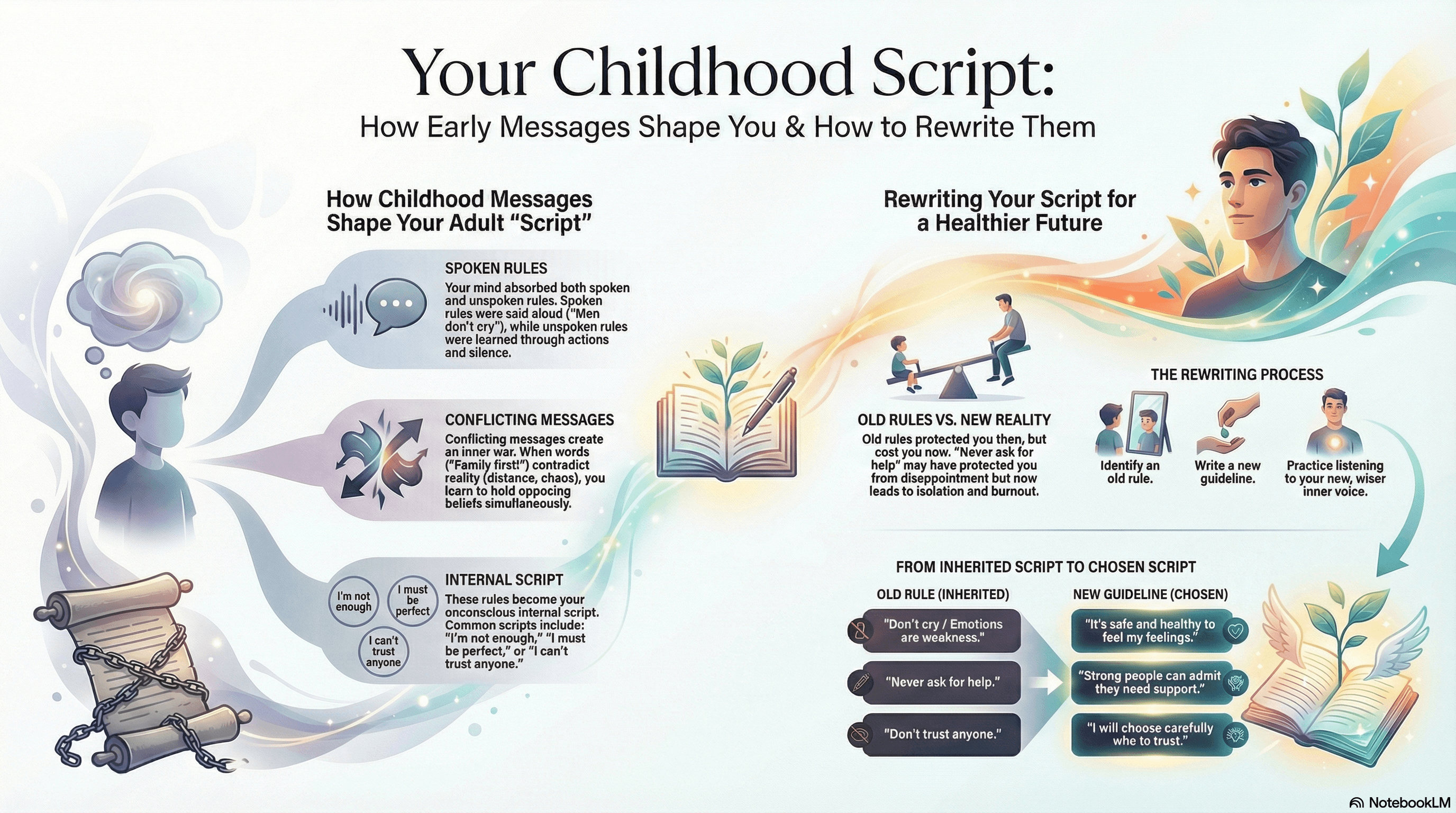
Most of us grew up holding competing messages in our head at the same time. You might have been told, “be tough,” “do not cry,” and “do not trust anybody,” while also being told, “respect matters,” “loyalty matters,” and “family first.” The tension comes when the words sound clean, but the behavior is messy. Someone might preach love and consistency, but show distance, chaos, or disappearing. This lesson teaches you to notice that split, because it explains why part of you believes in loyalty and another part stays braced for abandonment, even in good relationships.
Start by separating what was said from what was demonstrated. Think of the phrases you heard on repeat, then pair each one with a memory of what people actually did when pressure hit. “Family first” might have been said out loud, while the real lesson was “handle it alone.” “Be a man” might have been said out loud, while the real lesson was “your feelings make people uncomfortable.” Also tell the truth about praise. A lot of us were complimented most when we were convenient, quiet, productive, or useful, because that benefited other people. That is how a child learns that love can feel like performance, not connection.
Once you see the spoken and unspoken rules, the next move is noticing how they became your script. A script is the set of lines that starts talking in your head before you even choose what to do. It sounds like “I’m too much,” “I’m not enough,” or “I only matter when I perform.” These scripts keep running in the background when you are parenting, working, or loving somebody, and they can push you into reactions you do not even agree with. The point is to recognize them as scripts, not facts, so you have space to respond differently instead of reacting on impulse.
Pay attention to where your script shows up in real time. It shows up when you feel disrespected and your body wants to go cold or loud. It shows up when someone compliments you and you cannot receive it because you learned praise was manipulation or a setup. It shows up when you are doing well but cannot rest because the old rule says rest equals weakness. And it shows up in parenting fast, because parenting squeezes the old wounds on a regular schedule. If you have ever heard yourself say something to your child that you hated hearing as a kid, you have watched a message turn into a generational handoff.
That is where the lesson asks the hard question: what did these rules protect, and what did they cost. “Don’t trust nobody” might have protected you from being disappointed, but it also might have cost you healthy support. “Men don’t cry” might have protected you from being mocked, but it also might have cost you emotional range, intimacy, and peace. “Always be strong” might have protected you from feeling helpless, but it also might have trained you to ignore your own needs until you explode or disappear. When you name the protection and the cost, you stop romanticizing survival and you start seeing the trade you have been paying for years.
Now you choose what stays and what goes. Some messages can remain, like resilience, faith, honor, or a commitment to family, but you get to upgrade what those words mean in a healthy life. Other messages need to be rewritten, like “never ask for help,” so it becomes “I can ask for help without losing respect.” Some messages need to be retired completely, because they are not wisdom, they are old pain pretending to be guidance. Your job is to draft updated statements that honor how far you have come, so the voice in your head starts sounding more like a wise coach and less like an old wound.
In conclusion, this lesson is about taking back authorship of your inner rules. You learned how to spot the difference between what was said and what was shown, how those lessons turned into scripts, and how those scripts still influence your relationships and your parenting today. You also learned how to evaluate each message by its protection and its cost, so you can keep what builds you and release what breaks you down. As you move forward, do not aim for perfection. Aim for awareness, honesty, and a new set of statements you can actually live by.