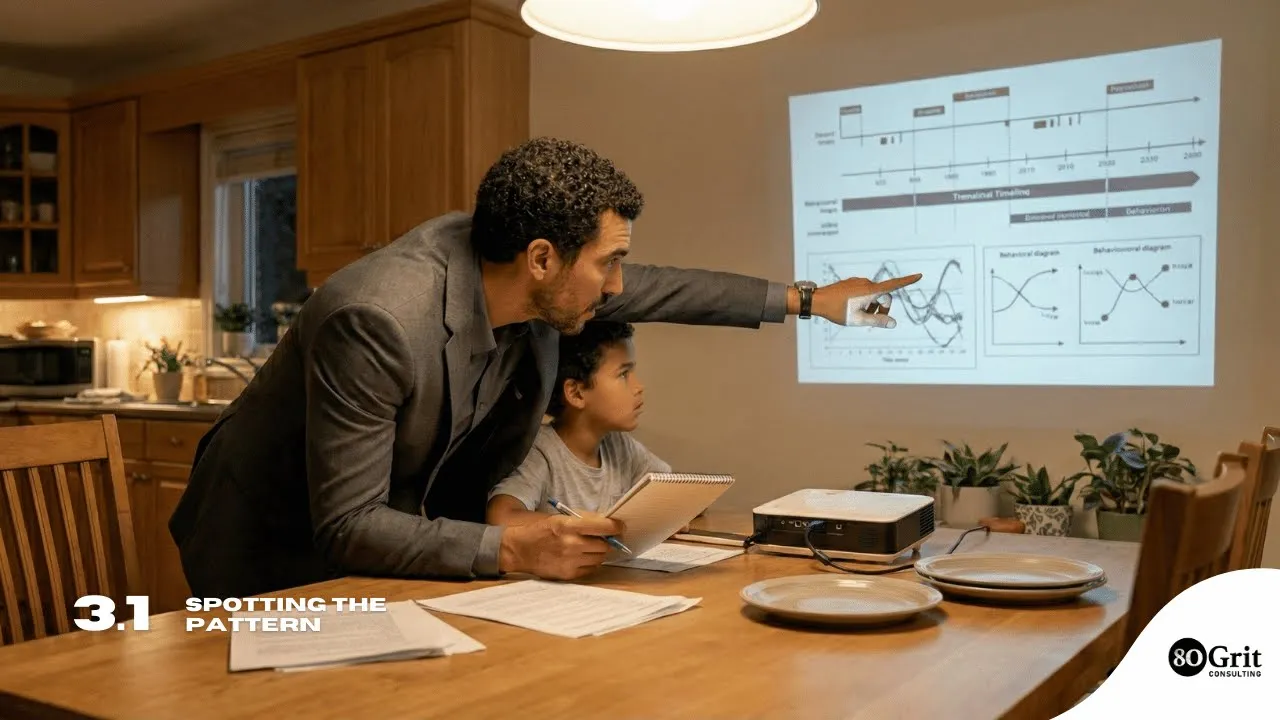

Welcome to this lesson on Spotting the Pattern. This is where your growth gets real, because you stop only analyzing other people and start studying yourself with the same honesty and precision. The goal is not self-condemnation. The goal is clarity that leads to choice. In this lesson, you will use a third-person camera mindset, like you are watching your own life from the outside, so you can finally see what you do on repeat and why you do it.
Most patterns are not random. They are survival habits that became automatic, especially when you feel hurt, ignored, or disrespected. Your body learns what worked before, and it runs that same play when danger feels close, even if the danger now is emotional, not physical. That is why you can be calm one second and reactive the next. When you feel unseen, you might turn the volume up. When you feel judged, you might start defending, over-explaining, or attacking. When you feel overwhelmed, you might shut down, go silent, or disappear.
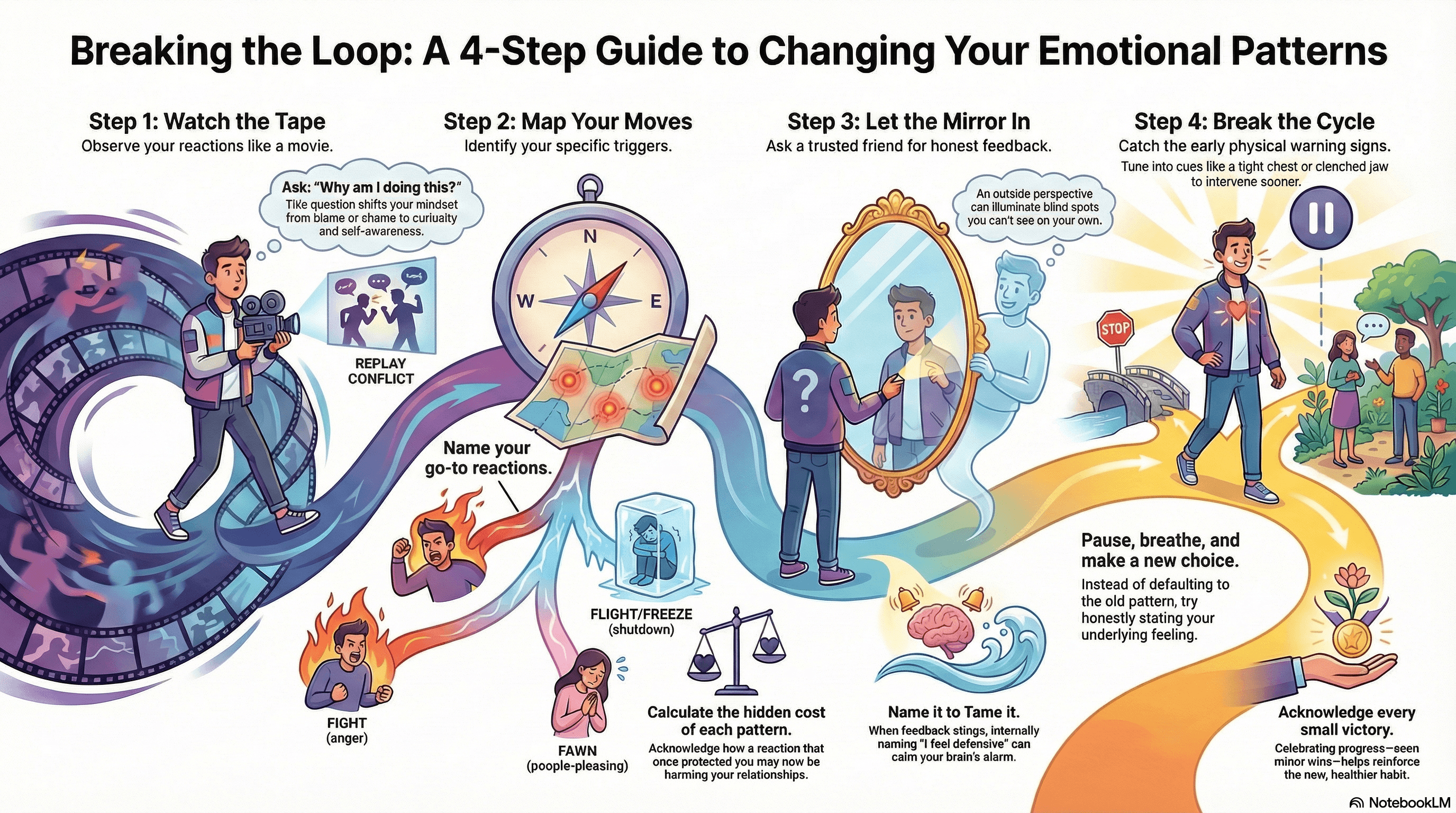
The third-person camera is your first tool. Pick one recent moment that did not go how you wanted, an argument, a shutdown, a cold reply, a passive comment, or a blowup. Now replay it like a movie and narrate it like you are describing a character, not judging a person. Notice your tone, your timing, your facial expression, and the exact moment your energy shifted. Ask yourself what you were protecting. Ask what you were trying to gain. This is how you turn confusing emotion into visible behavior you can actually work with.
Next, you build your personal pattern map. This is a simple way to lay your cycle on paper so it is no longer mysterious. Start with the trigger, what happened right before you shifted. Then write your go-to reaction, what you did, said, or refused to say. Then write the short-term payoff, what that reaction gave you in the moment, like control, distance, power, or relief. Finally, write the long-term cost, what it takes from you over time, like trust, closeness, peace, or self-respect. You will start seeing the same reactions show up across different relationships, which proves it is a pattern, not a one-time event.
Here is the question that changes everything: why am I doing this right now. Not why did they do that, not why is life unfair, not why does nobody understand me. Why am I doing this right now. When you get honest, you will usually find a softer feeling under the hard one, like fear under anger, shame under pride, or grief under shutdown. You will also find a need under the reaction, like wanting respect, wanting reassurance, wanting safety, wanting to be seen. When you can name the real need, you can meet it in a healthier way instead of acting it out through old habits.
This lesson also tells the truth about change: most people do not break patterns alone. It often takes someone brave and emotionally intelligent to call it out, and it takes you being humble enough to let it land. That is where honest mirrors come in. You choose one or two people who are grounded, who love you, and who are not afraid to tell you the truth without trying to shame you. You ask them for specific feedback, like what they notice you do when you feel disrespected or how your tone changes when you feel cornered. Their perspective gives you data you cannot always see from inside your own emotions.
When the mirror speaks, the real work is how you receive it. Your first instinct might be to defend, explain, minimize, or flip it back on them. That is the pattern trying to protect itself. Instead, practice listening for understanding, not winning. Breathe, pause, and repeat what you heard in your own words so you can check if you understood it. If you feel shame rising, remind yourself that awareness is not a life sentence, it is the start of freedom. You are not being attacked, you are being offered a chance to grow.
By the end of this lesson, you should be able to watch yourself with clarity, map your most common reactions, and catch the cycle earlier than you used to. You will begin interrupting the pattern mid-stream, not after the damage is done, by pausing, naming what is happening inside you, and choosing a response that matches the person you are becoming. This is not about perfection. It is about practice and honesty, moment by moment. The more you use the third-person camera, the more your personal pattern map becomes clear, and the more you invite honest mirrors, the more your life shifts from automatic reaction to intentional choice, and that is where peace starts.