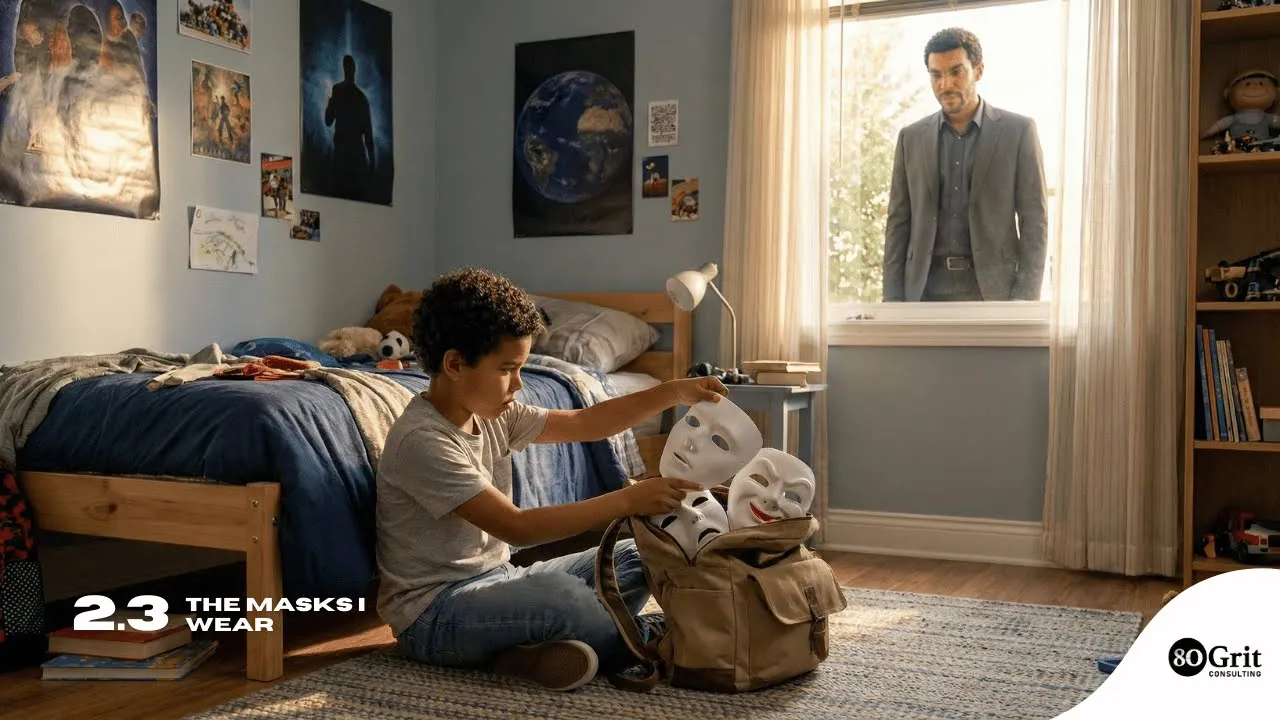

Welcome to this lesson, The Masks I Wear. Picture a closet full of faces: the tough-guy face, the smiling face, the sad face, the “I’m good” face. You learned to swap them fast depending on the room, the clique, the mood, or the need to stay in control. That skill did not come from vanity. It came from survival. This lesson is about seeing those masks clearly, without shame, so you can stop confusing performance with personality.
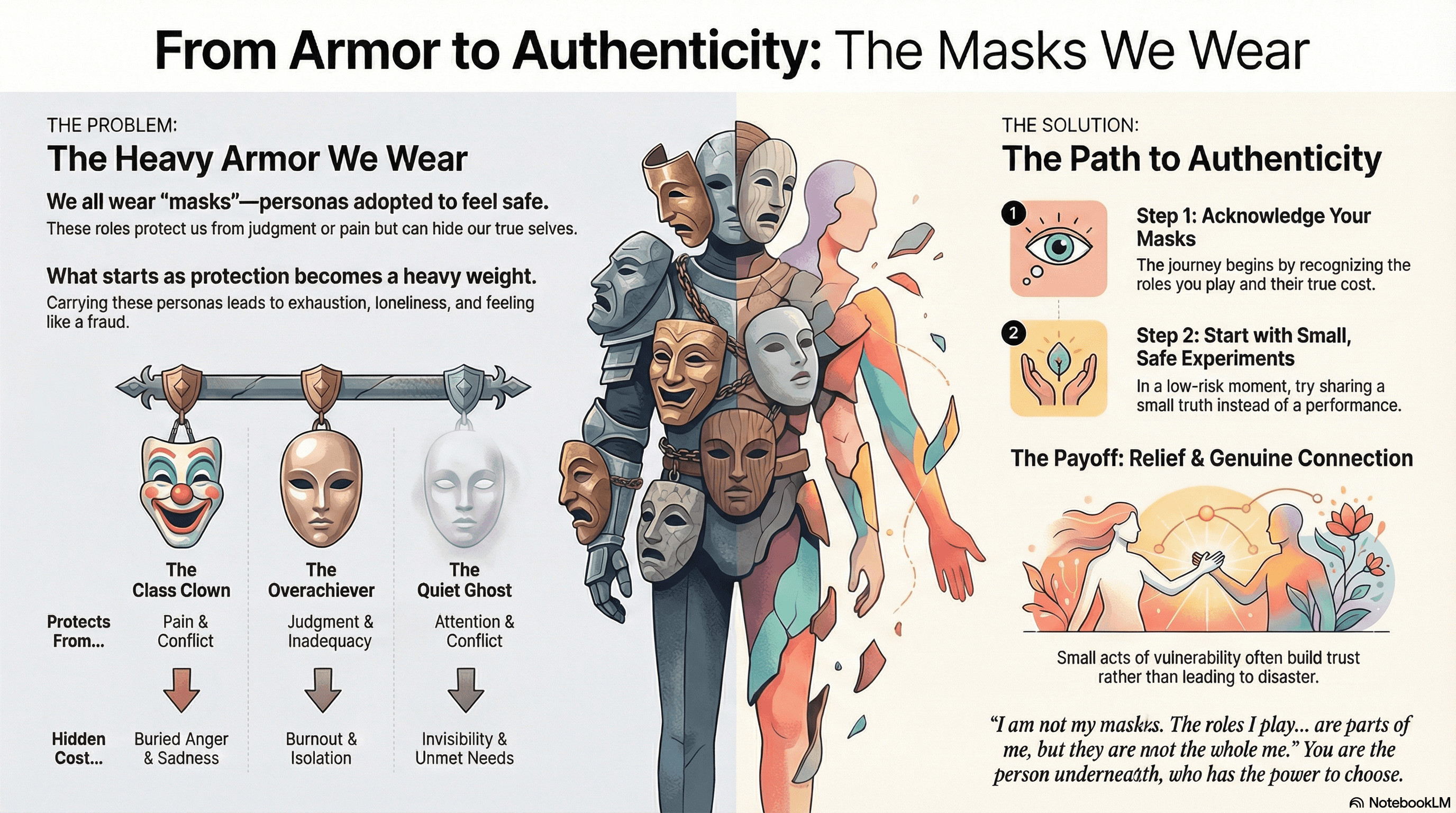
A mask is not just what you show people. It is the version of you that steps forward when your real feelings do not feel safe to reveal. Sometimes it is the tough one that never flinches. Sometimes it is the class clown that keeps everyone laughing so nobody asks real questions. Sometimes it is the overachiever that stays busy, productive, and impressive so you never have to feel powerless. Sometimes it is the fixer that solves everybody else’s problems because being needed feels safer than being known.
The first step is simply identifying your main masks in the places you live your life. Who are you at work, and who are you at home. Who are you with old friends, and who are you in public. Notice the moments where it feels like a costume instead of a natural expression. Pay attention to the patterns: smiling while angry, helping while hurting, joking while lonely, saying “I’m good” while you are actually running on fumes. Seeing the pattern is not weakness. It is clarity, and clarity is where choice starts.
These masks usually formed around a real problem you had to solve. Maybe you learned that emotions got punished, ignored, or used against you, so you became unreadable. Maybe you learned that being soft made you a target, so you became hard. Maybe you learned that nobody was coming to save you, so you became hyper-capable and overly independent. Maybe you learned that peace depended on you keeping people calm, so you became a performer or a caretaker. The mask was a strategy your mind and body built to reduce danger and keep you moving.
Now comes the hard truth that changes everything: the mask protected you, but it also robbed you. It can protect you from rejection, judgment, or feeling weak, but it can cost you intimacy because nobody gets to know the real you. It can protect you from being seen as “too much,” but it can cost you honesty because you stop telling the truth about what you need. It can protect you from chaos, but it can cost you rest because you are always on. Over time, wearing masks too long can blur identity, feed rage, and create impostor syndrome because the true face never gets daylight.
To understand the protection and the price, start connecting each mask to what it is trying to prevent. Ask yourself what you believe will happen if you take it off in that room. Then look at what happens when you keep it on. Do you leave the conversation drained, resentful, numb, or wired. Do you feel close to people, or do you feel alone even when you are surrounded. Do you remember the moments, or do they blur together because you were performing instead of living. This is how you move from guessing to knowing.
The goal is not to rip the masks off in a dramatic moment and call it healing. The goal is to let your real face breathe in small, low-risk ways. Pick one or two safer people or spaces where you can practice being a little more real. That might look like saying, “I’m not okay today,” or “I don’t know,” or “That actually hurt,” or “I could use help.” It might look like allowing silence instead of filling the room with jokes, or admitting you are tired instead of pushing harder. Small reps retrain your nervous system to learn that authenticity can be safe, not just dangerous.
In conclusion, this lesson is about respect and freedom. Respect the masks because they helped you survive something real, and freedom because you do not have to live behind them forever. When you can name your masks, understand what they protected, and tell the truth about what they cost, you stop living on autopilot. You begin choosing when to show strength, when to soften, when to speak, and when to rest. The real win is not becoming a new character. The win is remembering you already have a real face, and you can finally let it be seen.