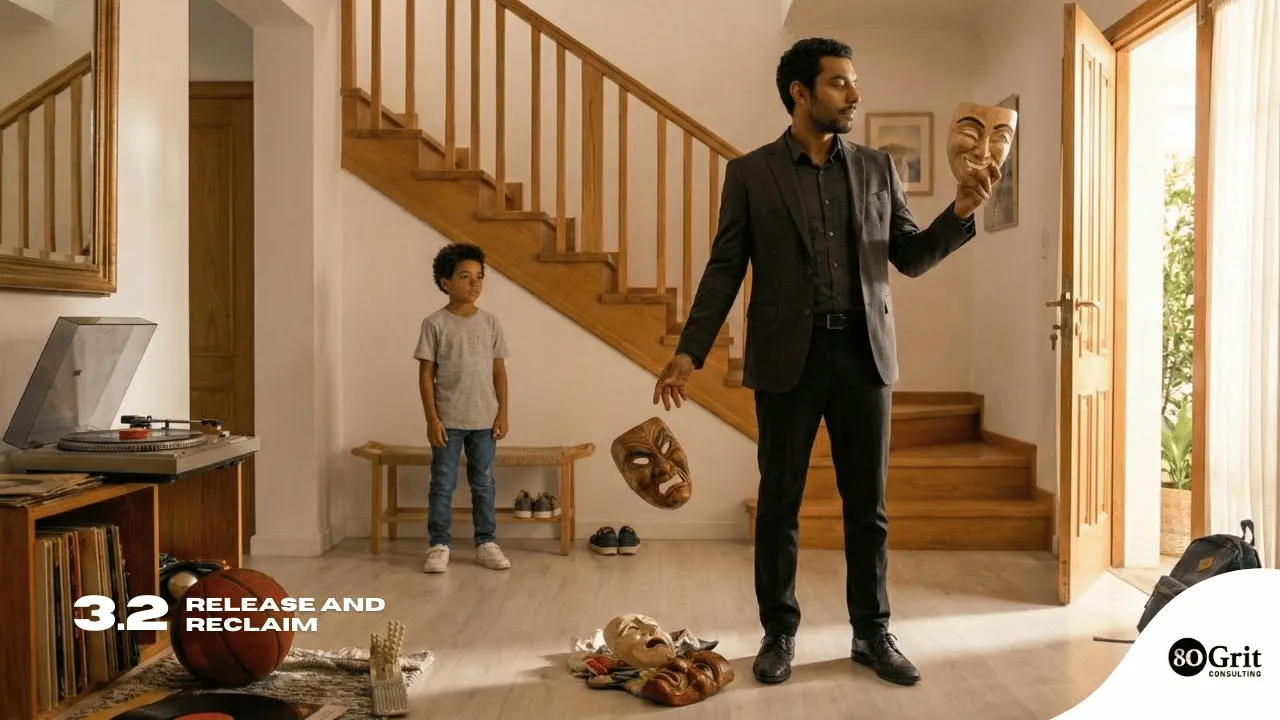

Welcome to this lesson, Release and Reclaim. This is not a dramatic reinvention that burns hot for a few weeks and disappears by February. This lesson is about slow, disciplined change that you can actually live with. You are going to release survival habits that once kept you alive but now keep you stuck, and you are going to reclaim parts of yourself you had to bury to make it through. The win is not looking different for other people. The win is becoming more regulated, more grounded, and more at peace in your own body and relationships.
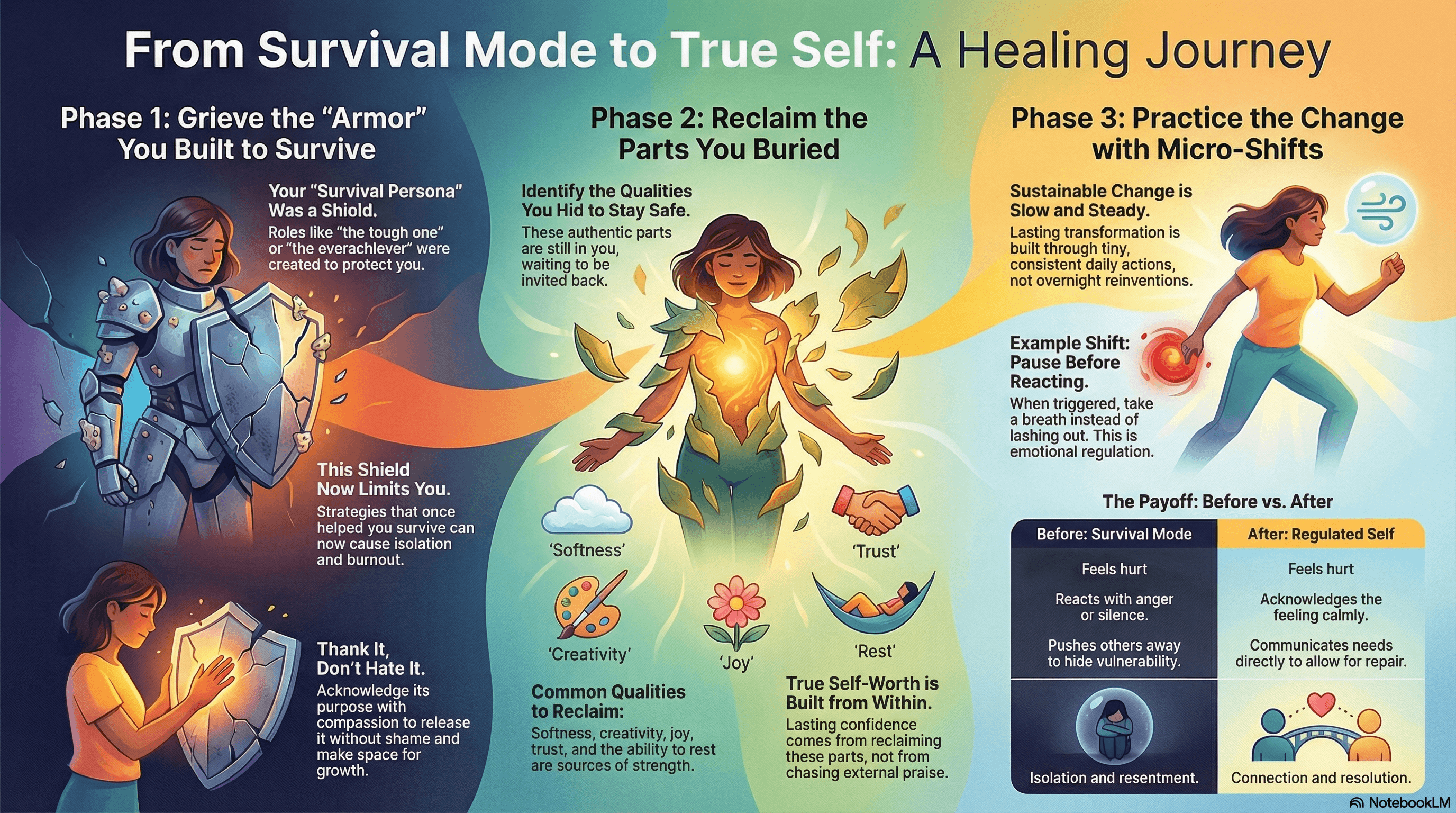
To release something, you have to tell the truth about what it used to do for you. Forced toughness, revenge, chasing affirmation, and needing to outdo your last win are not random flaws. They are strategies. At some point, being hard kept you from getting hurt. At some point, clapping back kept people from trying you. At some point, performing kept you seen in a world that ignored you. The problem is that survival strategies do not know when the war is over. If you never update them, they start sabotaging the very life you worked so hard to build.
That is why this lesson starts with grieving who you had to be. Not shaming that version of you, and not pretending it did not exist. Grief is how you honor the fact that you carried weight that was never meant to be yours. It is how you thank the part of you that stayed on guard, stayed ready, stayed sharp, stayed funny, stayed productive, and stayed unbreakable. When you do this right, you stop fighting yourself. You stop calling your younger self weak or stupid for doing what worked. You simply admit, that was necessary then, and it is costing me now.
A big part of releasing is getting honest about the fuel you used. Many people do not run on peace or purpose at first. They run on instant gratification and affirmation like a drug. A compliment, a win, a like, a reaction, a rivalry, a new goal, a new conquest. It gives you a quick hit of relief, then it fades, and you need the next hit to feel enough again. This lesson teaches you that the why matters more than the rule. A rule without a why becomes a performance. A why gives you direction when the rule is hard to follow. Your why might be protecting your peace, being a safer partner, breaking cycles for your kids, or simply being able to breathe without always proving something.
Once you start releasing, you get to reclaim. Reclaiming is not pretending you never went through what you went through. It is choosing to invite back the parts of you that got shut down to survive, like softness, needs, joy, creativity, trust, and rest. Start by naming what you miss, then decide what you are ready for now. Maybe you are ready to feel more and not punish yourself for it. Maybe you are ready to ask for help without turning it into a crisis. Maybe you are ready to play again without calling it childish. Maybe you are ready to rest without guilt and without explaining it to anyone.
Now you make it real with everyday micro-shifts. Micro-shifts are small on purpose because real change is built through repetition, not intensity. Pick actions that are easy enough to do on your worst day, not just your best day. Tie each shift to your why so it is not just self improvement theater. Examples look like this: pause for ten seconds before replying to a text that triggers you, and choose a response you will not regret. Ask for help once a week with something specific, even if your pride protests. Celebrate quiet wins like keeping your tone steady or taking a break on time. Replace revenge with clarity by addressing issues directly, or creating distance when someone keeps disrespecting you.
Expect resistance. Your nervous system learned survival as normal, so calm might feel strange at first. You might feel an urge to react fast, get loud, shut down, prove yourself, or chase a quick win to soothe discomfort. When that happens, the goal is not perfection. The goal is regulation. Notice what you feel in your body, name the emotion, slow down your breathing, and give yourself a beat before you choose what happens next. Over time, that pause becomes power. It is the moment where you stop living on reflex and start living on purpose.
Conclusion: Release and reclaim is the practice of outgrowing what saved you without disrespecting the fact that it saved you. You grieve the version of you that carried everything so you can put the weight down without guilt. You name what you are reclaiming so you stop building your life around what you lost. You design small daily shifts that match who you are becoming so your new story does not depend on motivation. Keep your why in front of you, because it will hold you steady when feelings spike and old habits call your name. This is what lasting change looks like: less performance, fewer reactions, more regulation, and more peace that you can actually keep.