
This course analyzes a case centered on Alex, CEO of the retail chain ElectroMart, who resists adopting an AI-driven inventory system until the cost of inaction becomes undeniable. His story shows how pride, overreliance on intuition, and fear of irrelevance can turn a successful leader into a barrier to progress.
Key takeaways:
In a fast-moving market, “wait and see” is not neutral; it is a high-risk decision that usually means falling behind.
The costs of technological inertia are concrete: missed sales, heavy discounting, and wasted staff time on manual work.
Competitors exploit hesitation. While ElectroMart stalls, rival TechTown embraces AI and gains a clear edge in inventory accuracy and personalization.
Recovery begins only when leadership owns past mistakes, changes its stance, and actively sponsors data-driven decision-making.
The Psychology of Resistance
The story opens with Alex rejecting an AI inventory proposal. After 25 years of success, he trusts his instincts and familiar playbook more than any new tool. When the proposal is presented, he says, “We’ve been in this industry a long time. I know our customers. We don’t need a fancy algorithm to tell us how to stock our stores.” For him, intuition is the competitive advantage, and profitability seems to confirm that he is right.
Underneath this confidence sits a quieter fear: if AI can make better decisions on inventory and customer preferences, what happens to the value of his judgment? Instead of naming that fear, Alex labels AI a fad, reminds himself he has “seen silver bullets come and go,” and insists ElectroMart will “stick to what we know.” Pride, mixed with anxiety about losing control, turns technology into a threat to his authority rather than a tool that could extend it.
Early Warning Signs and Willful Blindness
In the months after Alex’s decision, small cracks appear in performance. Rather than read them as evidence that the old system is failing, he treats them as execution problems that can be fixed by working harder within the same framework.
The spreadsheet-driven inventory process begins to buckle. Some stores run out of popular smartphones while others are packed with slow-moving cameras. A store manager emails, “We keep getting inventory we can’t sell, and not enough of what’s hot.” Alex pushes the problem back into the familiar process and instructs the team to refine forecasts. He keeps tuning a failing system instead of questioning it.
Meanwhile, TechTown adopts AI tools Alex has dismissed. Their app uses customer data to drive personalized offers and smarter replenishment, and analysts report a steady rise in repeat sales and basket size. Inside ElectroMart, analysts spend late nights stitching together spreadsheets and reports an AI system could generate in minutes. Frustration grows, and conversations begin about opportunities at more forward-thinking firms. Past success has bred pride, and pride is now fueling denial.
The Consequences of Standing Still
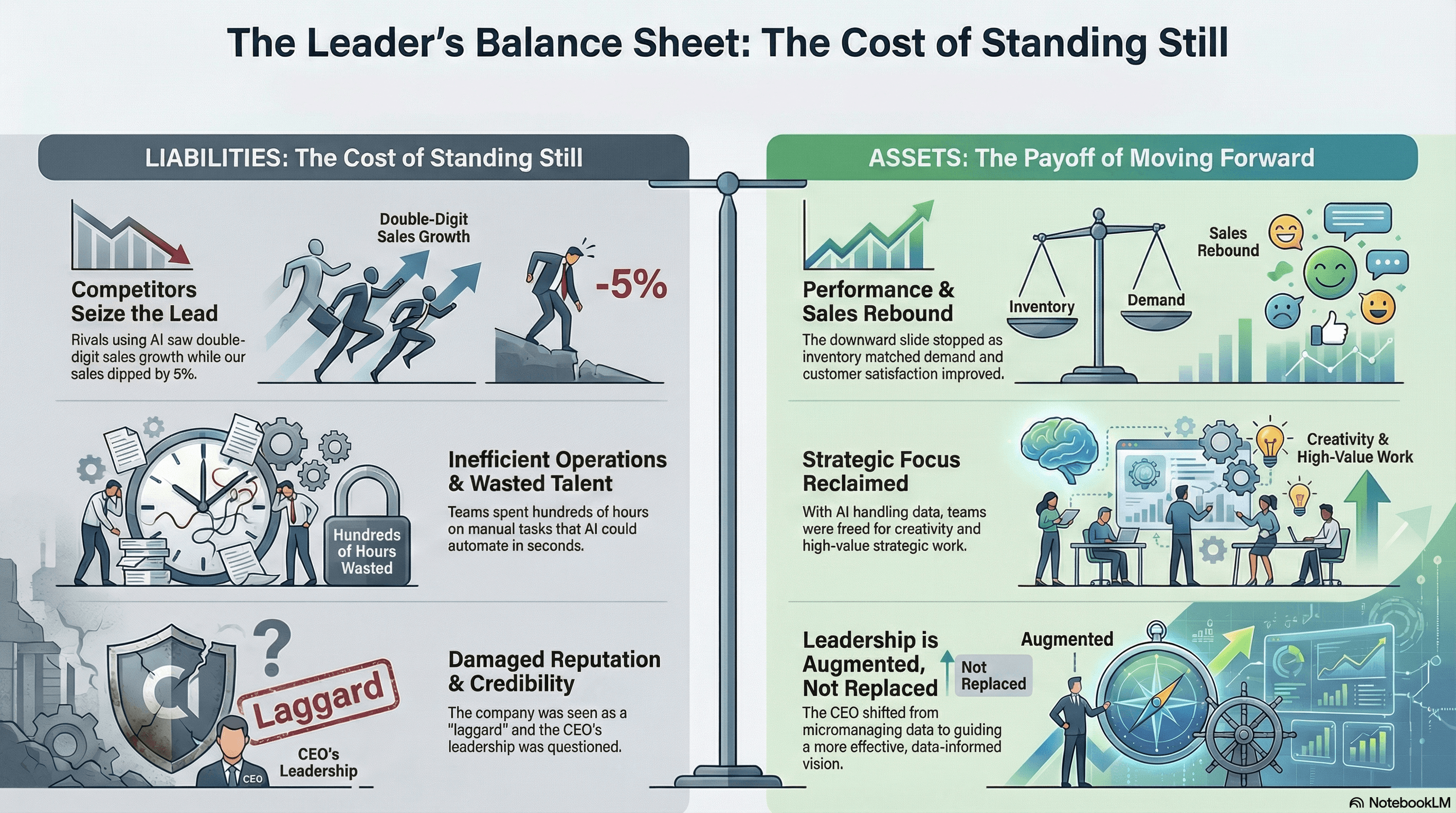
A year later, the cost of Alex’s choices is visible in the numbers and on the sales floor. ElectroMart’s same-store sales fall around 5%, while analysts report double-digit gains at TechTown. Their AI systems match stock to demand with precision and speed up fulfillment. ElectroMart shoppers increasingly encounter empty shelves or slow-moving stock and turn to competitors instead.
The leadership team can no longer absorb the damage quietly. In a tense meeting, the head of operations says, “Our old methods aren’t keeping up. We’re spending hours reacting while TechTown is ahead of the curve. If we’d implemented that AI system last year, we could have avoided this backlog and lost sales.” Alex is irritated but unsettled. A visit to one of the stores confirms the picture: backrooms full of unsellable stock, gaps where high-demand items should be, and a manager who tells him bluntly that other retailers have tools that ElectroMart does not.
The Wake-Up Call and the Bill for Inaction
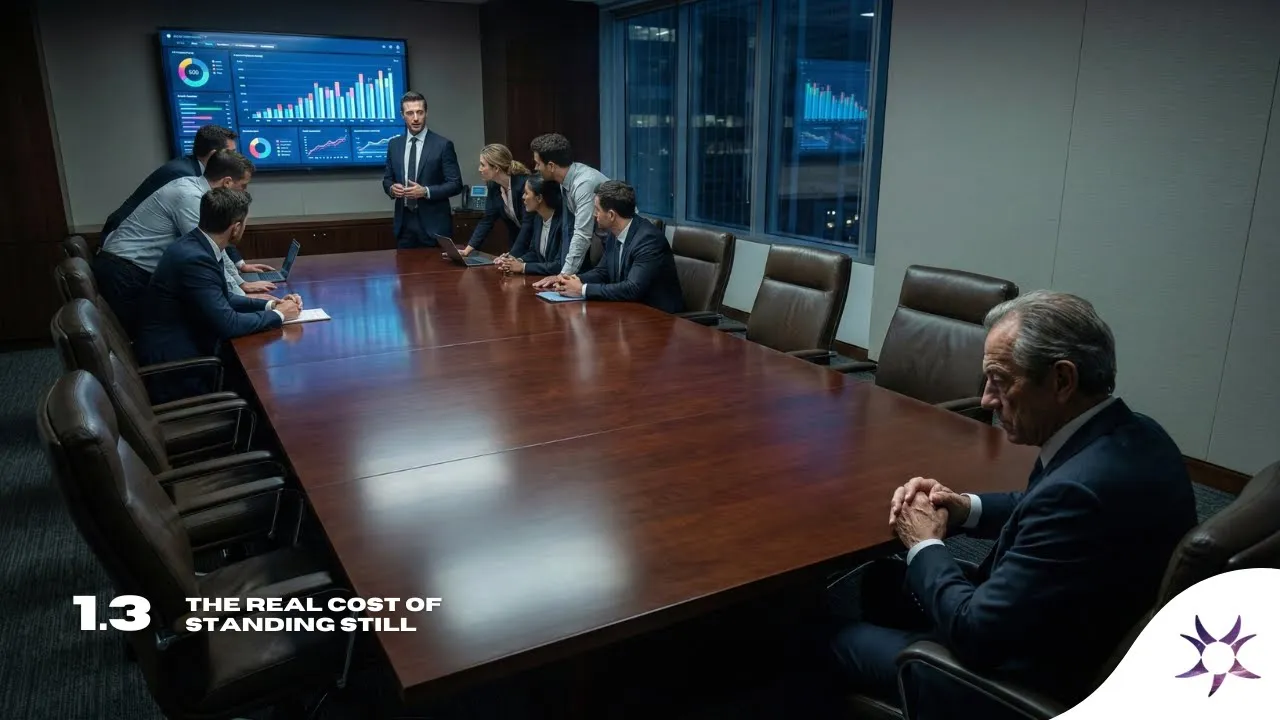
The breaking point comes at a board meeting focused on ElectroMart’s slide. After reviewing the numbers, a board member offers a blunt assessment: “Alex, doing nothing was a decision. I know you take pride in what you’ve built, but the world is moving. By standing still, you’ve actually been moving backwards. It’s not neutral ground – it’s quicksand.” The metaphor lands. Alex finally sees that “wait and see” did not keep the company safe; it quietly pulled it under.
As he reflects, three categories of cost become clear. First, opportunity cost: the AI system could have prevented lost sales from stockouts, reduced heavy discounting on excess inventory, and delivered smoother operations and happier customers. Second, competitive risk: TechTown reshaped customer expectations and turned ElectroMart into a visible laggard, damaging both the brand and Alex’s reputation as a forward-thinking leader. Third, wasted time and energy: internal reviews show that employees spend hundreds of hours each quarter on manual forecasting and adjustments. A well-implemented AI tool could reclaim several hours per person per week, translating into significant gains in productivity and creativity that never materialized.
The Path to Recovery
The board meeting forces a shift. Alex decides his role is no longer to protect the old playbook but to lead the move to a new one. He starts by taking responsibility. In an all-hands meeting he says, “I know I’ve been resistant. I had my reasons, but those reasons have cost us. We lost time. We lost sales. And I take responsibility for that.” He then introduces a pilot of the AI inventory system he previously rejected and commits to reviewing its results himself. This visible sponsorship signals that the blockage at the top has been removed.
Within days, the AI system surfaces recommendations on how to rebalance stock between stores, anticipate demand spikes, and target promotions more effectively. Teams feel the shift as the system takes over the heavy data work and frees them to focus on strategy and creativity. Productivity and morale rise together.
The most important change is in how Alex views his job. He stops trying to be the person with all the answers and becomes the person who insists on better questions and better information. He leans on AI for pattern-spotting and forecasting, while he focuses on culture, partnerships, and long-term direction. Instead of viewing technology as a rival, he treats it as a force multiplier for his experience and his team’s talent. By the end, ElectroMart has stabilized and can compete again on more than its legacy. The core lesson is simple: the greatest danger was not trying new tools, but standing still while the rest of the world moved.