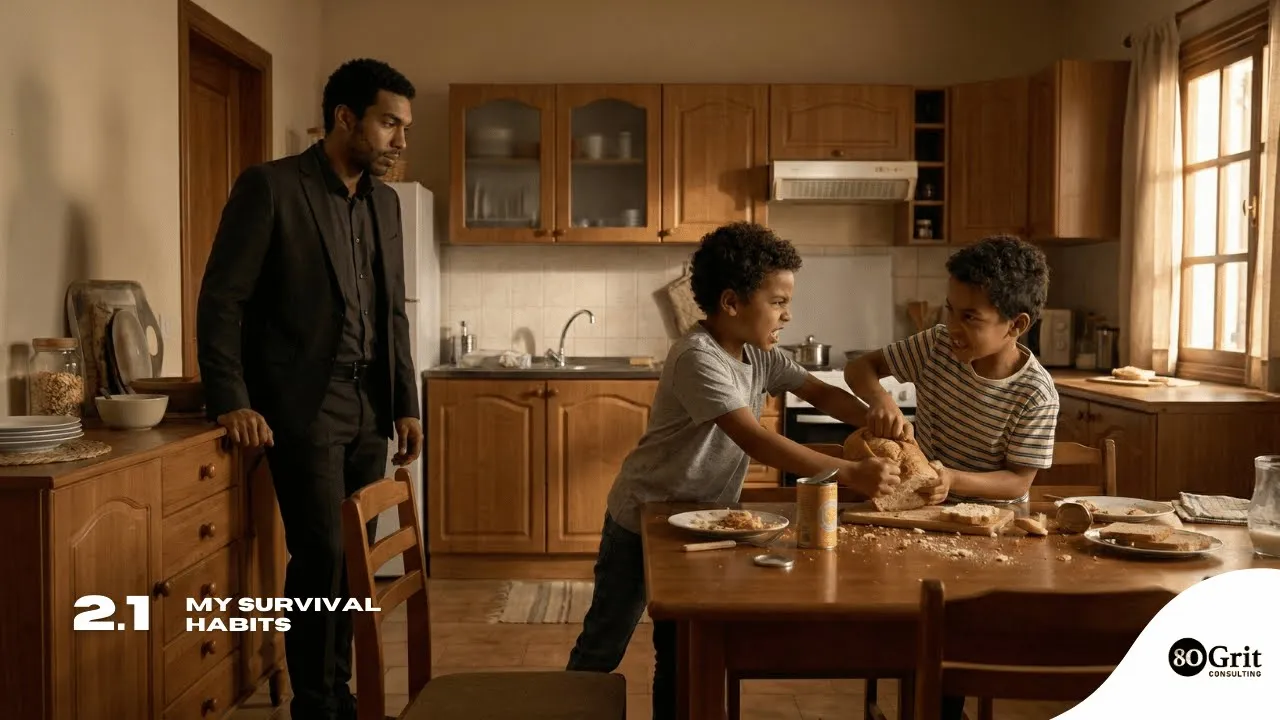

Welcome to this lesson on My Survival Habits. This is where you stop judging your reactions like they are character flaws and start seeing them for what they often are: strategies you learned to stay safe. Survival can become a sport when life teaches you to stay ready at all times. You learn to compete with everybody, stay guarded, and treat softness like a risk. In this lesson, you will name the habits that carried you, connect them back to the moments that shaped them, and start separating what once protected you from what now controls you.
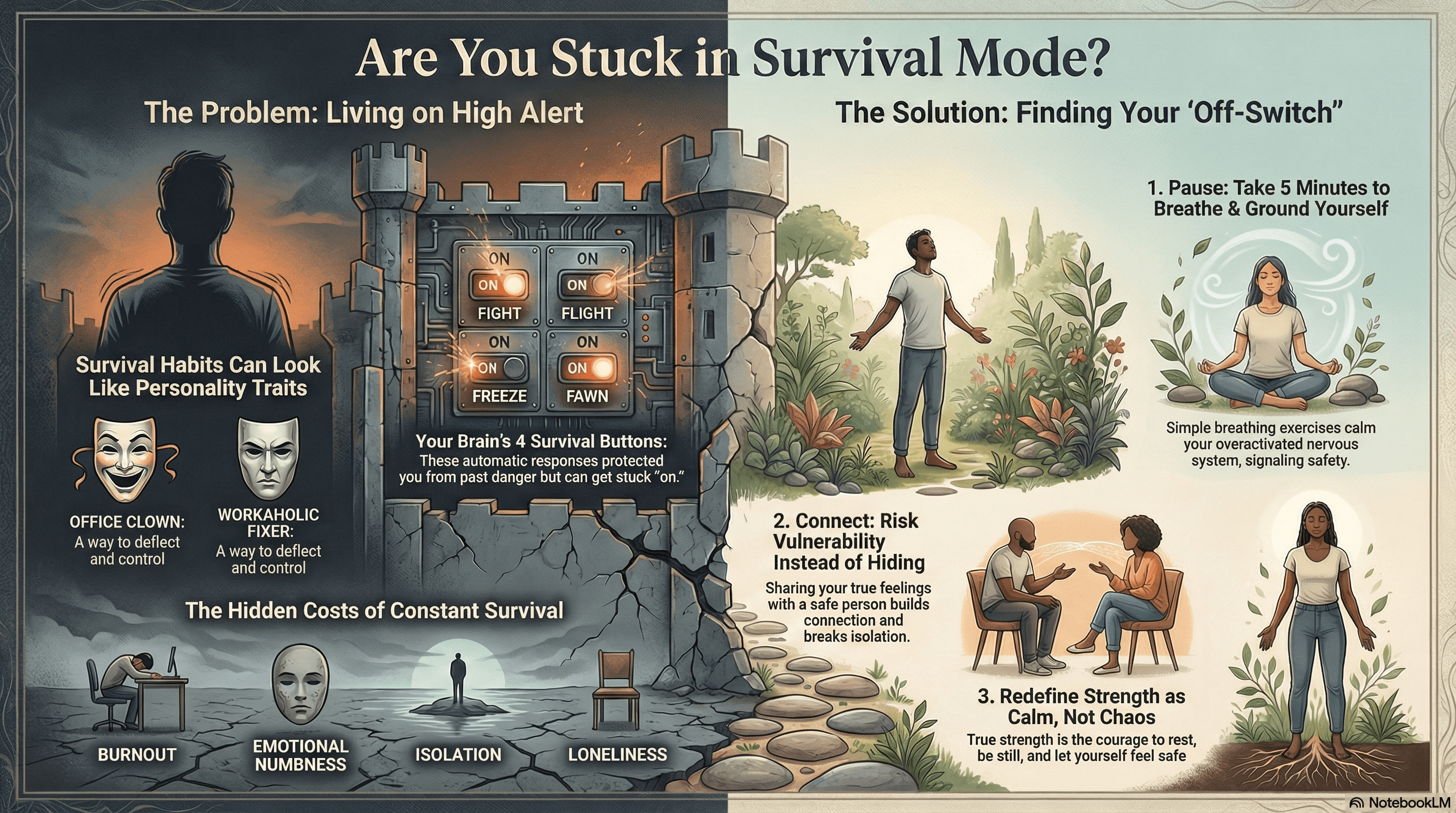
Survival habits are not random. They are usually the nervous system doing its job under pressure. When your body believes something is dangerous, it does not hold a meeting with your logic. It moves fast to protect you. That is why you might explode, shut down, overwork, joke, numb out, or jump into fixing other people before anyone even asks. These are not just behaviors, they are automatic protection patterns. The problem is that when you live in stress for too long, your body can start treating normal life like an emergency, so the habit becomes the default even when the threat is gone.
A simple way to understand these patterns is through four common survival responses: fight, flight, freeze, and please. Fight can show up as anger, control, defensiveness, or needing to win every conversation. Flight can look like staying busy, grinding, overworking, disappearing into errands, or always needing motion so you do not have to feel. Freeze often shows up as numbness, zoning out, shutting down, going quiet, or feeling stuck in your head while your body feels heavy. Please, sometimes called fawn, can look like over-helping, smoothing conflict, apologizing too much, abandoning your needs, or making sure everyone else is okay so you do not become a target. None of these are “bad” by themselves. They are the body trying to keep you safe.
For some people, survival becomes performance. The class clown persona is a powerful shield because humor can control the room. If people are laughing, they are not looking too closely. If you stay high energy and entertaining, you do not have to sit with loneliness. If you are always the one who lightens the mood, people rarely ask how you are really doing. Over time, arrogance can join the performance as armor. It keeps vulnerability off-limits. It tells the world, “I do not need anyone,” even when your inner world is craving care, rest, and real connection.
The turning point in this lesson is learning to name your personal patterns with precision. You are not just “angry,” you might be in fight mode when you feel disrespected. You are not just “lazy,” you might be freezing when you feel overwhelmed. You are not just “driven,” you might be fleeing through constant productivity so you never have to feel unsafe. Start noticing what sets you off, what you do next, and what happens in your body. Tight chest, clenched jaw, fast talking, shallow breathing, restless legs, blank mind, sudden fatigue, or the urge to fix everyone are all signals. When you can name the pattern, you can interrupt it earlier.
This lesson also asks you to see the cost of staying in survival mode. Survival habits may earn you praise, promotions, attention, and a reputation for being strong, but they can quietly drain your life. You can become exhausted but unable to rest. You can feel lonely in a room full of people because the version of you they love is the performance, not the real you. You can sabotage peace because calm feels unfamiliar, so you create problems or stay busy to feel normal. You can carry short tempers, impatience, and constant tension because your body is always braced. When grind and chaos become proof of strength, you lose access to the kind of strength that looks like steadiness, softness, and safety.
The goal is not to erase what saved you. The goal is to respect it without letting it run your life today. That is where regulation begins. Regulation is simply helping your body come down from threat mode so you can choose your next move instead of reacting on autopilot. You start small: pause for ten seconds before responding, take a slow breath in and a longer breath out, unclench your jaw, drop your shoulders, feel your feet on the ground. Take five minutes alone without a screen. Move your body in a simple way like a walk, stretching, or shaking out tension. These are not dramatic transformations, they are small signals to your nervous system that you are safe enough to slow down.
As you practice, self-compassion becomes part of the work. That means speaking to yourself like you are talking to someone you love who has been through a lot. It means replacing “What is wrong with me?” with “What is my body trying to protect me from?” It also means getting honest about what you need, even if you are not used to needing anything. Sometimes the first act of growth is admitting you are tired. Sometimes it is telling the truth instead of making a joke. Sometimes it is letting someone help you without feeling weak. Each time you do that, you teach your system a new lesson: connection can be safe, and calm can be strength.
To conclude, this lesson is about upgrading your relationship with the version of you that survived. You will map your fight, flight, freeze, and please responses, and you will see how your habits once made sense. You will also face what they cost you now, especially when performance, competition, and guardedness become a permanent lifestyle. Most importantly, you will take first steps toward regulation so your present life is not run by past danger. Respect your survival story, and start building a new one where peace is not a reward you earn, it is a standard you protect.