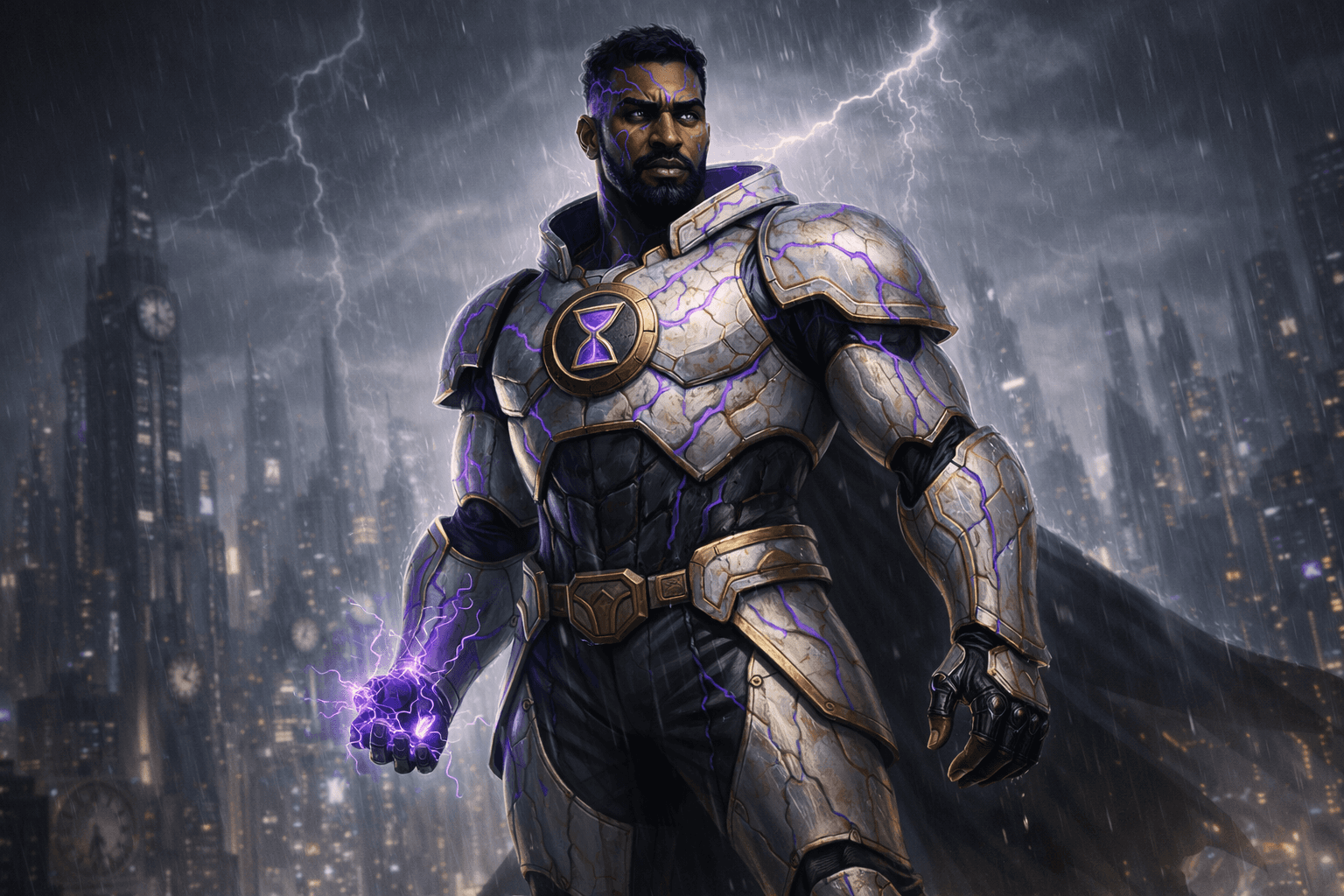
Creed grew up alone, hemmed in by silence and stacks of discarded electronics. With no clean lab, no mentor, and no clear way out, he scavenged broken radios, cracked laptops, and dead batteries until he built a rough question console from scrap. Night after night he fed it problems, and each answer taught him to hear order inside noise. He learned that failure was rarely empty. It was code he had not learned to read.
On a stormy ride home, carrying the device beside him, Creed slid on wet pavement, split his skull, and shattered the machine. Battery chemicals mixed with his blood across exposed circuitry. The ruined console sparked once. Then his mind did.
He lived, to the shock of his doctors, but survival came with seizures he later named Glitches. During them, the world seemed to stop while his awareness stayed awake, giving him impossible seconds to map danger, motive, and consequence before time moved again. The episodes were brutal, erratic, and never clean. Creed could have hidden, or let the condition reduce him to a victim. Instead, he built protocols, armor, and discipline around it, turning catastrophe into protection.
As Processor, he studies first, adapts fast, and uses every widened moment to keep others from being trapped by panic, ignorance, or bad odds the way he once was.
Abilities
Primary
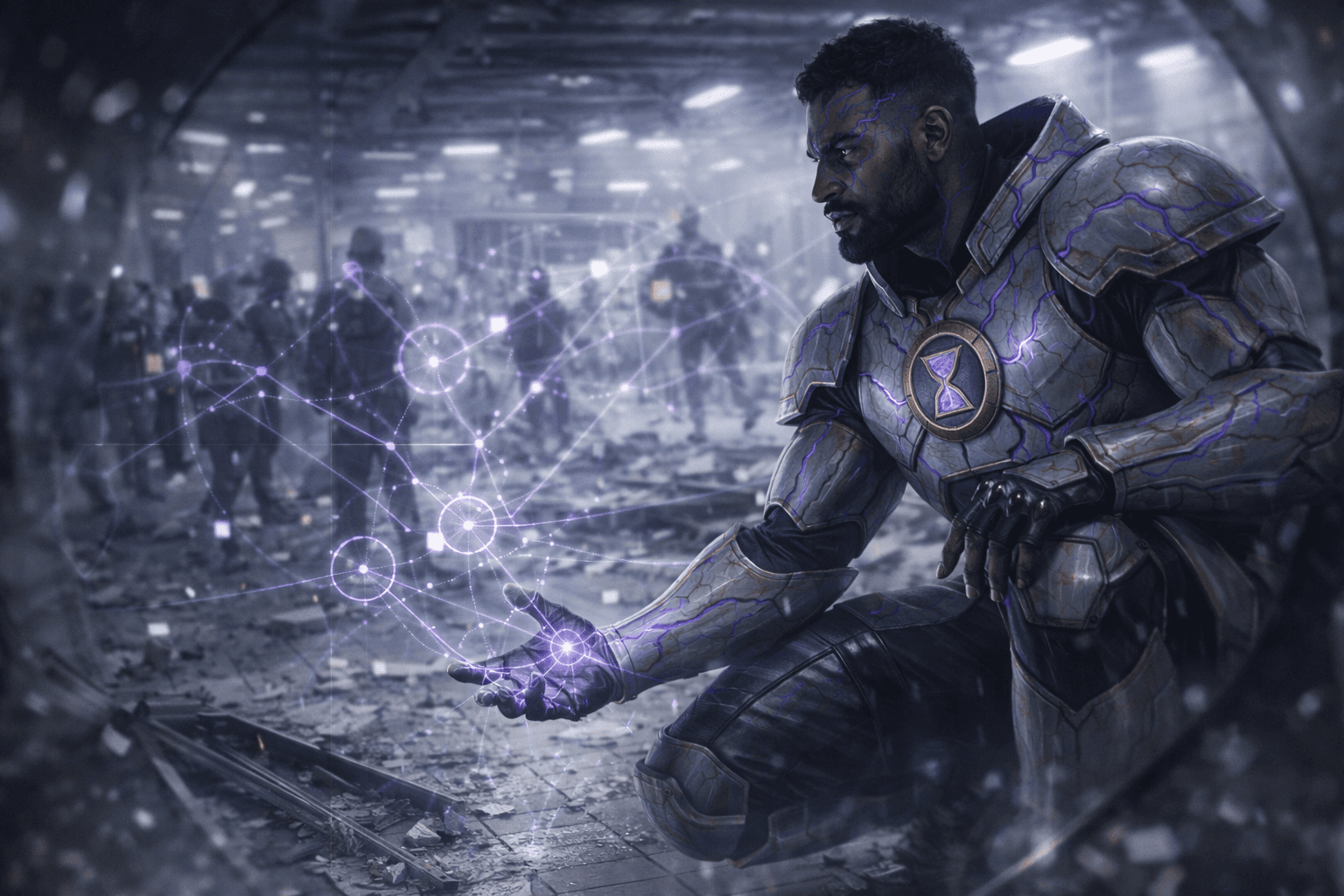
Audit
Processor enters a widened state where time seems to stretch and violet fault lines reveal motives, limits, and ripple effects. He runs mental simulations, then shares the strongest move with his allies. Audit works from available data, not certainty, and it cannot force an outcome.
Secondary
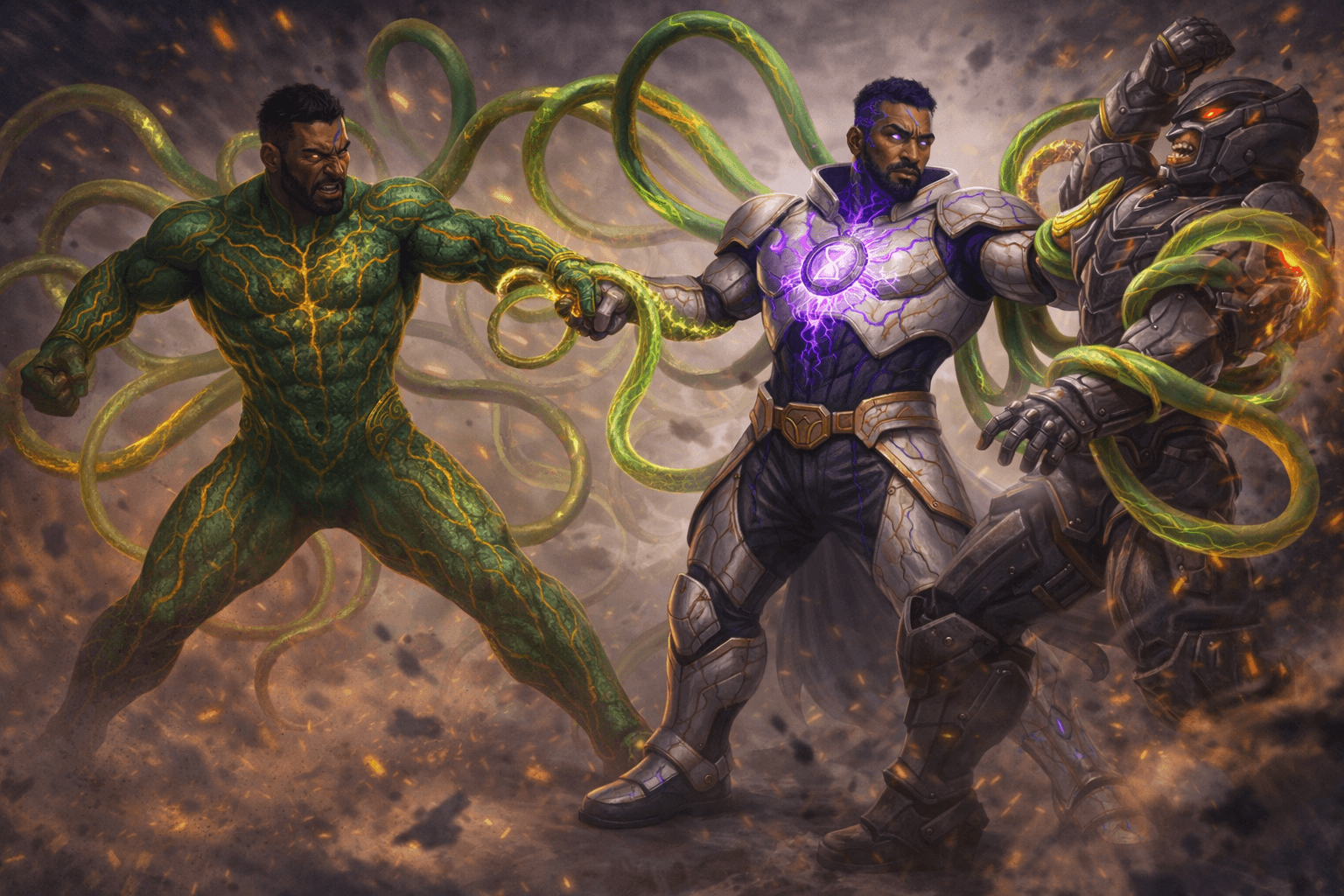
Mimic
After seeing a technique once, Processor can copy its mechanics and sharpen it fast. Mimic lets him cover gaps, counter specialists, and adapt mid-fight. It works on visible, learnable skills, not unique biology or artifact-bound powers, and repeated use taxes his focus.
Ultimate
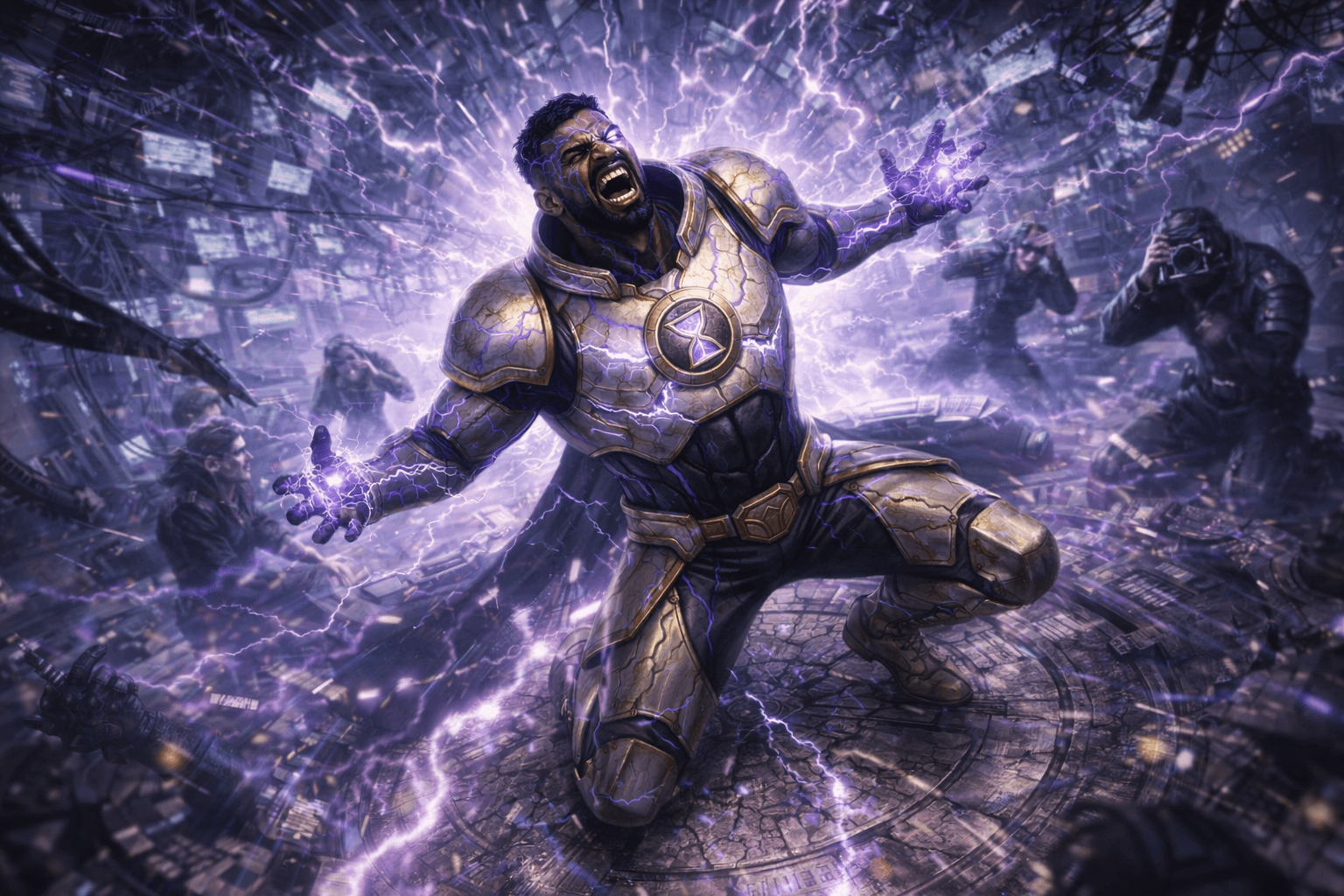
Overlock
In crisis, Processor sends a surge through nearby minds. Allies feel their thinking accelerate and solutions snap into place, while enemies drown in more input than they can sort. Overlock can break a stalemate, but the backlash risks violent Glitches and neurological burnout.

Before there was armor, Creed sat alone with scrap-built circuitry and a hunger isolation could not dull. He kept feeding questions into a homemade console built from dead laptops and broken radios, refusing to believe discarded things were done. The moment that defines him first is not the crash but the obsession before it: a boy proving that patience, pattern, and stubborn thought could pry open a future no one had built for him.
In one early crisis, Processor entered a Glitch and saw the clean answer at once: seal a route, save the majority, and leave behind the few who could not get out in time. He had the numbers. He had the proof. When time resumed, he rejected the optimal loss curve, chose a riskier path, and pulled everyone through alive. The pressure did not expose weakness. It exposed the line he will not cross, even when logic tempts him to become less human.
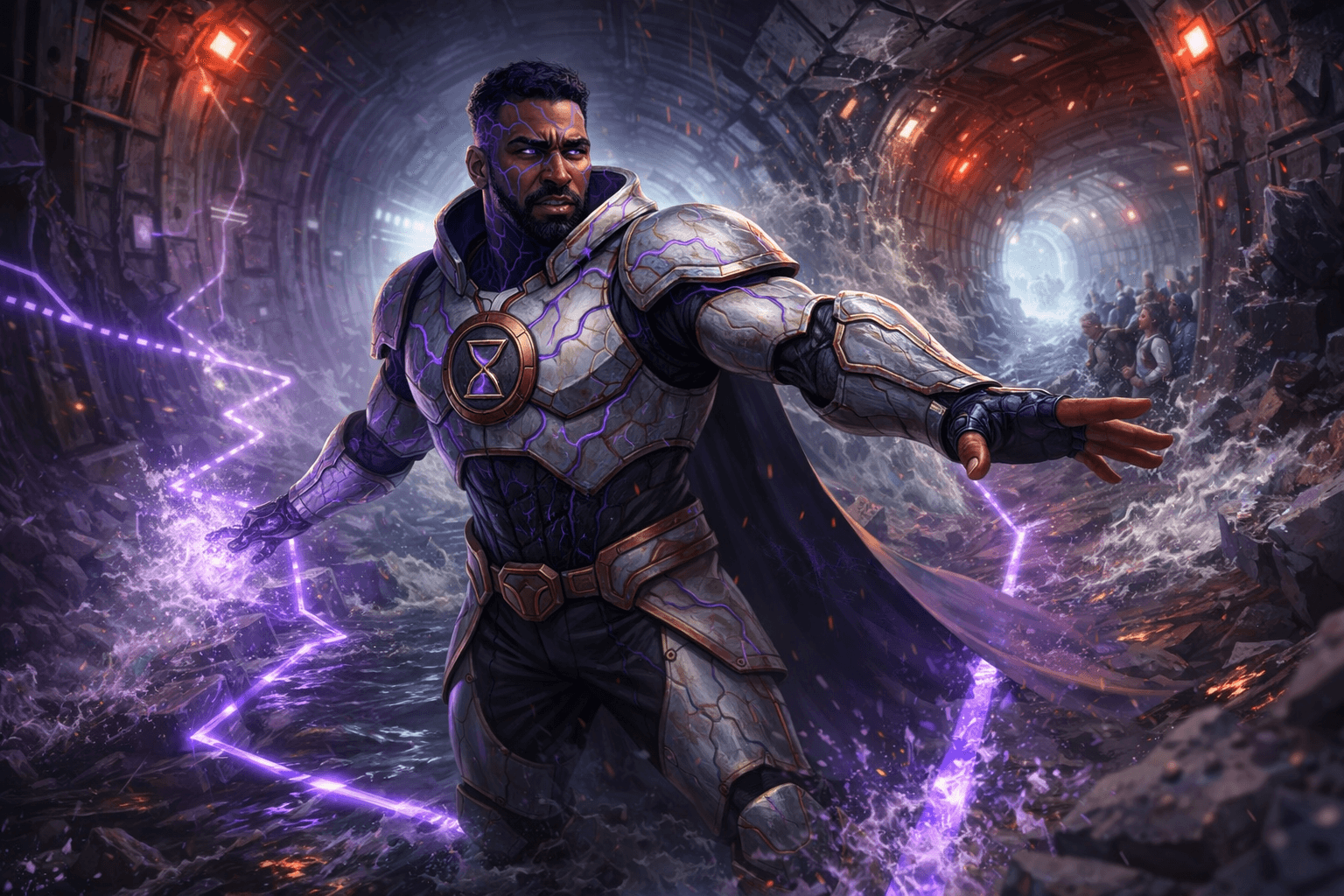
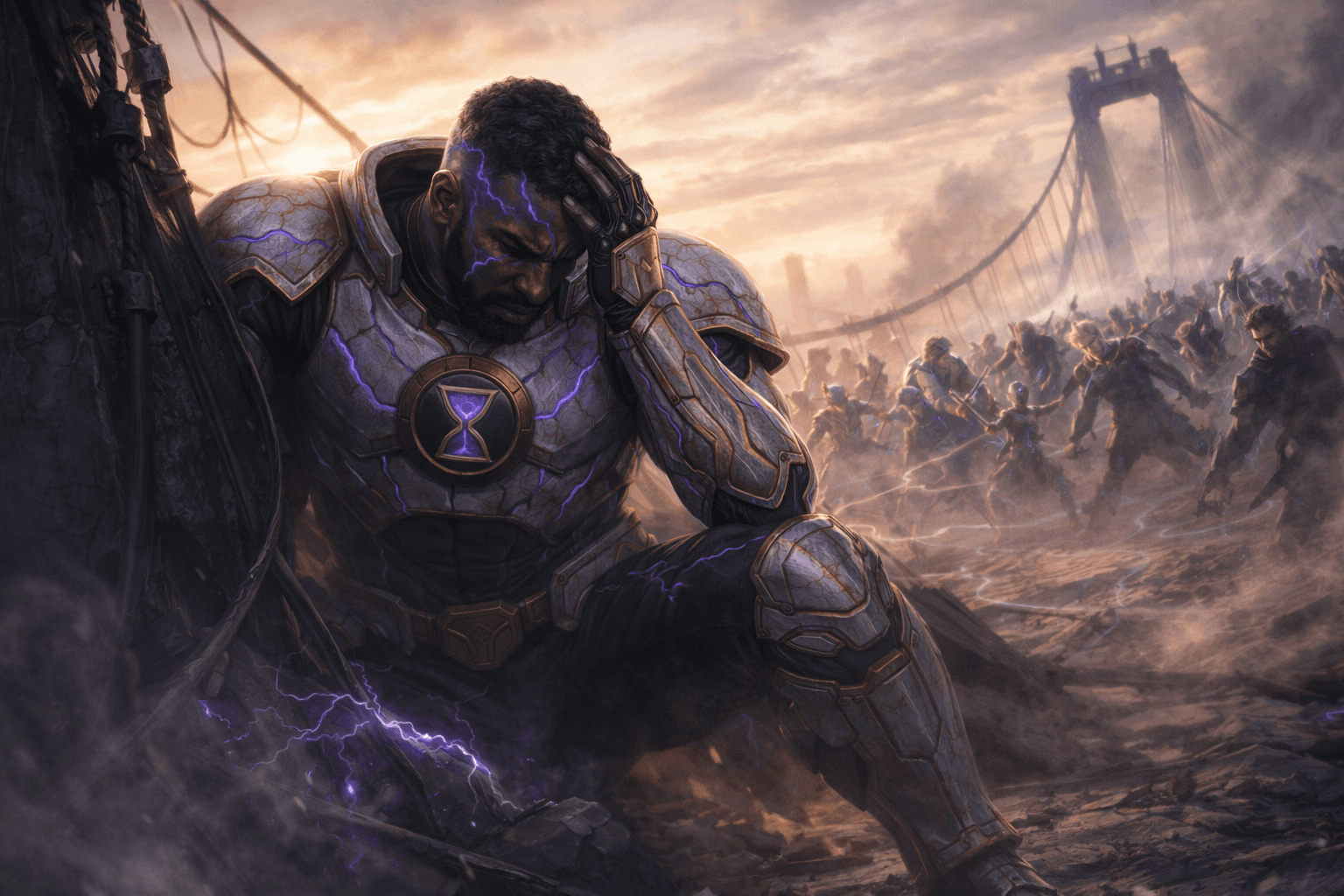
At his highest cost, Processor faced a collapse no single fighter could solve fast enough. Instead of trying to outplay it alone, he triggered Overlock and pushed accelerated cognition through every nearby mind. Allies found answers at once, the enemy line drowned in unusable data, and victory arrived through shared clarity. Processor won, but the backlash left him shaking and half-blind. The moment seals his belief: power means little unless it expands what other people can do.
