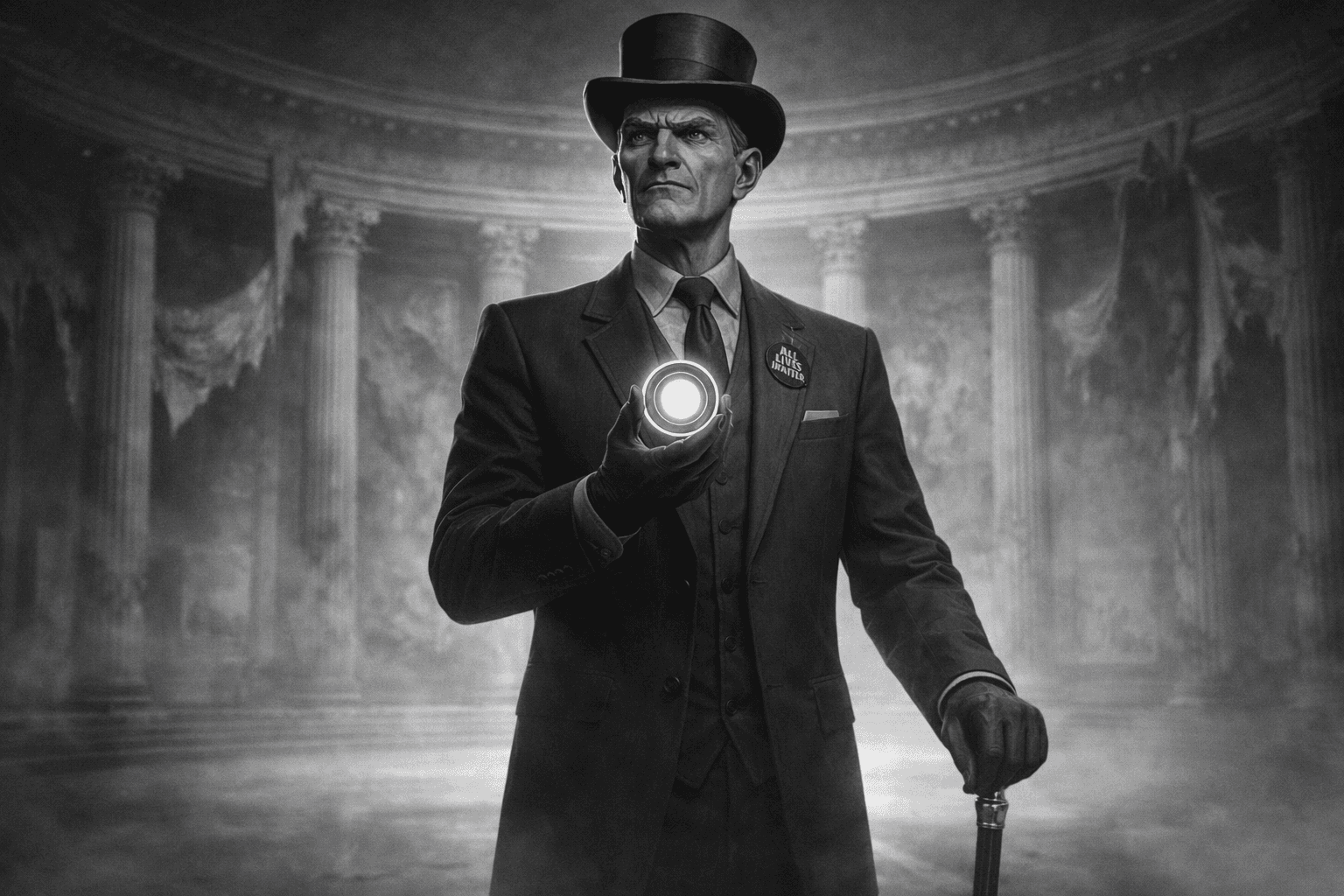
Before he became Monochrome, he was a civic mediator raised in a city that prized quiet over repair. As a boy, he watched officials meet racist violence with calls for calm, fuzzy appeals to togetherness, and swift punishment for anyone who disturbed the peace. When his district tried a brief truth-telling effort, the backlash split neighbors, pushed teachers out, and made his reform-minded mother a public target, almost overnight.
He learned the wrong lesson: not that injustice was denied, but that naming identity had broken the city. He came to believe institutions reward anyone who can make moral conflict sound rude.
As a strategist, he made a career of tearing down equity programs beneath the language of equal treatment, until a confrontation at a cultural archive changed him. While trying to seize records of buried abuse, he encountered the Null Lens, a prism that made metaphor real. In his hands it drained pigment from murals, cloth, and stained glass, and turned his voice into a field of false sameness and quiet authority.
He took the name Monochrome and turned not only against policy, but against memory itself. Now he moves from one institution to the next promising unity while bleaching symbols, muting witnesses, and turning respectable fear into a disciplined army.
Abilities
Primary
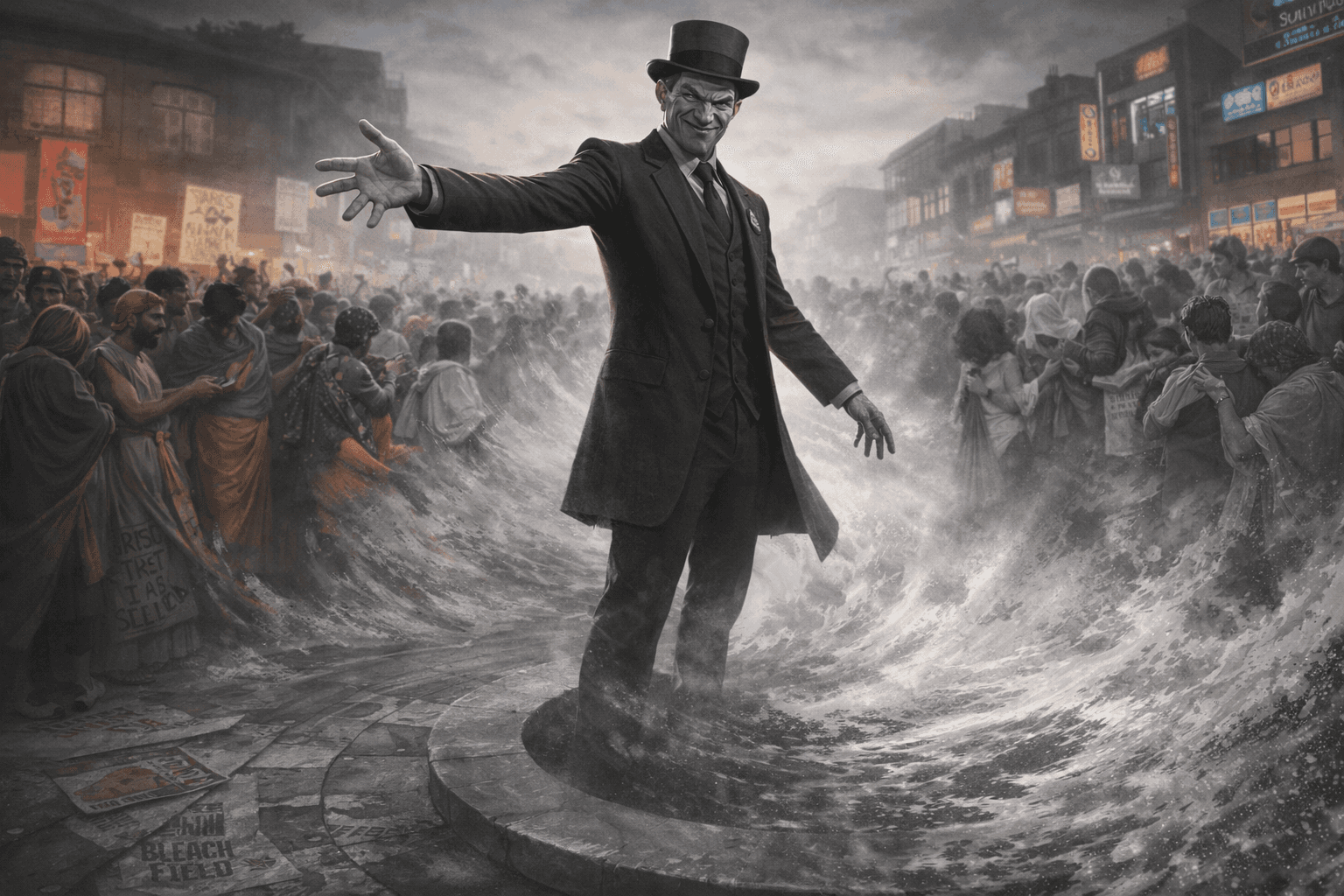
Bleach Field
Monochrome projects a field that drains color from people, symbols, and marked places, flattening cultural signs into one gray blur. He uses it to erase evidence and weaken identity-based powers, but the field starts to shake when people name together what was taken.
Secondary
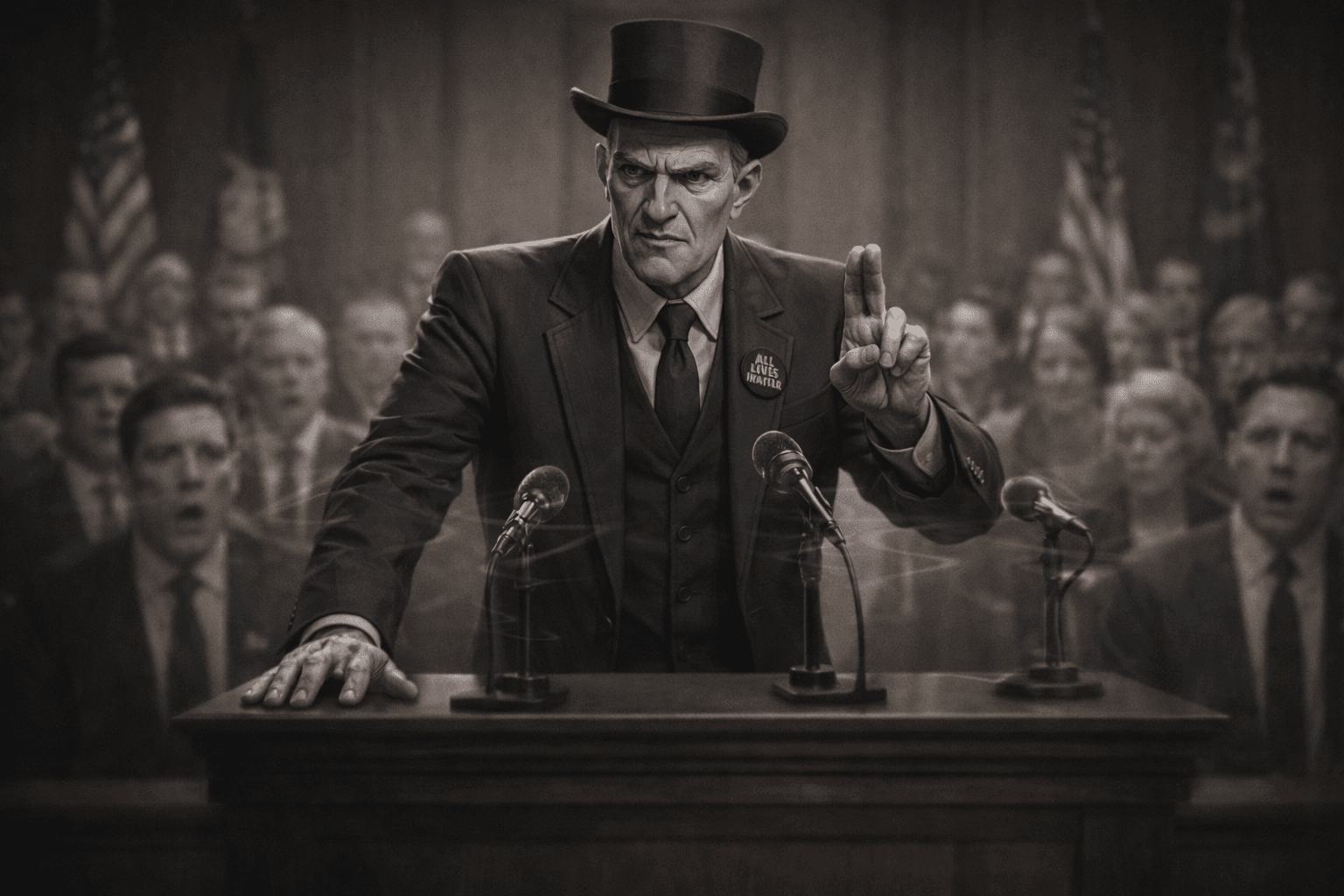
Equal Silence
With sermon-like force, Monochrome fills a room with psychic pressure that turns speech into hesitation and self-censorship. It works best in hearings and forums where people already fear sounding divisive, but it weakens against speakers grounded in solidarity or testimony.
Ultimate
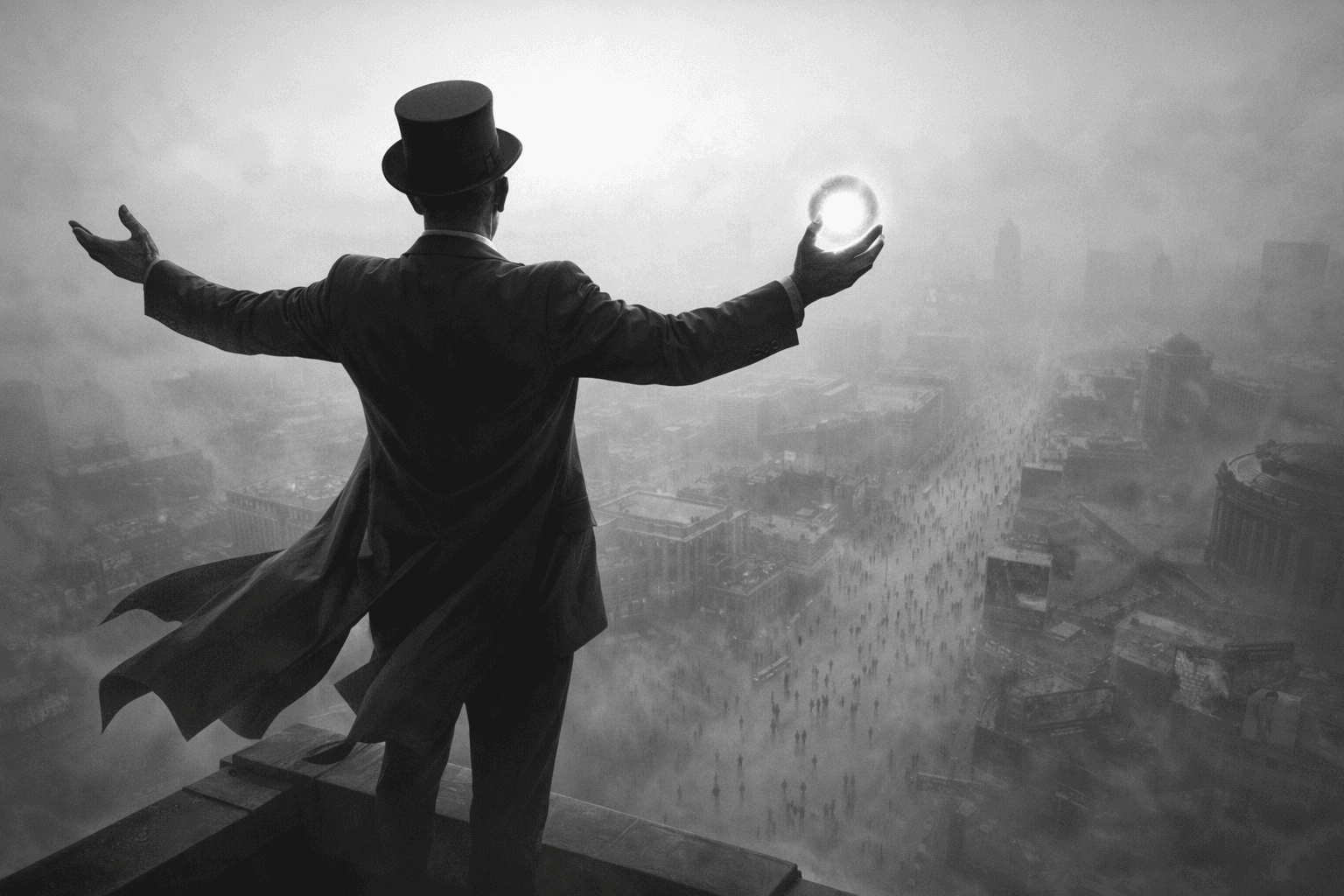
Whiteout Consensus
At full strength, Monochrome drowns a district in gray mist that bends perception, making citizens remember difference as danger and uniformity as safety. It can hollow institutions in minutes but it needs a prepared audience and breaks when living memory survives the veil.
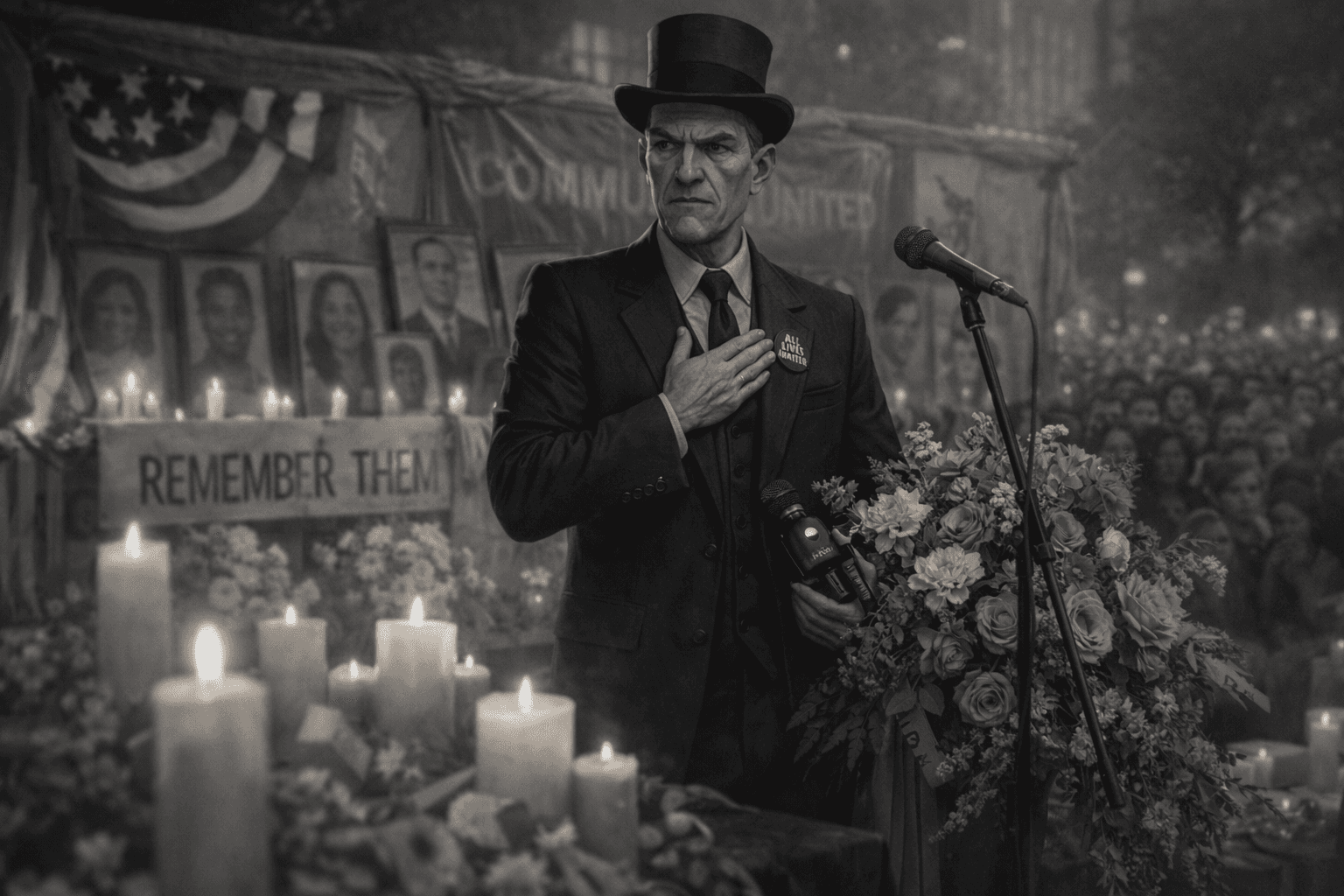
At a candlelight vigil for victims of a racist attack, speakers asked the city to say clearly what had happened and who had been targeted. Monochrome stepped onto the stage as a mediator, honored grief on every side, and triggered the Null Lens. Banners, murals, and even the candles themselves lost their color as the crowd went quiet under Equal Silence. By the time the lights returned, news coverage called the night healing while the dead themselves had been rhetorically erased.
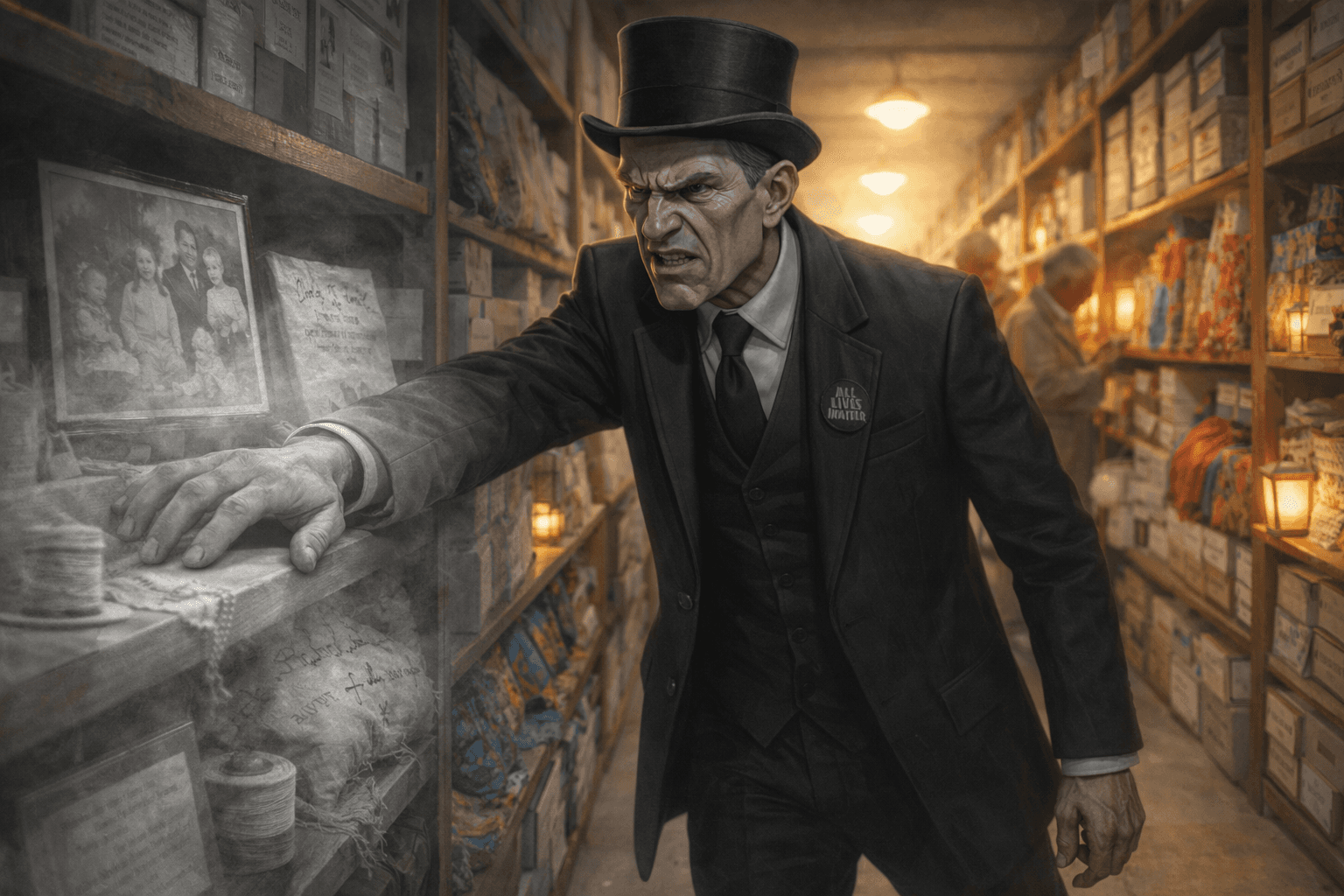
When archivists and neighborhood elders refused his order to close a living history center, Monochrome staged a tribunal in the halls and framed the archive as a source of division. He bleached photographs, textiles, and testimony stones until family lines seemed to vanish from the record. Then an elder began speaking names aloud and others joined her, drawing color back through the room. Forced to retreat, he learned that communal witness could wound him more deeply than combat.
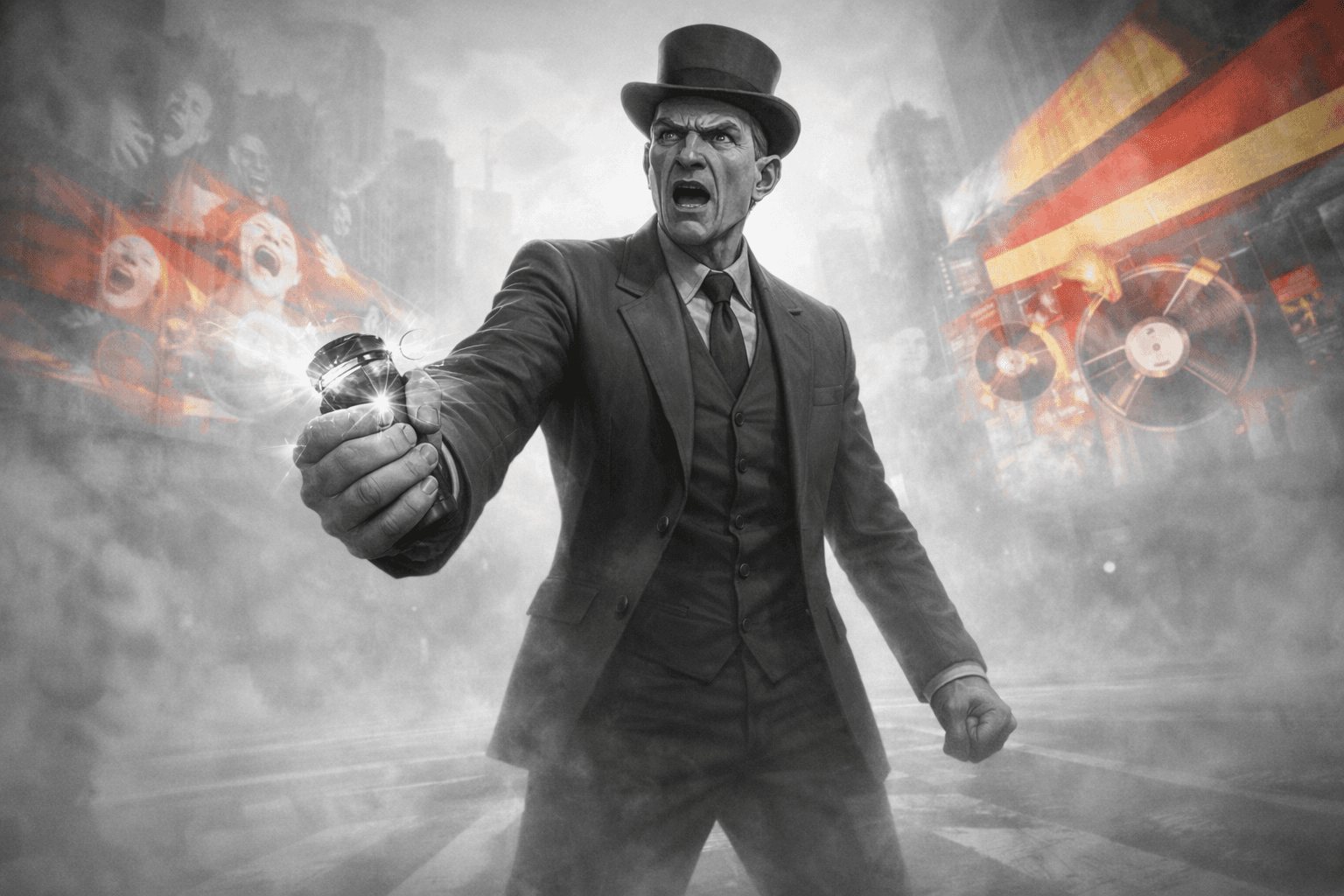
At the Civic Forum siege, Monochrome unleashed Whiteout Consensus over downtown, promising peace if every group surrendered its banners, names, and grievances. For a moment the city went still. Then survivors projected stolen records, songs, and faces across the fog, forcing color back into the streets. Rather than release control, Monochrome tightened the field and nearly erased himself inside it, proving he would sacrifice his own humanity before admitting living difference.
