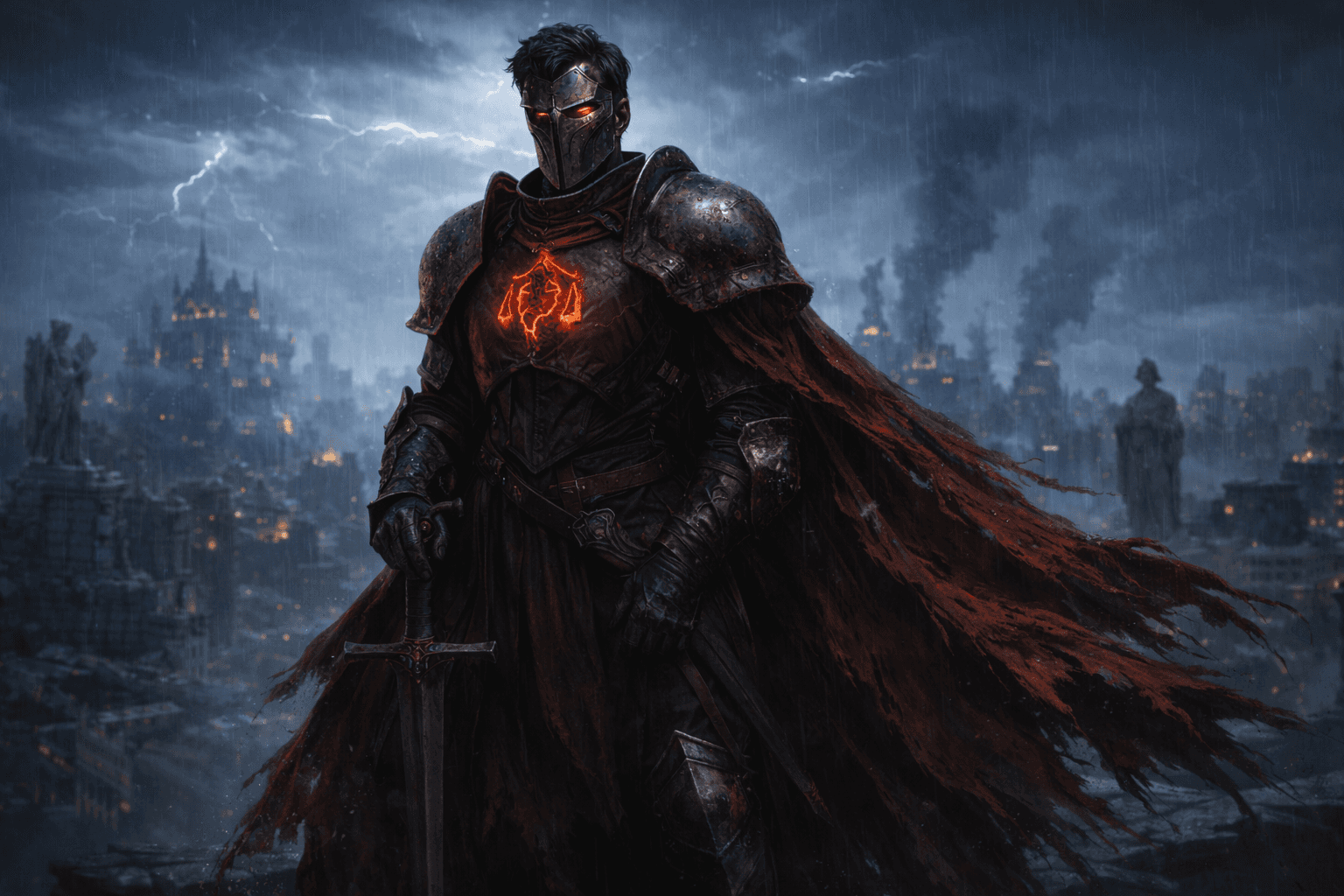
Before the armor, he was a governor known more for nerve than charm. He came up through audits, emergency councils, and long public hearings, where he learned that states rarely fail in one dramatic blow. They are hollowed out by exemptions, sealed rooms, vanity titles, and the belief that blood may stand above law. He made his name by pulling power into daylight.
When a would-be king arrived with money, loyal officers, and a polished story about sacred inheritance, he saw the real danger at once: the system around him tightening as command lines bent, officials froze, and citizens waited to see whether old poison would return as destiny.
He ended the coup in a single encounter, swift enough to deny martyr theater and final enough to stop civil war. In the quiet afterward, the people asked him to rule. He refused crown, title, and cult, but accepted a harsher duty, letting them name him Knight of No Kings, a living barrier against birthright rule. That refusal changed his authority. Public vows began to answer him, witness became force, and governance bent toward public exposure when he stood for the commons.
Now every fight asks the same question: can a nation call forth a protector without building a new throne? His life is an effort to prove that answer can remain yes.
Abilities
Primary
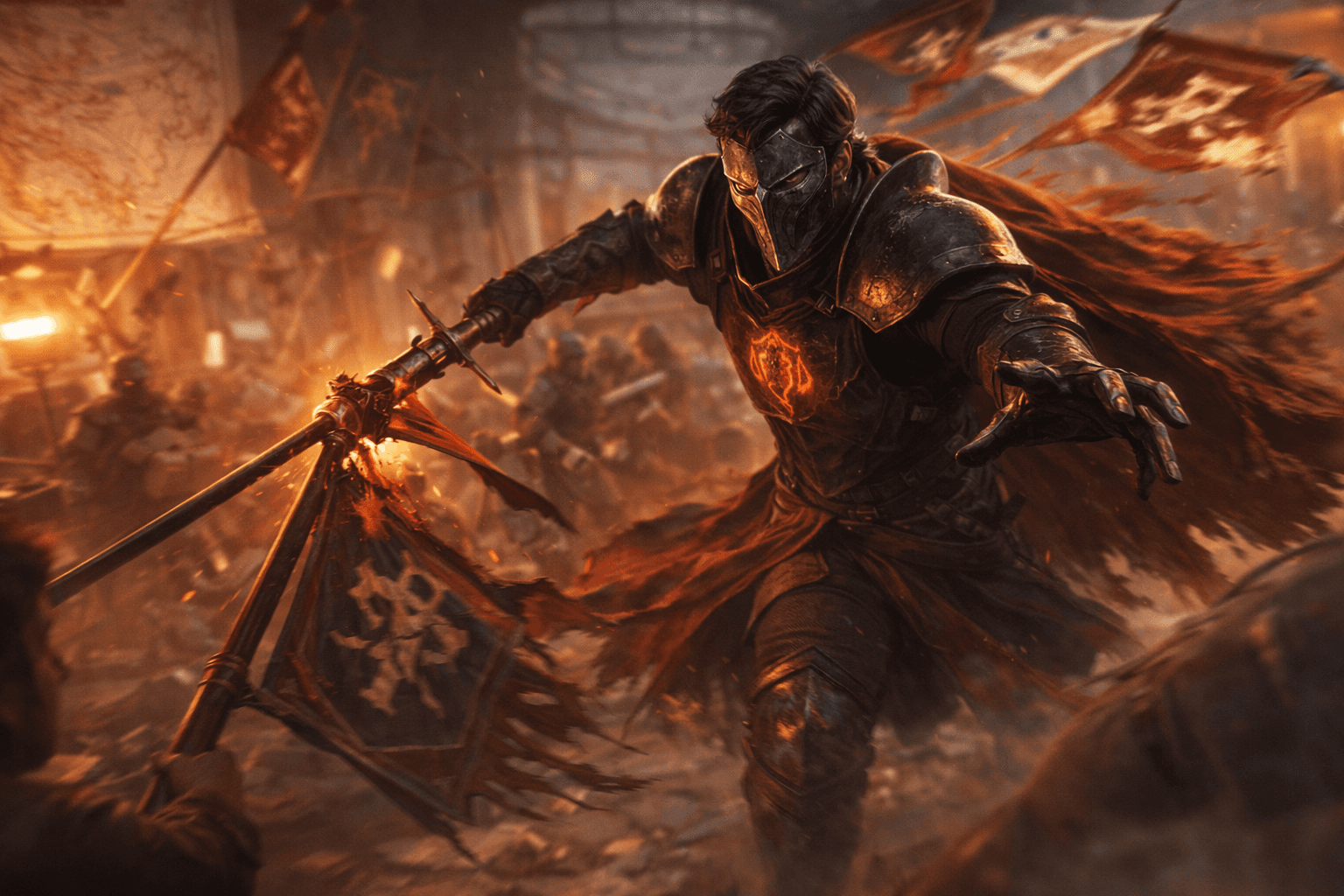
Checkmate
He finds the load-bearing move inside an enemy plan, pressures it with feints, then cuts it clean. For one decisive beat, command nets stall, false narratives collapse, and the whole field shifts around his strike. It works best against coordinated systems, not pure chaos.
Secondary
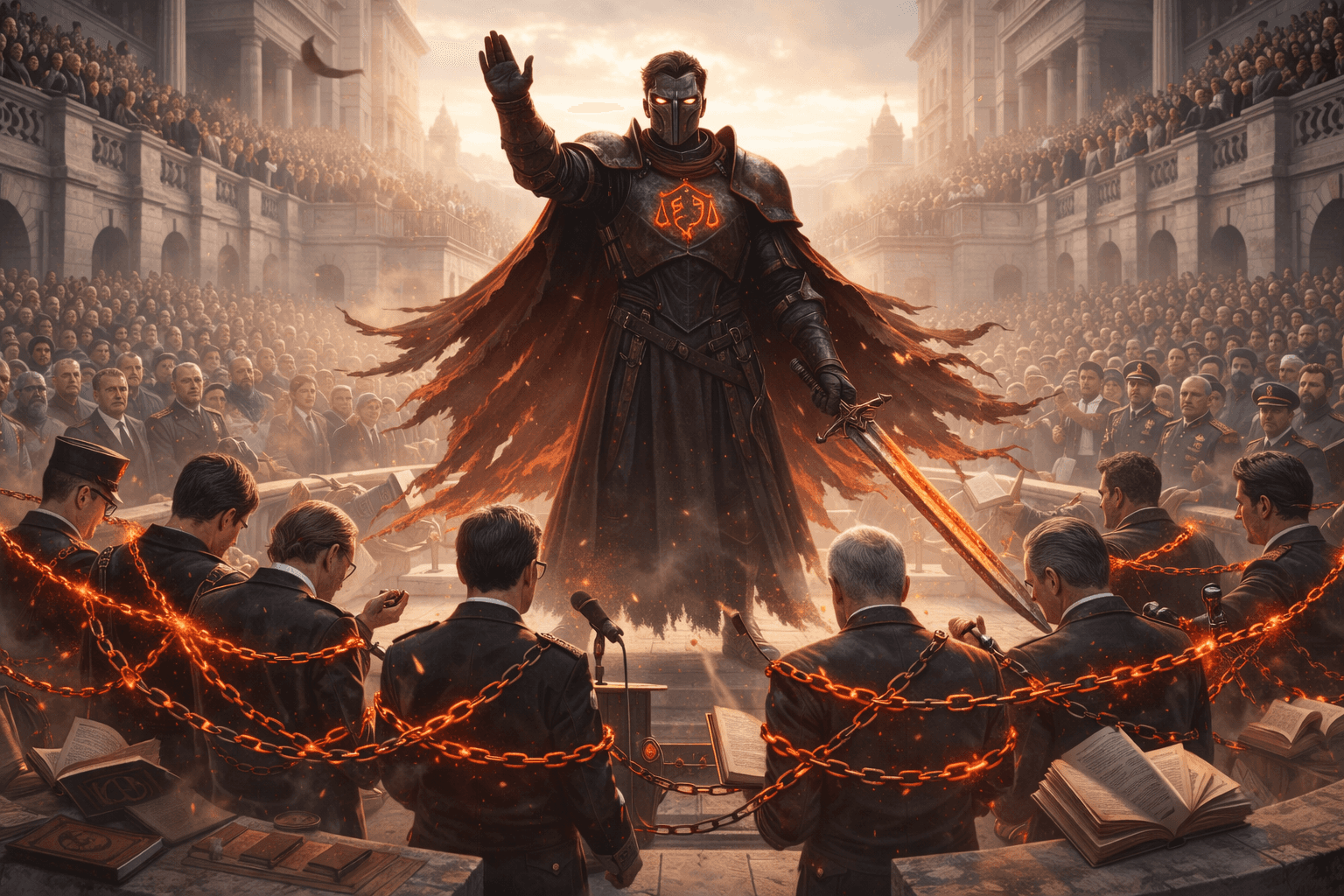
Lawbound
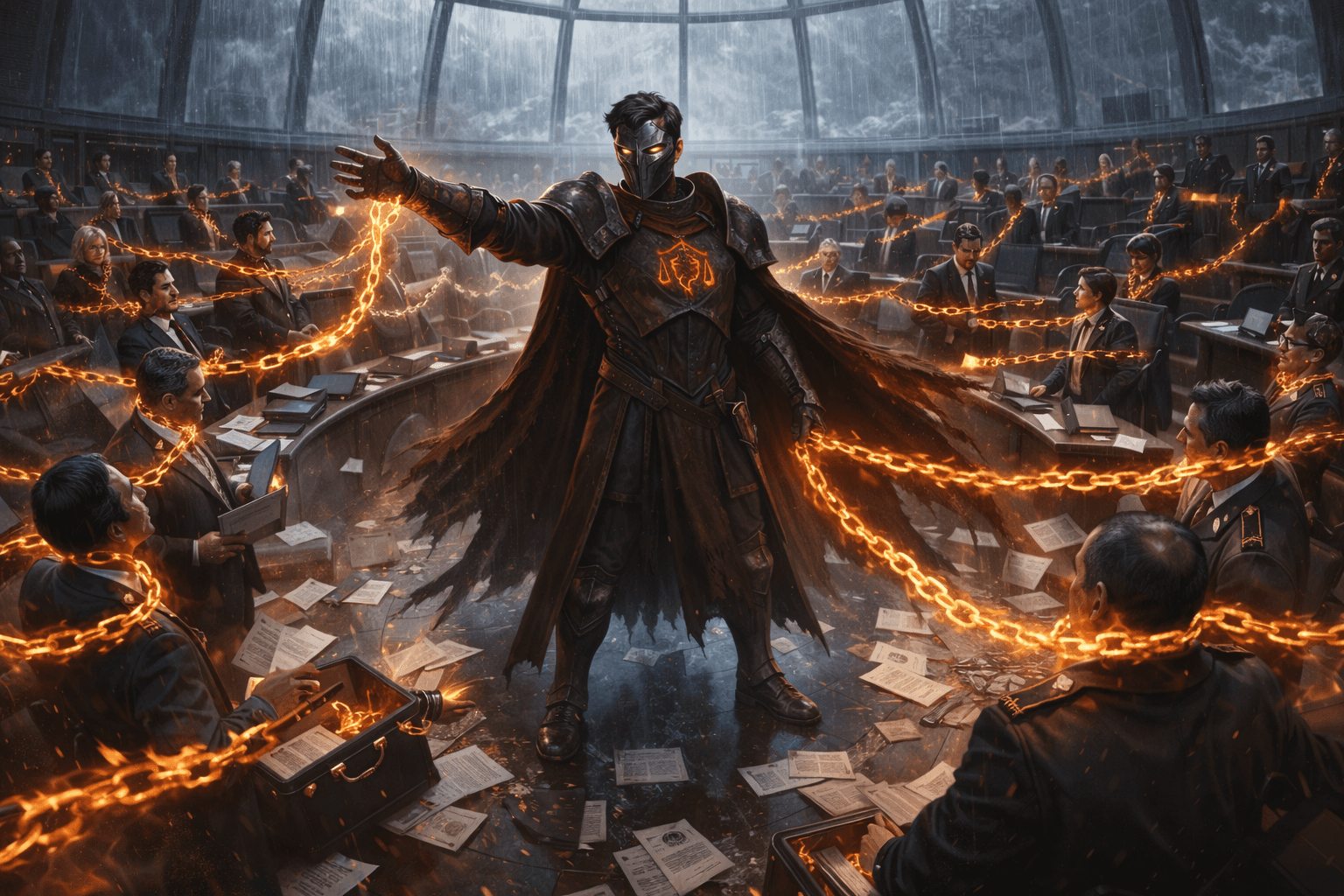
By forcing vows into public hearing, he forges bright bonds that fasten office to obligation. These chains expose hidden orders, unlock suppressed records, and route authority toward the commons. They require witnesses and spoken commitment, and fray under secrecy or panic.
Ultimate
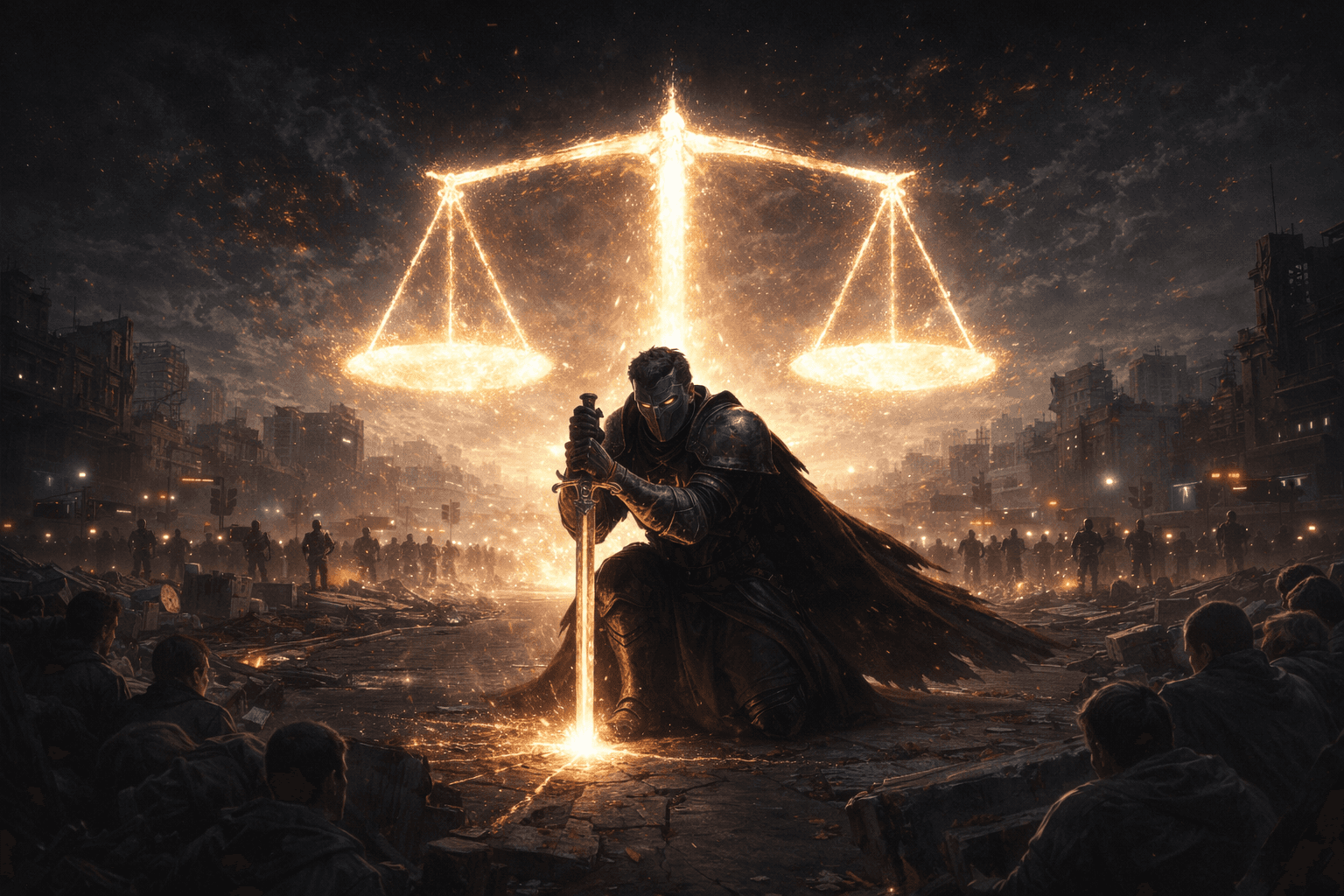
Final Precedent
He invokes a rare civic judgment that lifts vast scales across the horizon and rewrites the fight for a brief span. Illegitimate commands null out, whole populations gain cover, and control grids lock in place. It requires public recognition and leaves him drained after.
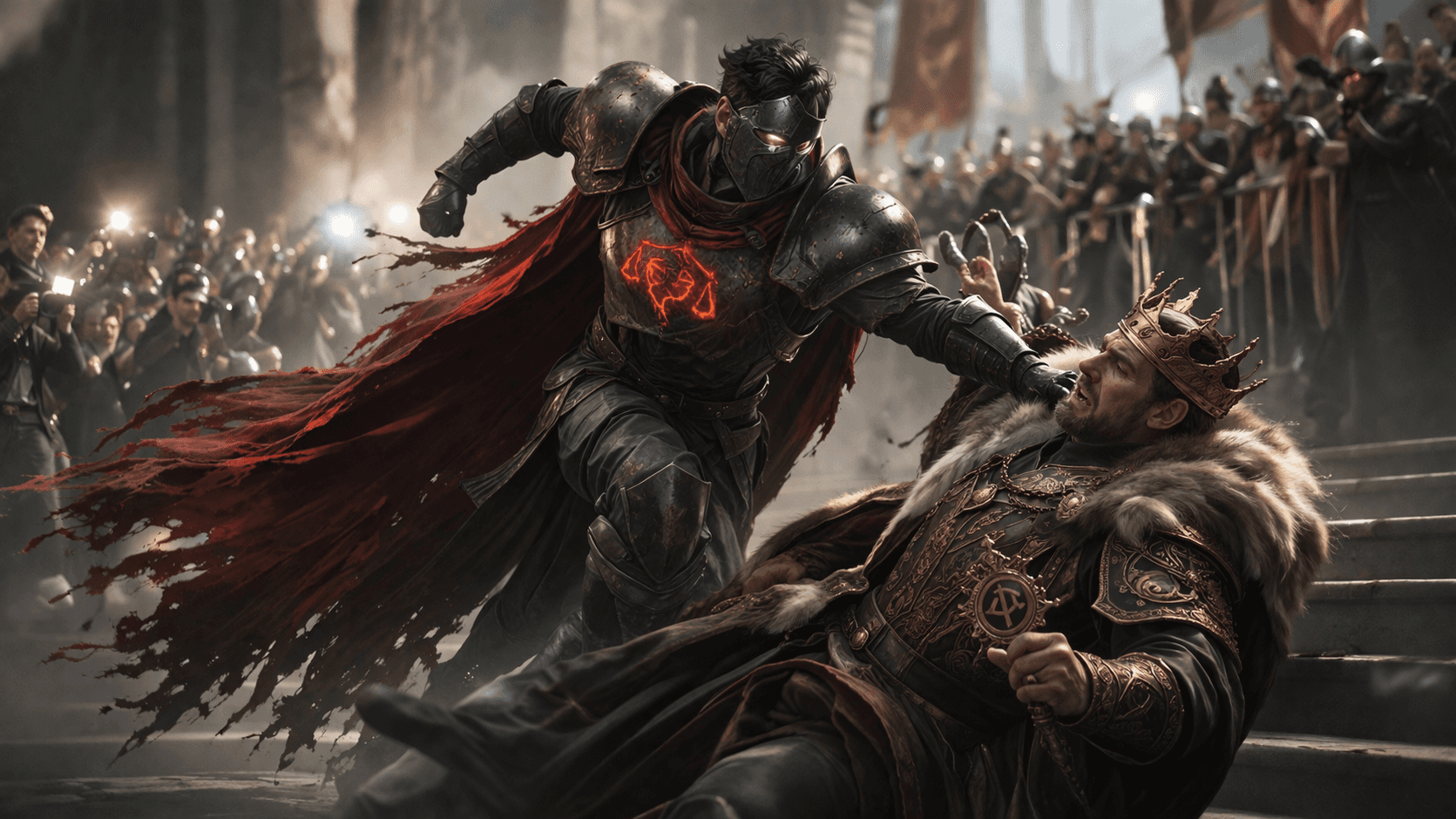
When the palace steps filled with cameras, militia, and citizens too stunned to run, the would-be king raised an ancestral seal and began the speech that would turn seizure into ceremony. The Governor did not answer with debate. He stepped forward, tested the guard with two calm movements, then struck once, ending both the man and the performance before the crowd could yield to it. The nation first saw him there: swift, loyal to the people alone, not to the throne.
Months later, with sabotage spreading and the public begging for stability, a coalition of ministers, generals and corporate directors urged him to sign a sealed emergency compact. It promised order through hidden exemptions and private command. Instead, he called them into daylight, spoke the promises before the crowd, and bound allies and rivals alike with Lawbound. The sealed files split open, the contracts became evidence, and he chose slower, angrier truth over a cleaner lie.
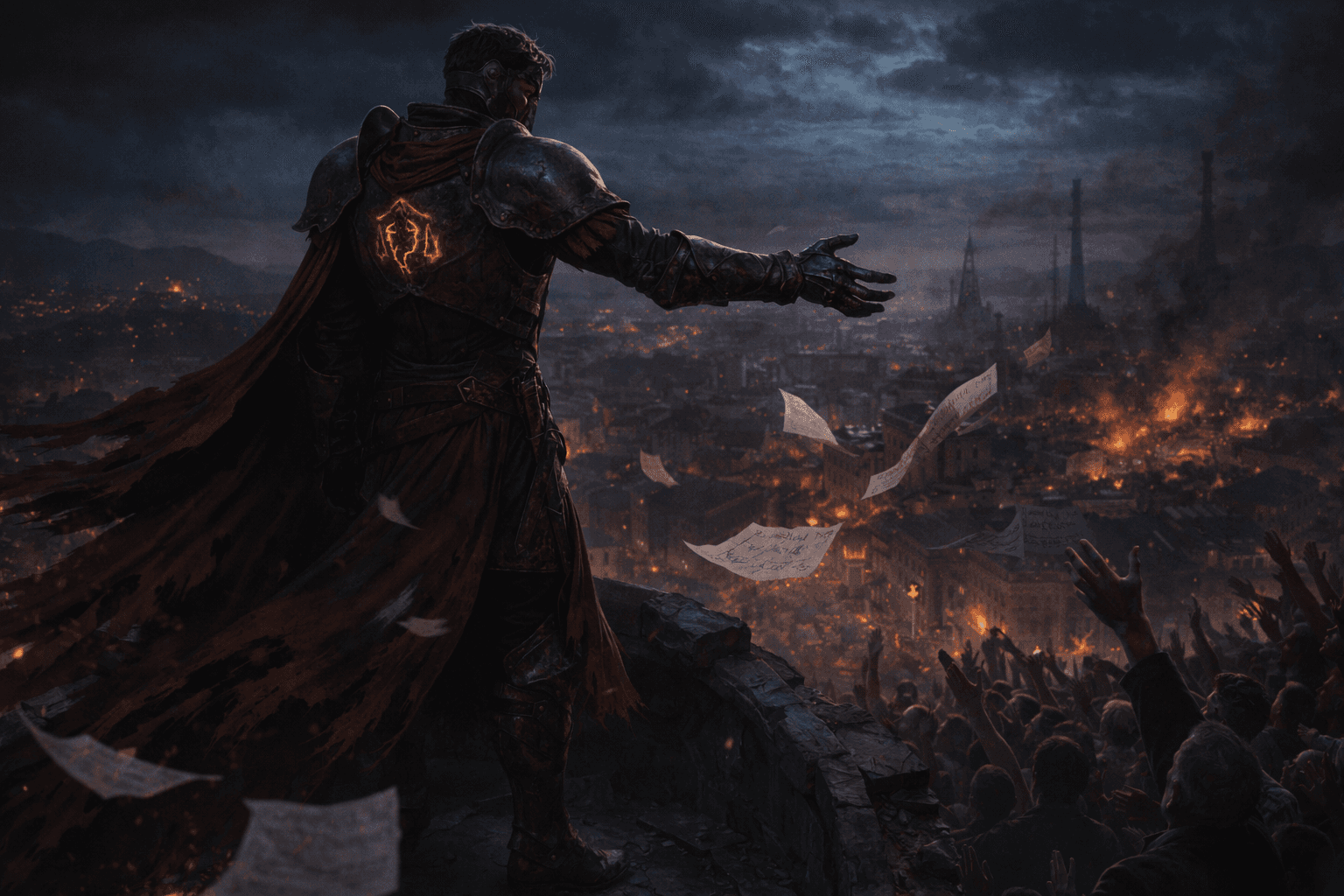
During a later national crisis, with cities locked down and control systems turning whole regions into silence, crowds and councils begged him to take authority. Instead, he climbed the shattered capitol gate, invoked Final Precedent, and erased illegitimate orders across the state, including the powers they would have placed in his hands. The cities held, the apparatus froze, and when the light faded he stood weaker and more certain that no victory was worth becoming a throne.
