
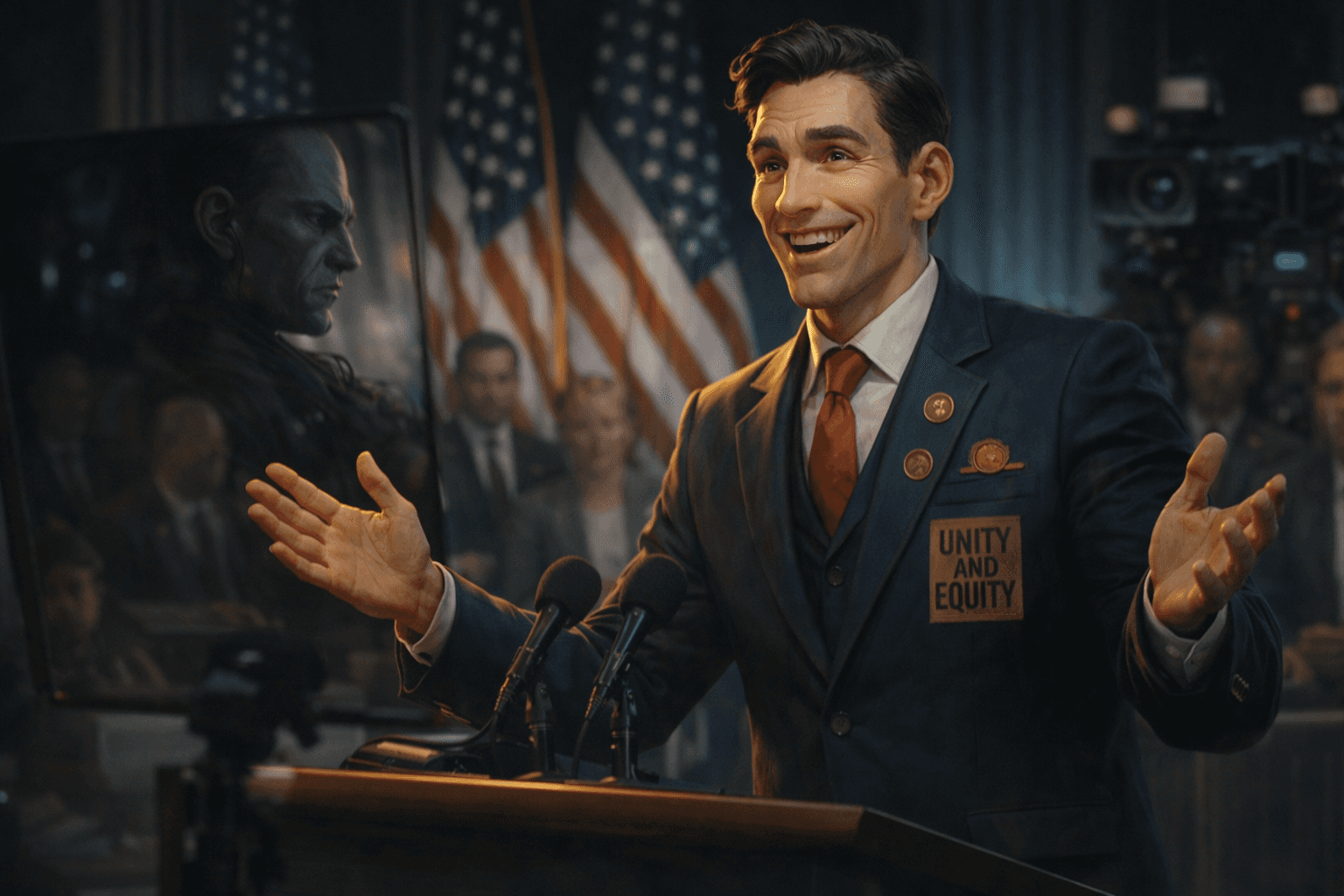
Janus was shaped inside civic institutions that reward visible conscience more than moral courage. In hearings, briefings, and strategy rooms, he learned that hypocrisy survives when it arrives wrapped in the language of care. He mastered the optics of equity, the performance of listening, and the habit of renaming retreat as responsibility. In time, that performance became a split. The face he offered the public grew so polished it began to separate from the colder mind he had kept buried inside himself.
The dark passenger only Janus can see is not an intruder or a guilty conscience. It is his clearest self. Janus, the smiling bureaucrat, is the acceptable shell, a body made for public consumption.
Rather than fight the split, he turned it into a method for survival. He wears the right party label because culture and voters make it the cleanest route up, but his deeper loyalty is to power, continuity, and the systems he can guide from within. He helps the doctor when closeness helps his rise, then slows real change with red tape, budget trims, staged concern, and hollow gestures. Each contained betrayal sharpens his timing, his optics, and his deniability.
He is still early in the climb, yet his ambition is already clear: larger office, national reach, then the highest seat.
Abilities
Primary
Public Mask
Janus presents a public self so polished that scrutiny slips past it. He uses the mask to earn trust, redirect blame, and hide intent in speeches, negotiations, and crises. It weakens when faced with hard evidence, repeated testimony, or failures too visible to spin away.

Secondary
Red Tape
Janus turns process into a weapon, burying action under reviews, funding rules, and jurisdictional fights. He uses it to wear opponents down while seeming measured. It works best inside institutions and weakens when decisions are dragged into open view and bound by time.

Ultimate
Stasis
At full focus, Janus can lock an institution into self-protective paralysis, forcing every actor to choose optics and safety over real change. He saves it for pivotal moments because it requires full narrative control and leaves a pattern clear enough for enemies to trace.

At a packed equity hearing, Janus praises the doctor’s reform plan as exactly the kind of brave partnership the city badly needs. Cameras catch the smile, the applause, the open hands. By nightfall, he has quietly moved the proposal into a new oversight channel, added a budget compliance review, and split the funding across two later quarters. The room remembers a champion. The records show delay. The program starts dying with his signature nowhere near the wound.
As unrest spreads and the doctor begs for the immediate release of emergency resources, Janus faces a rare test where delay will be measured in blood, not paperwork. He calls a press conference, promises calm, and announces a temporary review to ensure equitable implementation. The review swallows the response window. Neighborhoods take the damage. He keeps the image of a steward, proving that under pressure he will sacrifice people before he risks a precedent he cannot control.


In the decisive break, Janus uses the doctor’s trust to gain access, intelligence, and legitimacy for a final takeover. When the moment comes, he does more than abandon the alliance. He redirects funding, isolates the doctor, and steps into office through chaos he helped build. In private, the dark passenger stands aligned with him, not as a companion but as the revealed operator. The betrayal costs Janus the illusion of a divided self, and that loss becomes the price of ascent.
