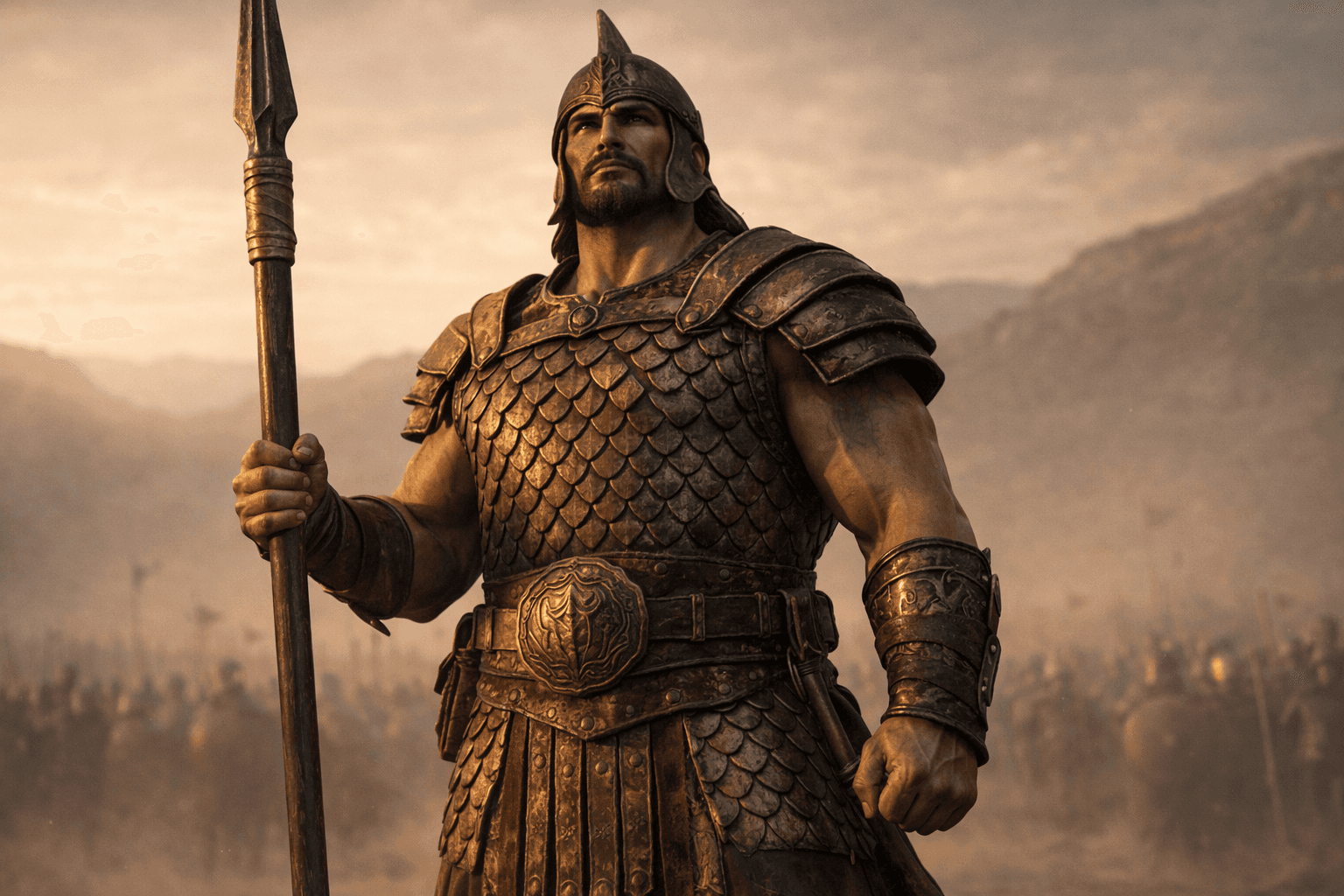
Scripture does not preserve Goliath’s childhood or private thoughts, so a faithful profile should not invent them. What it does give is his public world. He comes from Gath, a Philistine center, and enters the story in a border conflict where Philistine and Israelite forces face each other across the Valley of Elah. That setting matters. Goliath enters first as a visible threat.
He enters as a champion, a representative fighter whose size, armor, and speech are shaped to make one man stand for many and spread fear before battle begins. The pressure that formed him is military, cultural, and public. He belongs to a system that prizes visible strength, martial display, and national pride.
By the time the account opens, Goliath has taken that role so fully that he turns war into spectacle. He steps into the space between armies, sets the terms, and treats Israel’s silence as proof that strength decides truth. His pattern is challenge, taunt, shame, and a demand for surrender. Yet the same pattern that enlarges him also narrows him. Because he trusts armor, rank, and spectacle, he cannot imagine a smaller opponent refusing his terms in the name of the living God.
He falls because his vision of power left no space for divine reversal.
Abilities
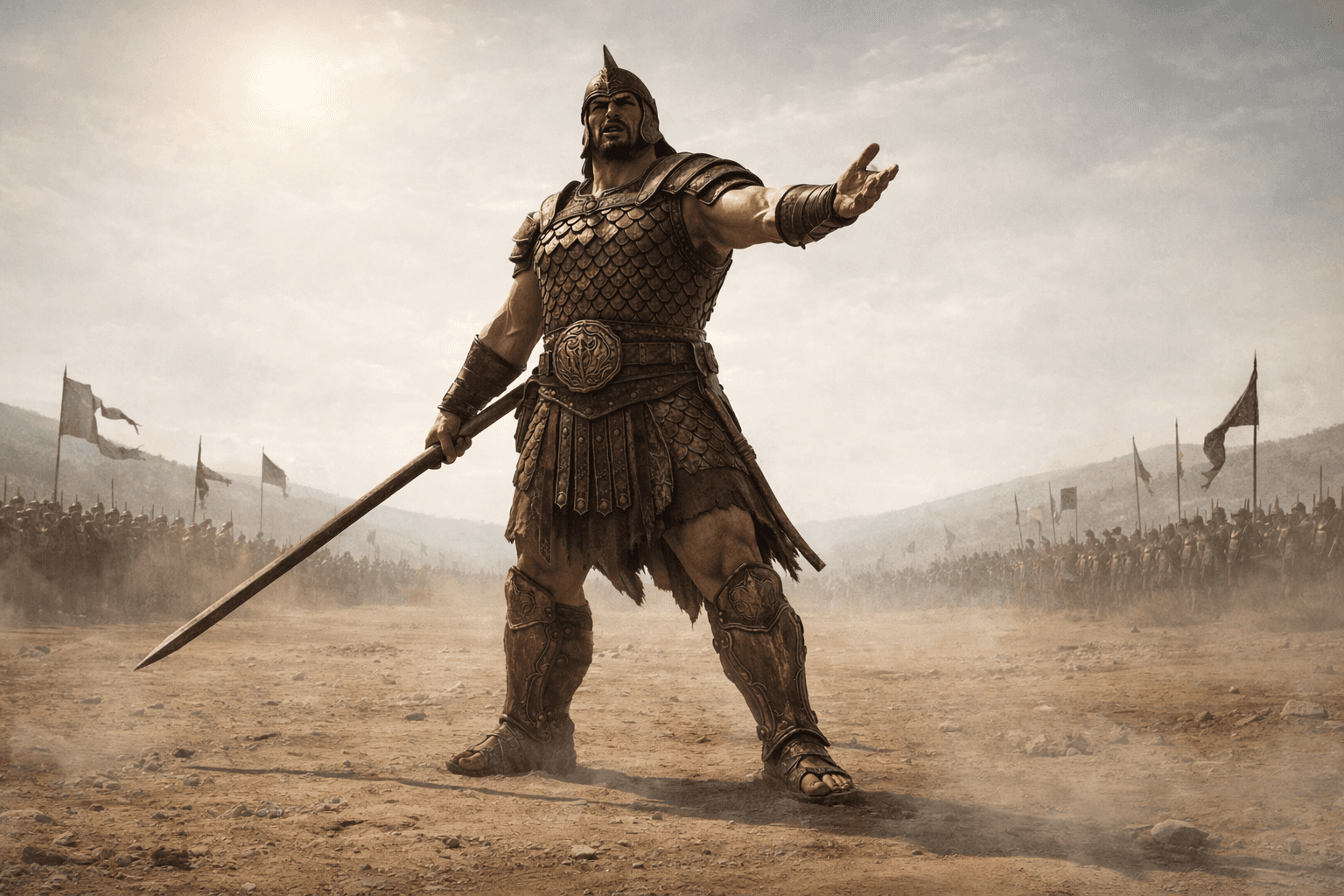
Primary
Champion’s Challenge
Goliath’s core strength is representative warfare. He steps into the open as the Philistine champion and turns battle into a test of courage, honor, and shame. It pressures armies before any swords meet. It works only while others accept his terms and stay ruled by fear.
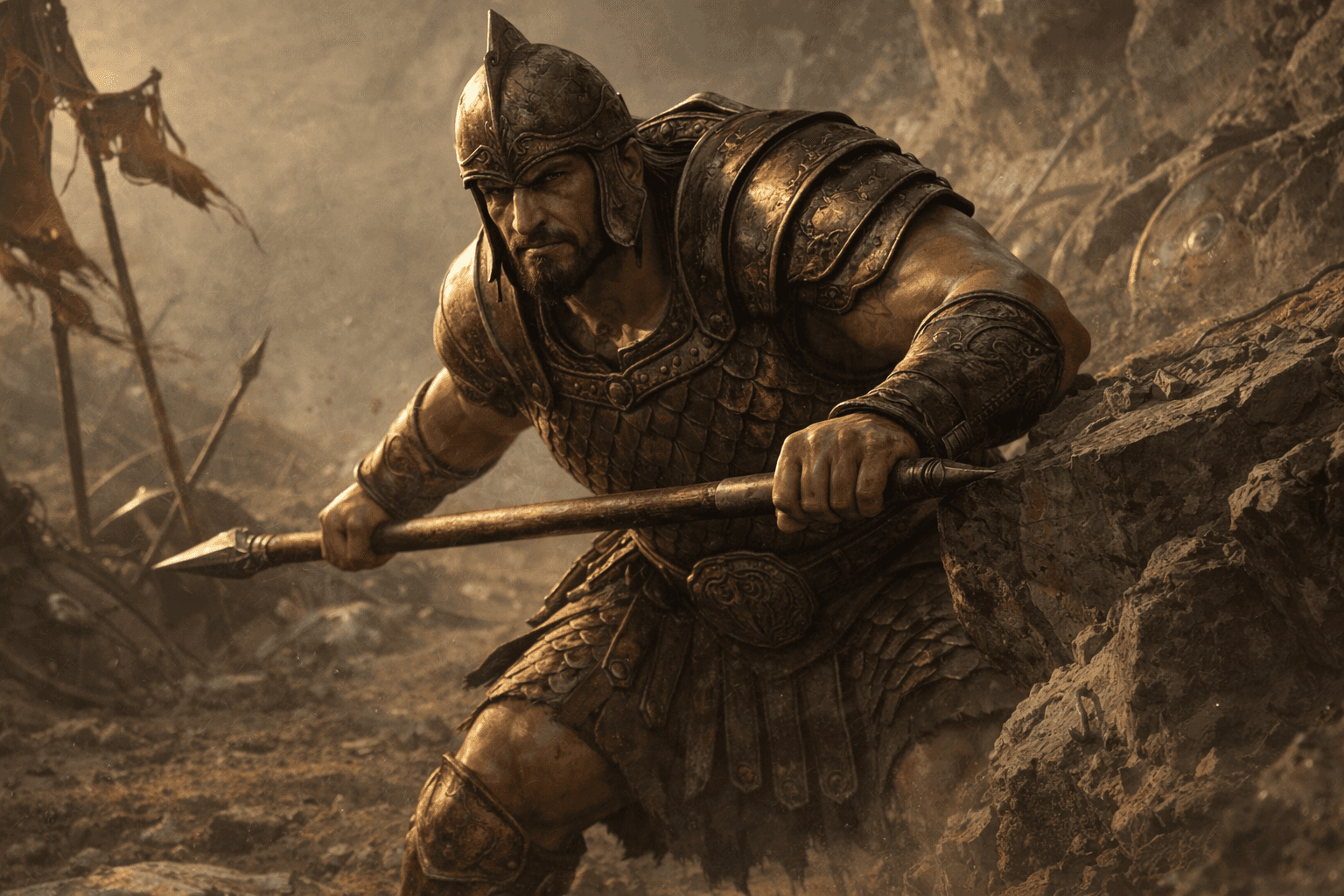
Secondary
Bronze Wall
His armor, weapons, and shield bearer make him feel like a barrier. In close combat, Goliath absorbs pressure and answers with force. That gives him protection and intimidation. The cost is agility: heavy gear favors direct fighting and slower response when range changes.
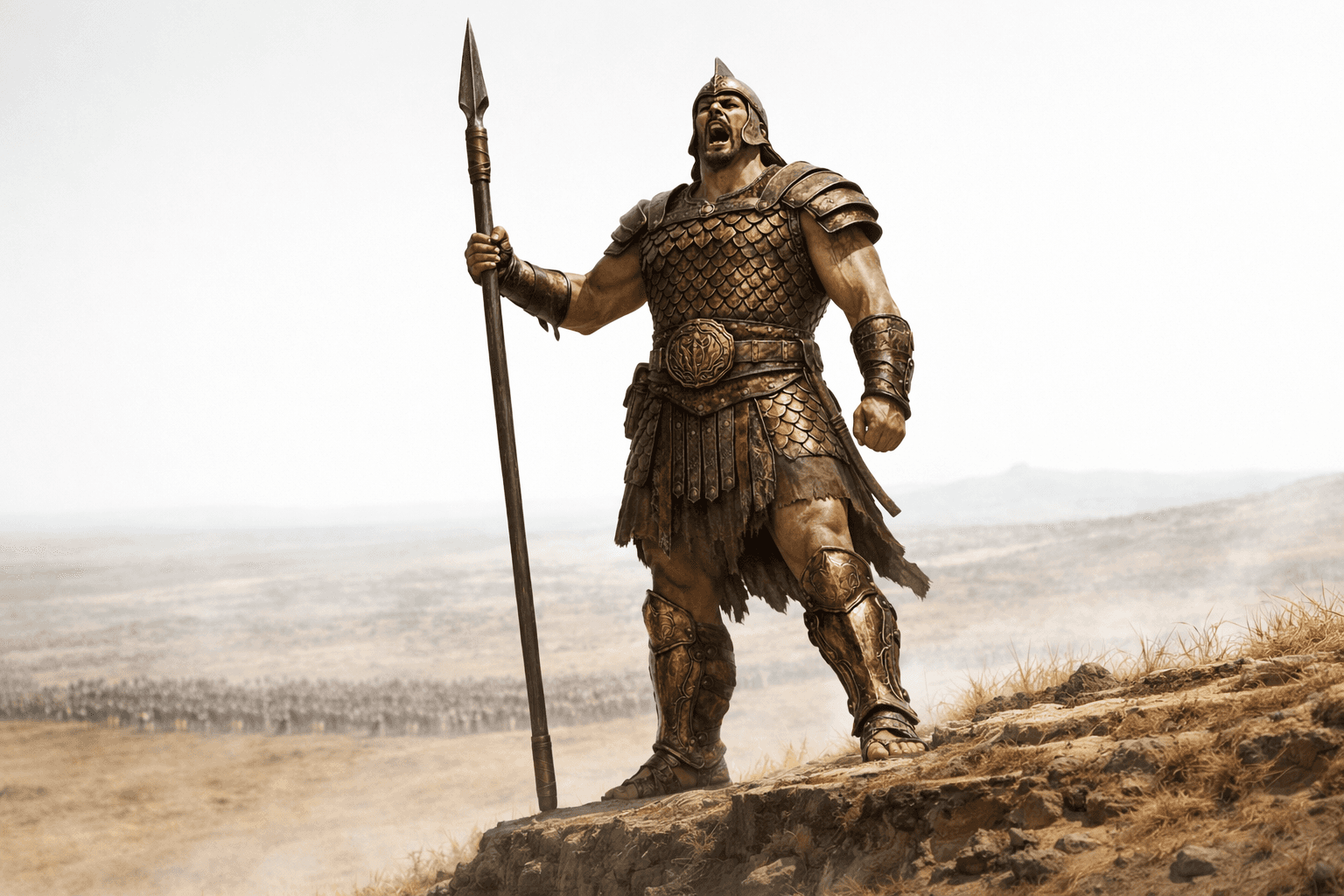
Ultimate
Forty-Day Defiance
Goliath’s apex move is prolonged public intimidation. By repeating his challenge, he wears down courage and normalizes fear. It targets the will of an army. This power depends on time, an audience, and control of the moment, and it fails when someone answers without fear.
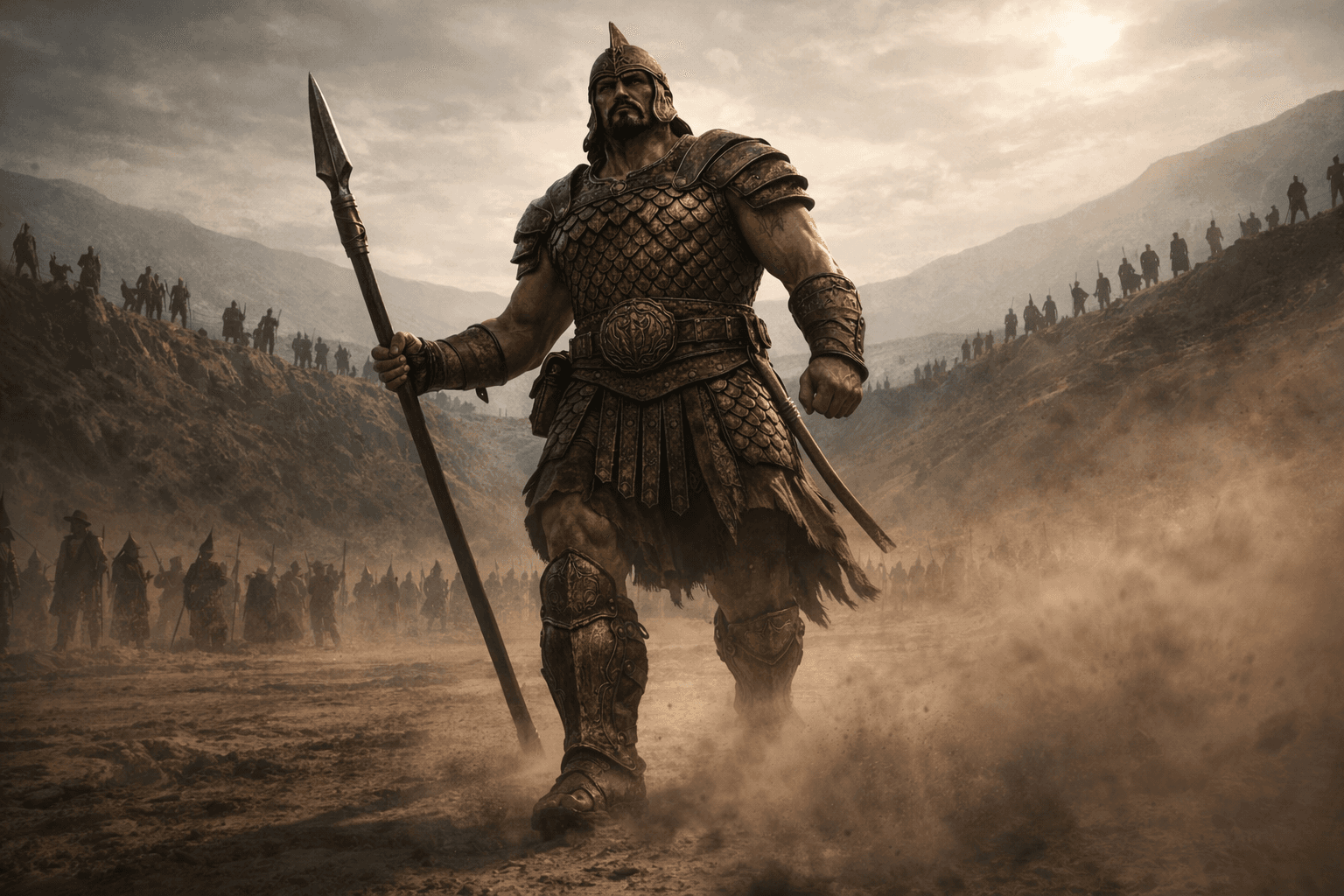
Goliath’s first defining moment is not the blow that ends his life but the walk into the space between armies. There he becomes exactly what the text means readers to see: the Philistine champion, armored and exposed, using public challenge as a weapon. He does more than call for a duel. He reframes the whole conflict around fear, honor, and surrender. In that moment, his identity is plain. He is the man who believes power should be visible, declared, and obeyed by everyone.
David arrives, and Goliath responds with contempt instead of caution. Faced with an opponent who does not fit warrior expectations, he doubles down on insult. He sees youth, smaller size, and unfamiliar weapons, then assumes the ending is obvious. Under pressure, he shows that pride has trained him to misread both the enemy before him and the God behind that enemy. The scene makes clear that his confidence is not wisdom.
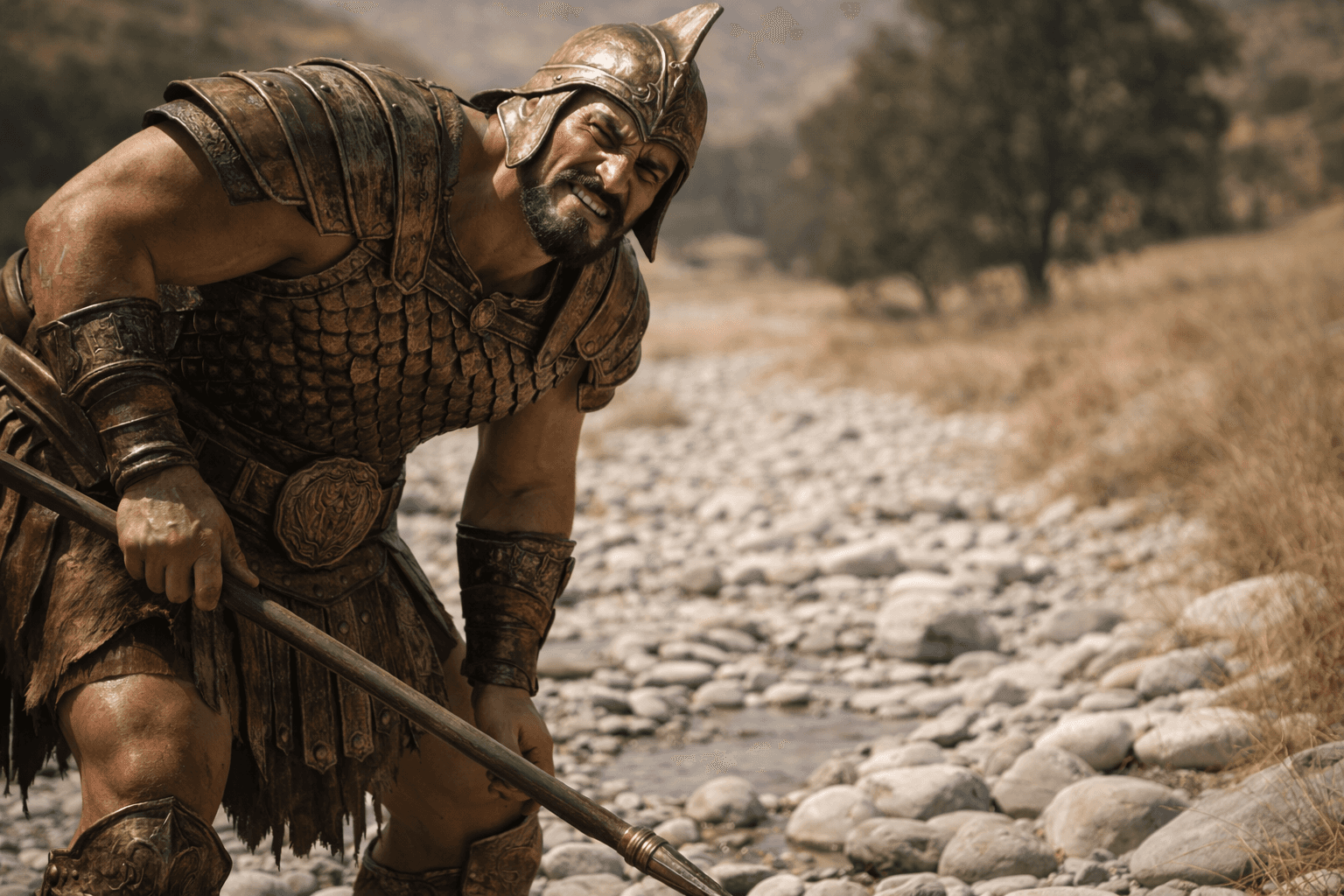
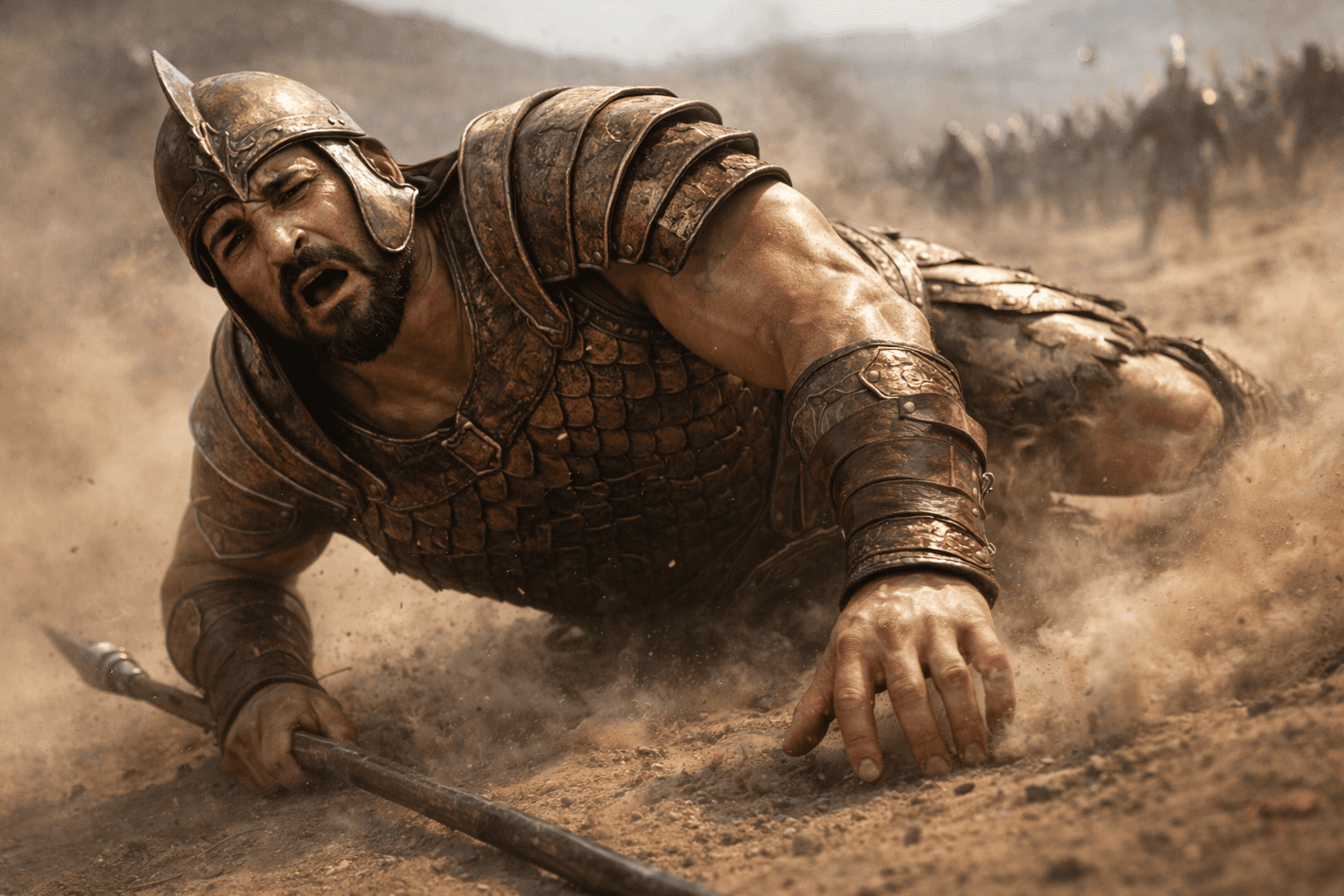
David does not win by becoming a smaller copy of Goliath. He refuses the champion’s chosen terms and meets him with faith, speed, and a different kind of confidence. Goliath’s fall reveals the cost of his conviction. He built everything on armor, spectacle, and the assumption that visible strength rules the field. Once that breaks, he has no deeper ground beneath him, and the warning remains.
