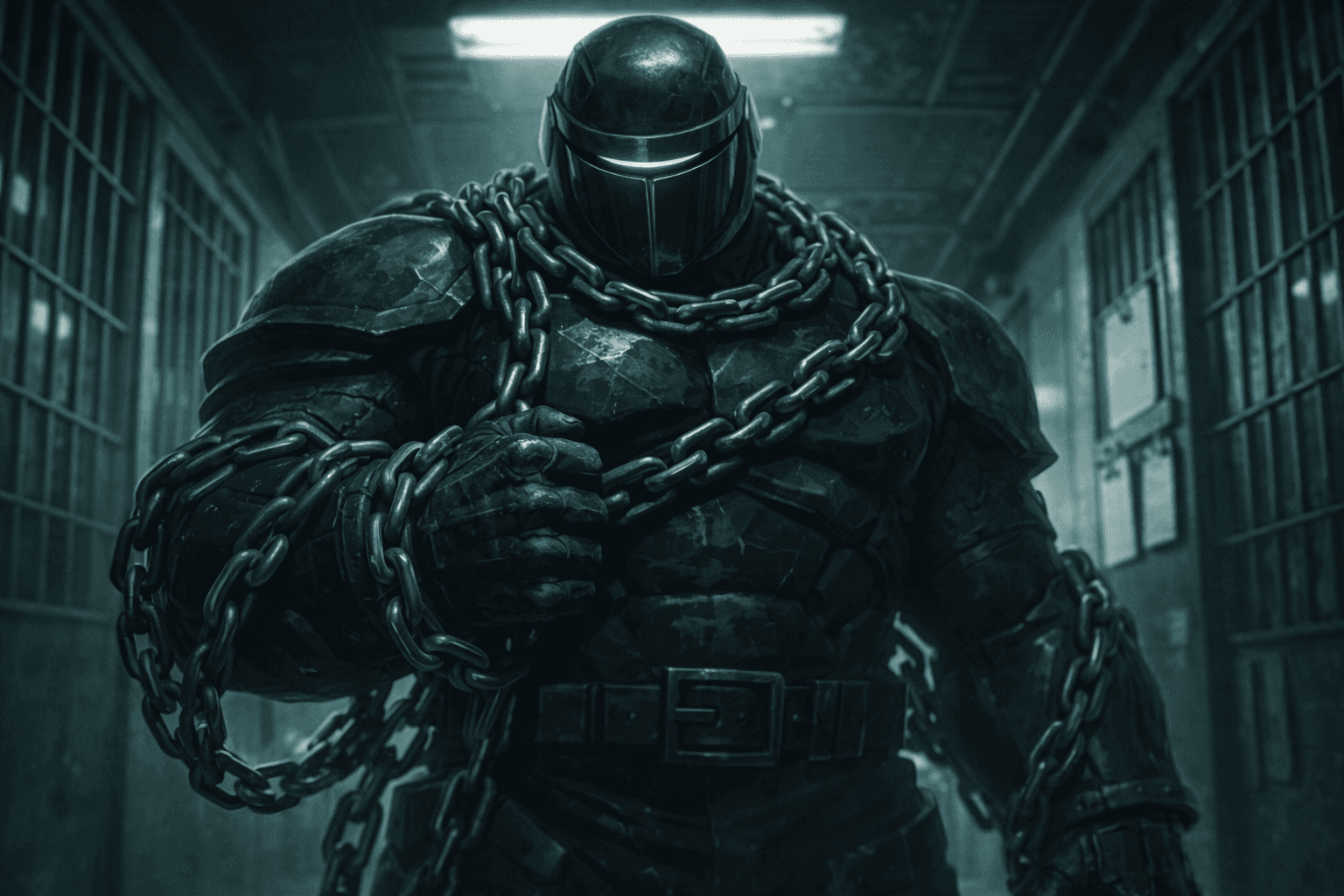
Raised in General Kurt’s shadow, Chain Maker learned that obedience could pass for love and cruelty for training. Kurt won praise for keeping others bound to tradition. The younger brother came to believe worth was earned by enforcing rules on people with less power. Eager to prove himself, he entered military service before building a self beyond discipline. War ended that dream. He came back scarred and rebuilt in metal, with armor and chain braces carrying what his body no longer could.
Officials praised what he could do, not what it cost him. Recovery was another drill. He learned broken people are tolerated only when they still obey.
He came home feeling unfinished and refusing pity. Instead of healing, he chose usefulness. Juvenile detention, school security, and preemptive discipline offered a doctrine that matched his wound: zero tolerance. In that world, mercy looked weak, context looked like excuse-making, and scared youth looked like future danger. He learned he could turn a single accusation or mistake into life-changing restraint. Each intervention told him he was saving the world early, before worse harm could spread.
Now Chain Maker serves as the iron fist of the school-to-prison pipeline, locking up young people before they get the chance to become anything else.
Abilities
Primary
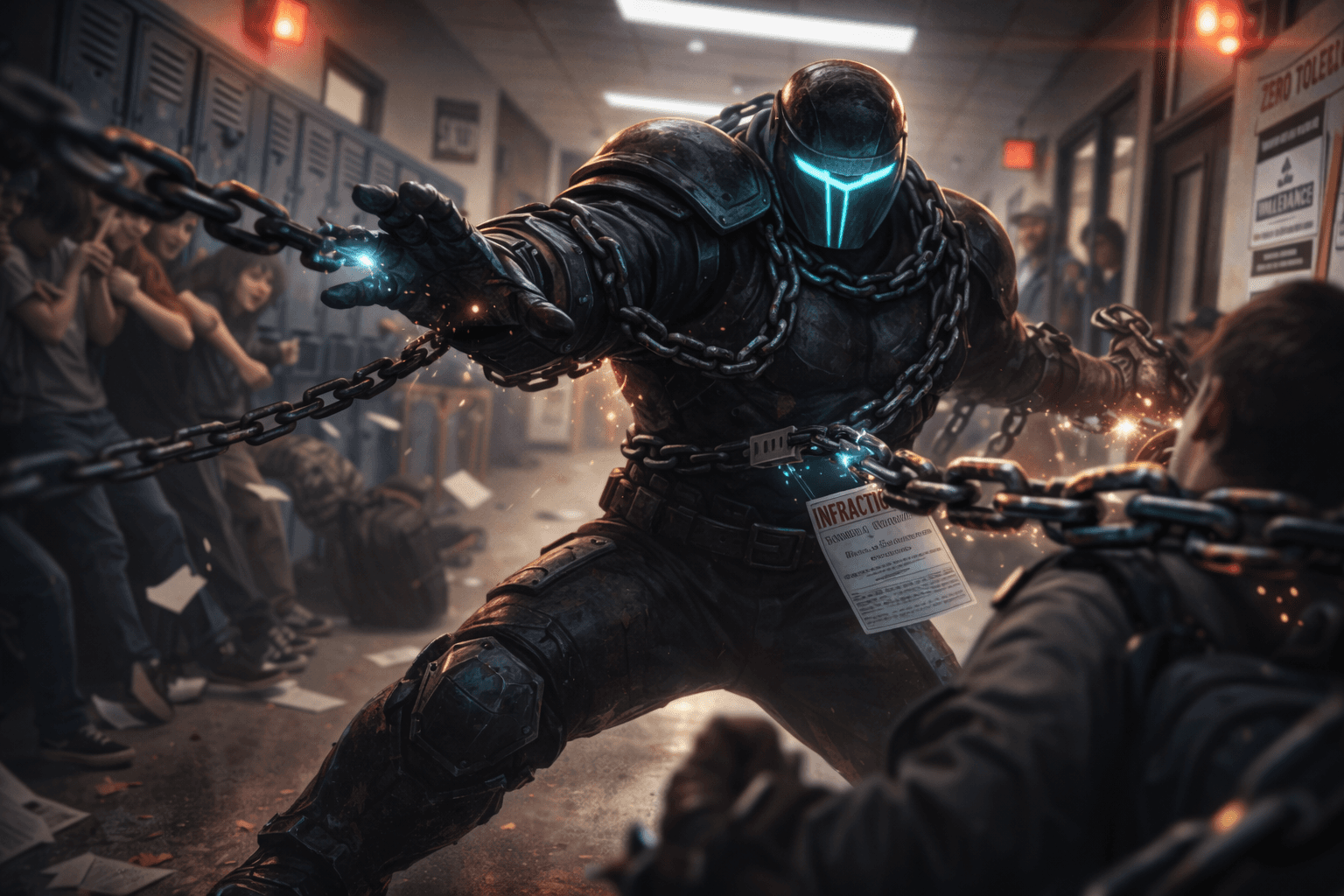
Infraction Chains
Chain Maker fastens living iron to a mistake, accusation, or formal violation. The chains turn one infraction into growing restraint, making movement or speech feel like further guilt. They weaken when no witness, record, or authority can support the charge.
Secondary
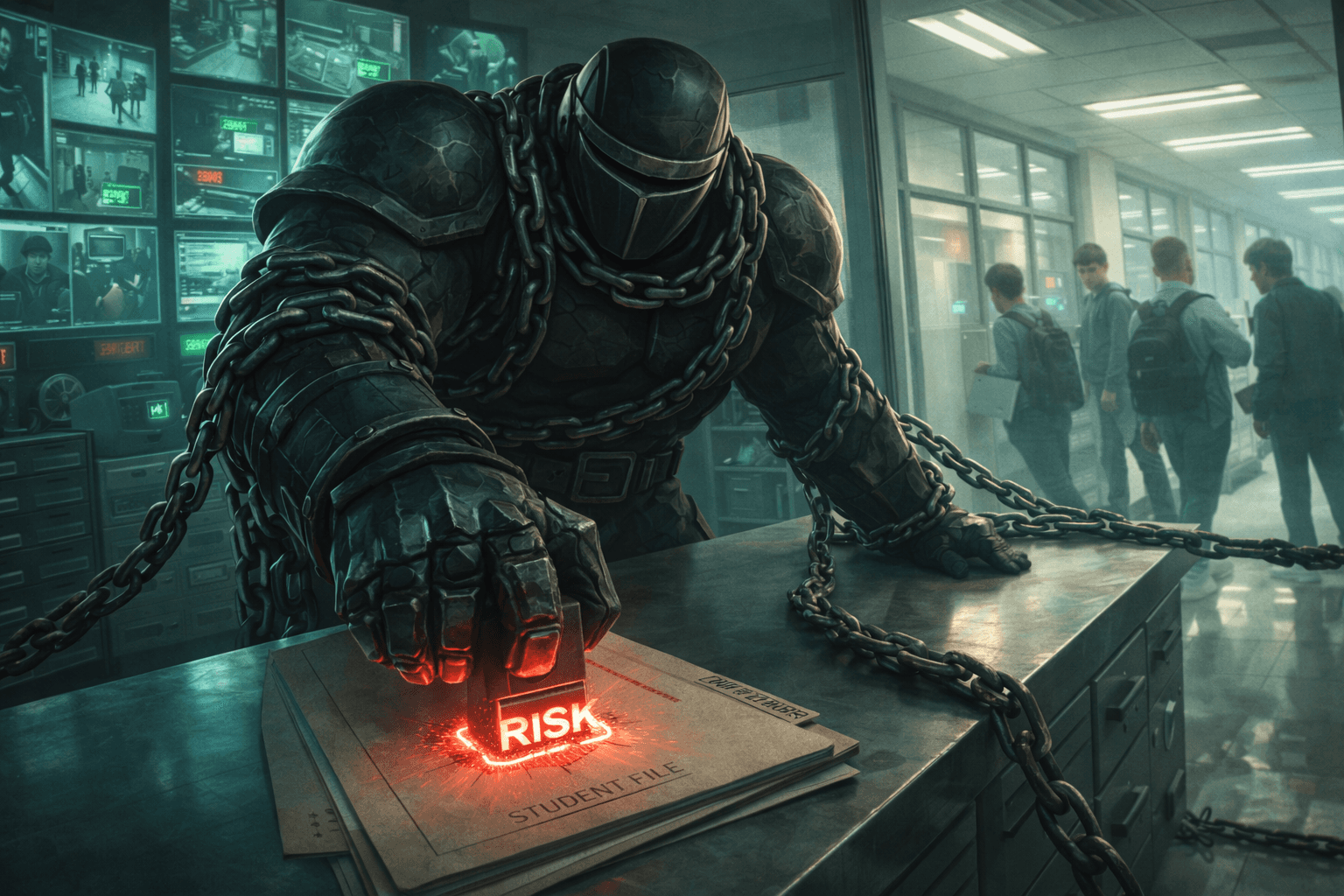
Risk Stamp
Chain Maker marks a person, hallway, or file with a threat brand that makes guards, cameras, and administrators read ordinary behavior as danger. Doors lock faster, punishments stack higher, and empathy drains from the room. The mark fades when others defend the target.
Ultimate
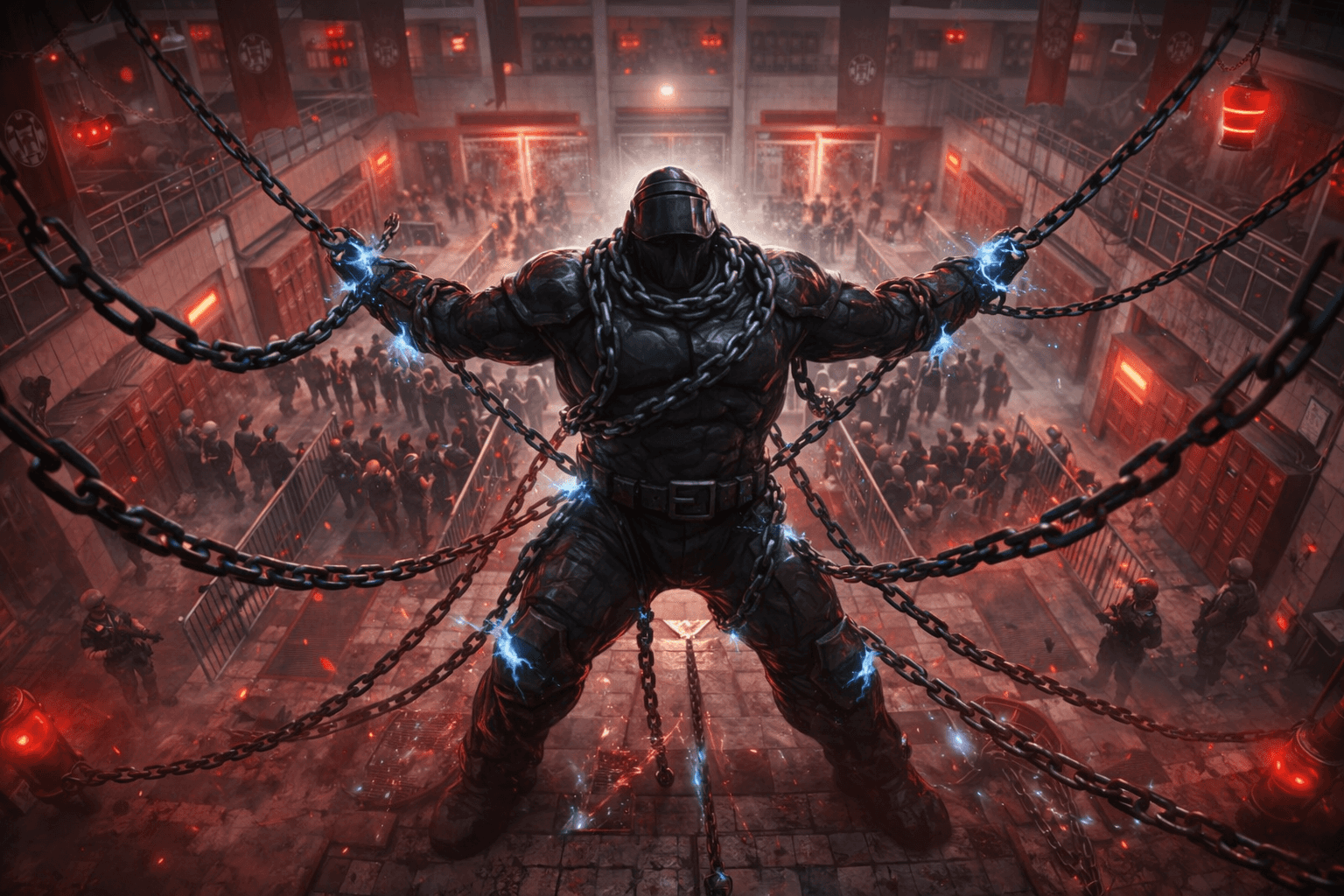
Lockdown
By driving chains into floors, lockers, and gates, Chain Maker welds school and detention into one regime. Bells become alarms, exits seal, and disruptions trigger restraint as students are sorted like suspects. The system drains his body and needs fear or approval to hold.
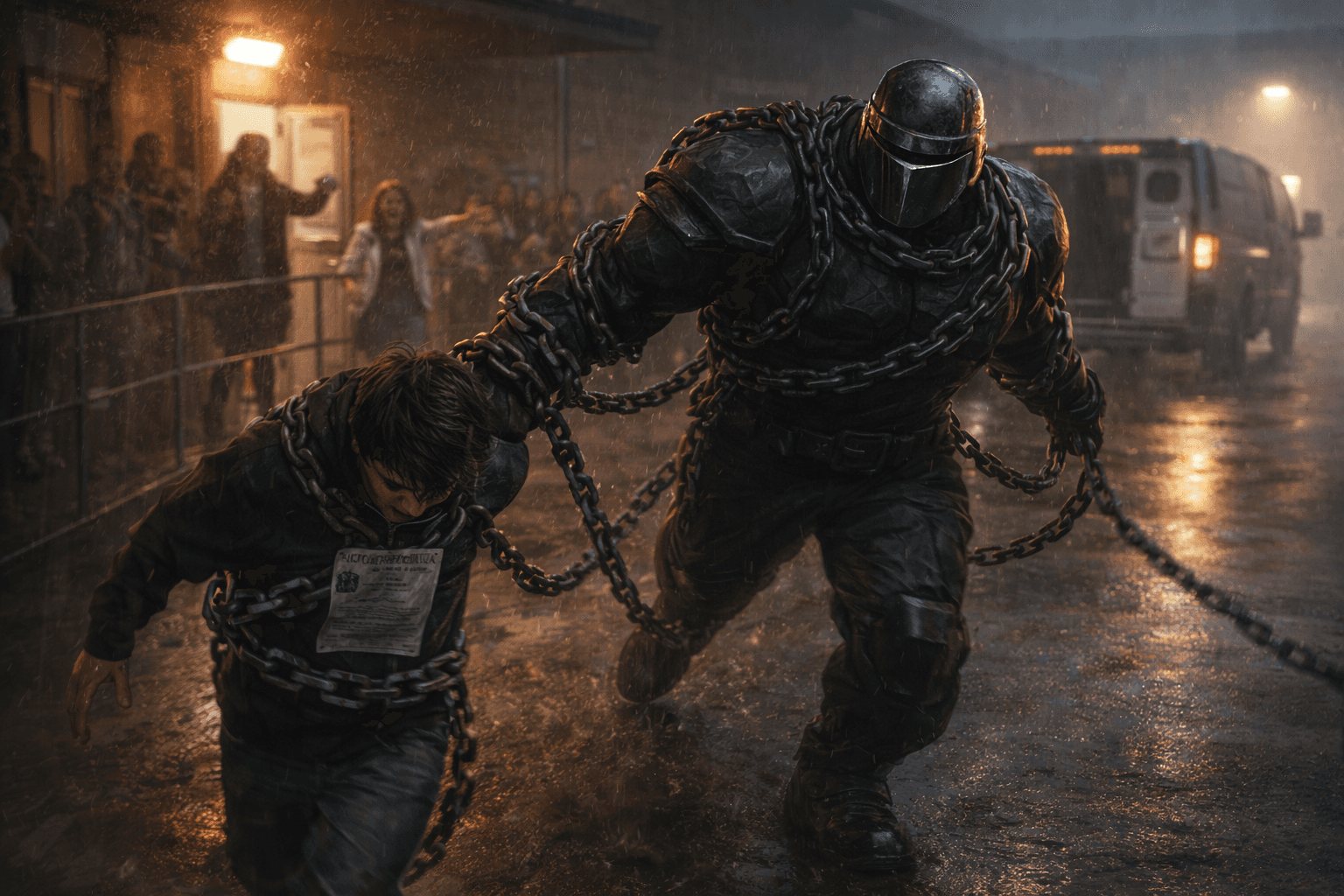
During a crowded school fight, most adults see panic and a chance to separate kids before things get worse. Chain Maker sees proof that punishment came too late. He wraps the student who threw one shove in iron, pins a citation to his chest, and drags him past the principal’s office to juvenile intake. When a counselor pleads for de-escalation, Chain Maker answers that mercy is how threats grow. Everyone watching learns his rule at once: one bad second can become a cage overnight.
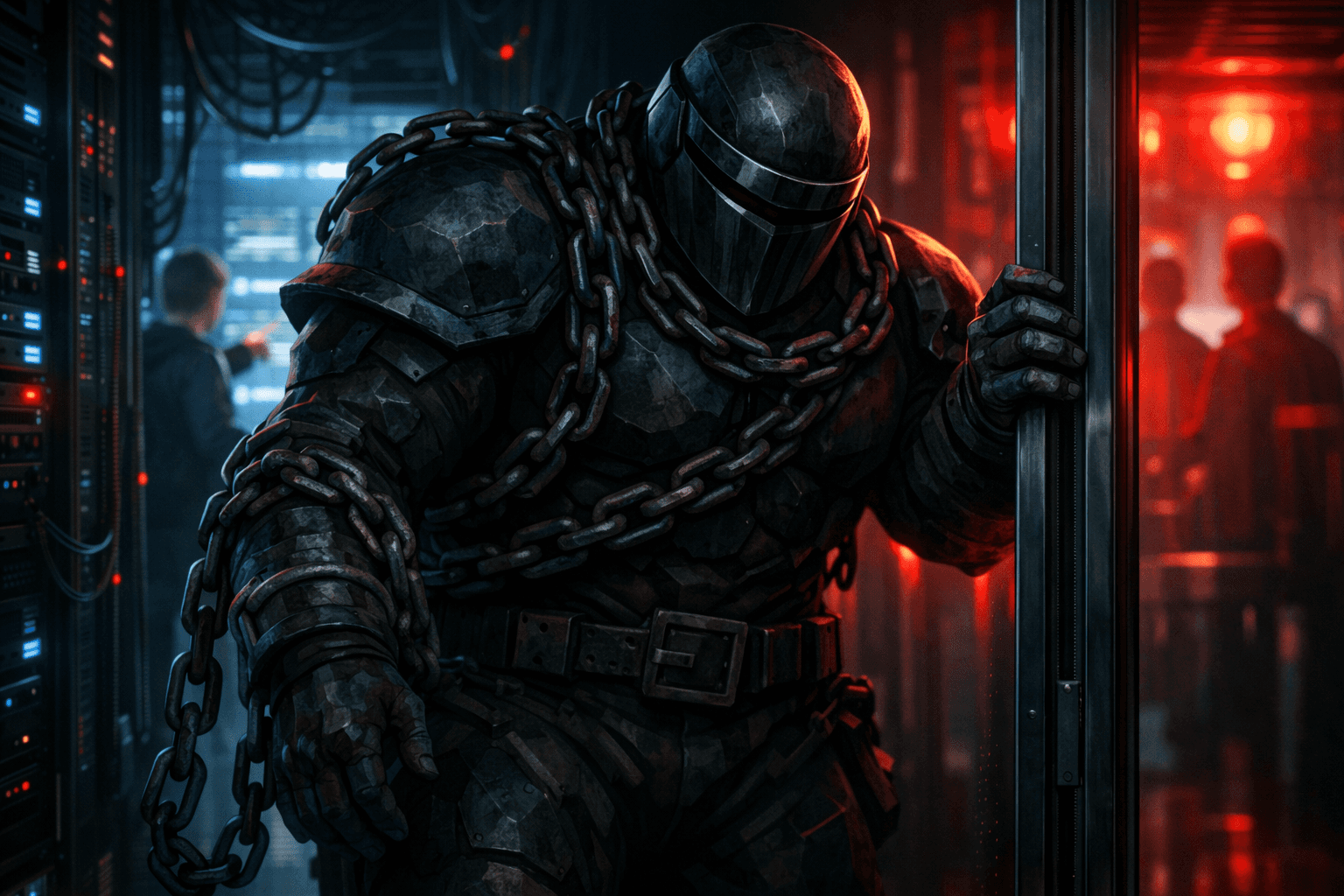
After a student hacks detention records to free classmates from false suspensions, Chain Maker corners her in the server room. She points to the braces under his armor and tells him systems like his never healed him, they only reused him. For one beat, the chains loosen. Then administrators demand a culprit and alarms surge. He seals the room and condemns her as an architect of chaos, choosing the institution that rewards his hardness over the truth that almost reached him.
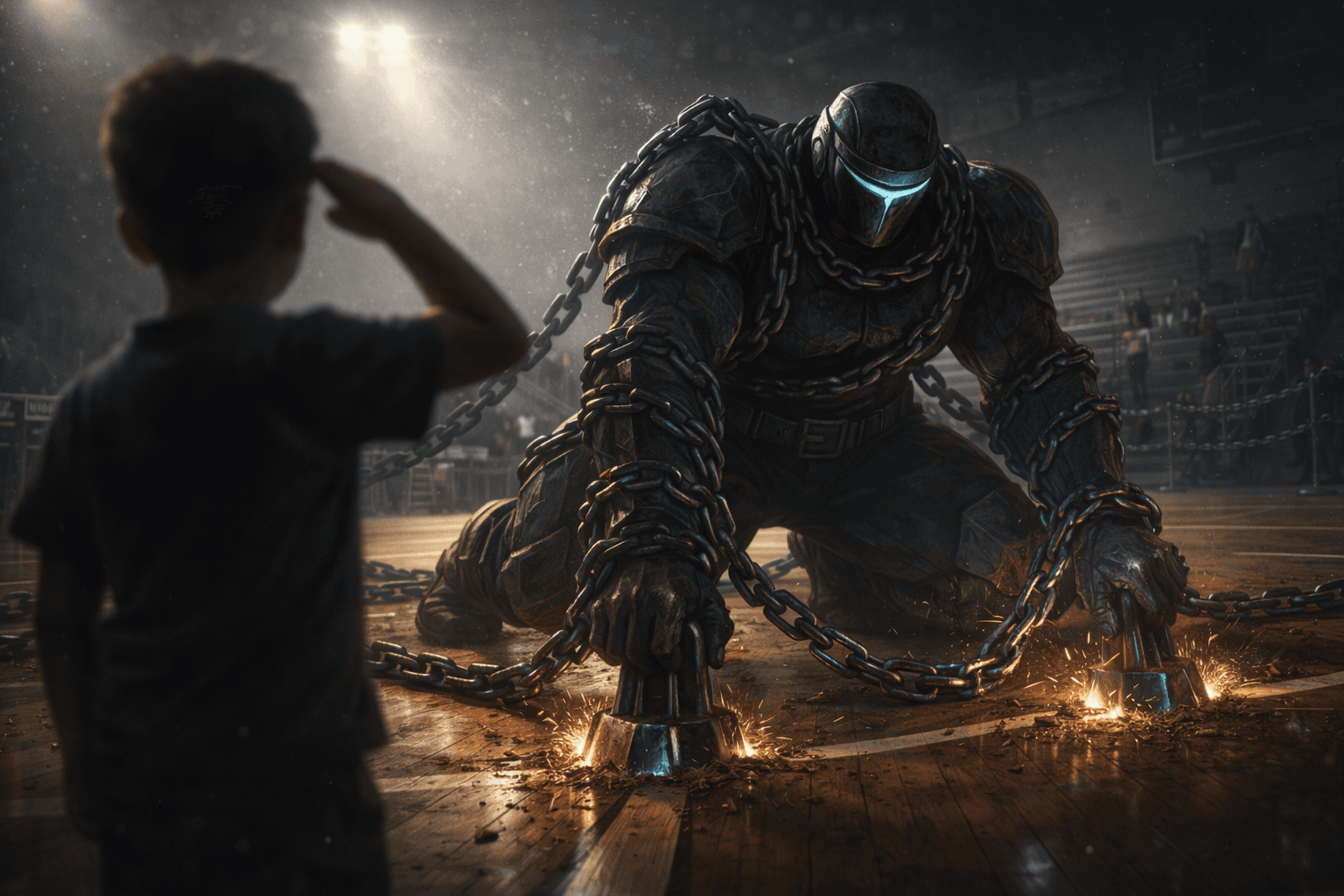
When city leaders demand a crackdown after public unrest, Chain Maker unleashes Pipeline Lockdown across a campus. Doors become cell bars, hallways sort students by risk, and staff surrender authority to him. A child salutes him the way recruits salute General Kurt, showing him what he is creating. Instead of stopping, he drives his chains into the floor and commits his body to the regime, choosing permanent service over doubt and losing the last unarmored part of himself.
