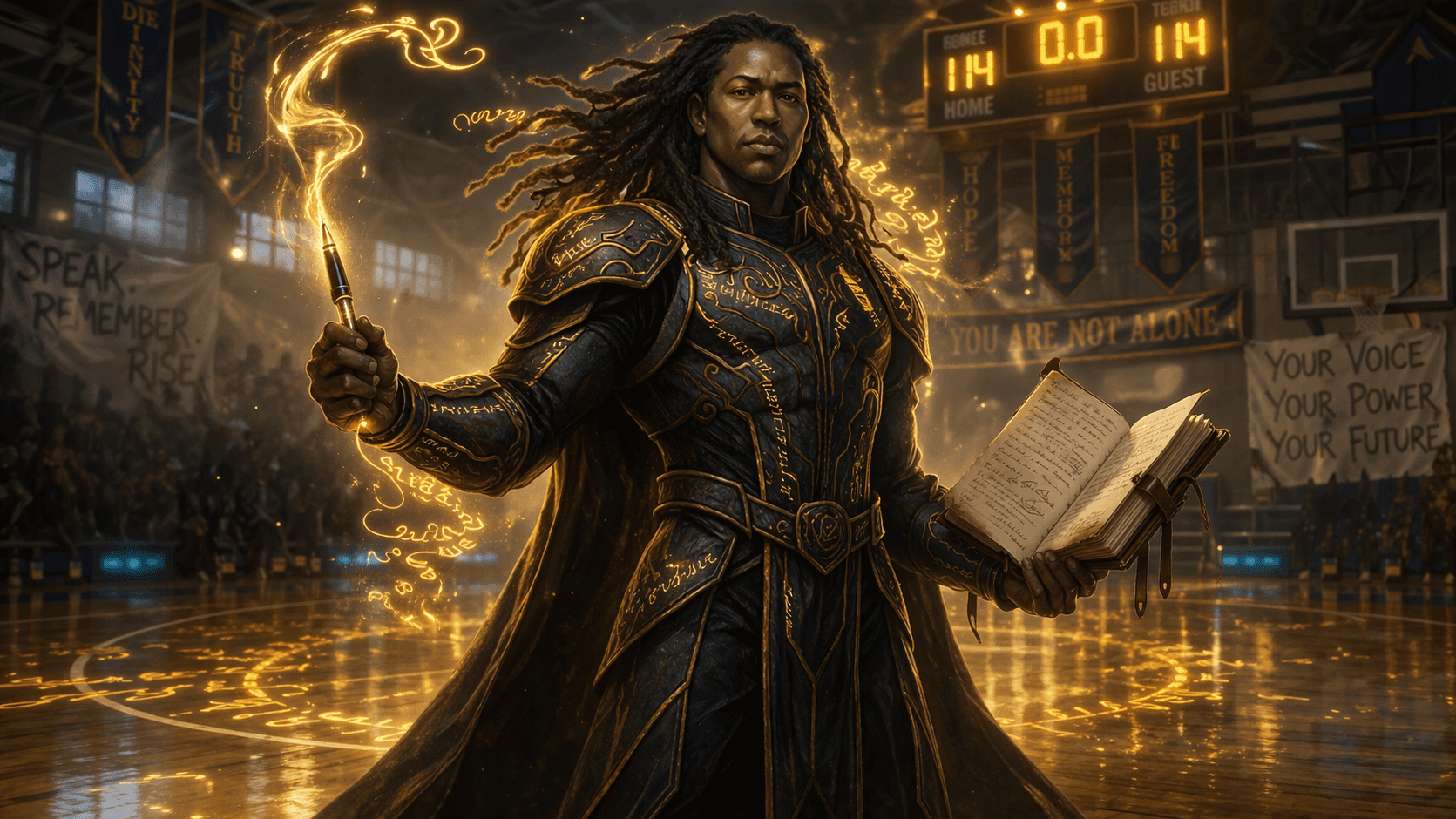
Before he became Amplifier, he was a Tacoma kid sorted by other people’s forecasts. Adults said at-risk like it carried diagnosis, destiny, and excuse in one phrase. After a school incident left him boxed in before an auditorium, he reached for his worn pen and blank page. The poem that came next named the machinery of labeling so plainly that the room shifted with him. Students sat up. Teachers fell quiet. A story used against him for years looked thin and false.
He learned that language could scar a life, but it could also carve a way out of the wound.
He did not mistake that moment for magic. He trained. He filled notebooks, listened to elders, and watched how rosters, files, and policies slipped old shame into daily life. Craft became power. Strokes let him break shame-worn loops and rebuild courage in the mind. Trees let poems move through systems, turning deficit language into dignity. Lyrical Rain could drag buried harm into public view, but each gift had a cost: push too far and his pathways burn, words fracture, and silence claims him.
So community is not background to his myth but the force inside it. The reclaimed gym steadies him, the crowd restores him, and his mission remains: free people from the stories built to confine them, then help them write what comes next.
Abilities
Primary
Strokes
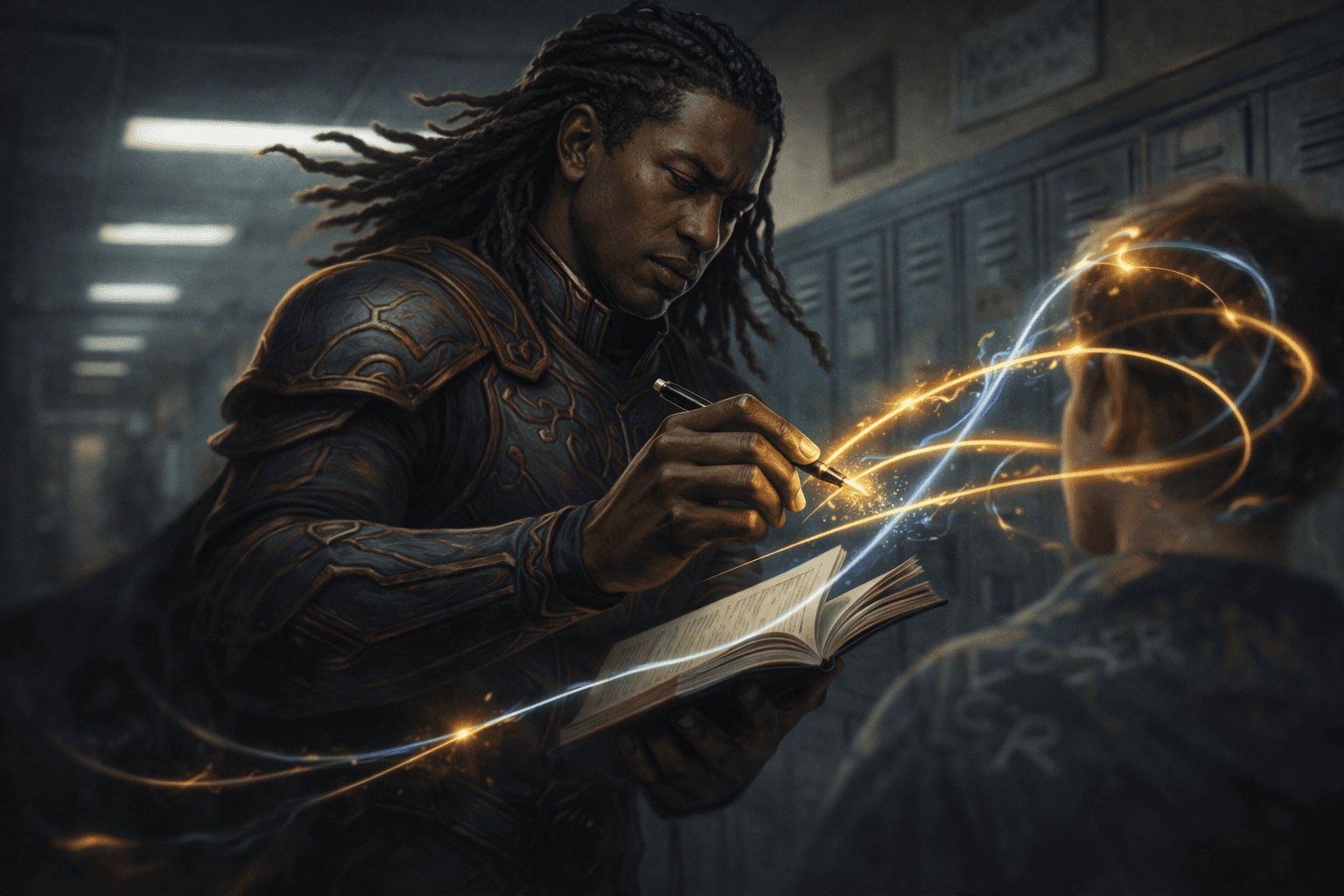
With each deliberate pen stroke, Amplifier sends meaning through the mind, cutting shame-worn loops and opening new paths. He uses Strokes to clear confusion, renew courage, and help people shed labels, but overuse scorches his own pathways and throws his voice off balance.
Secondary
Trees
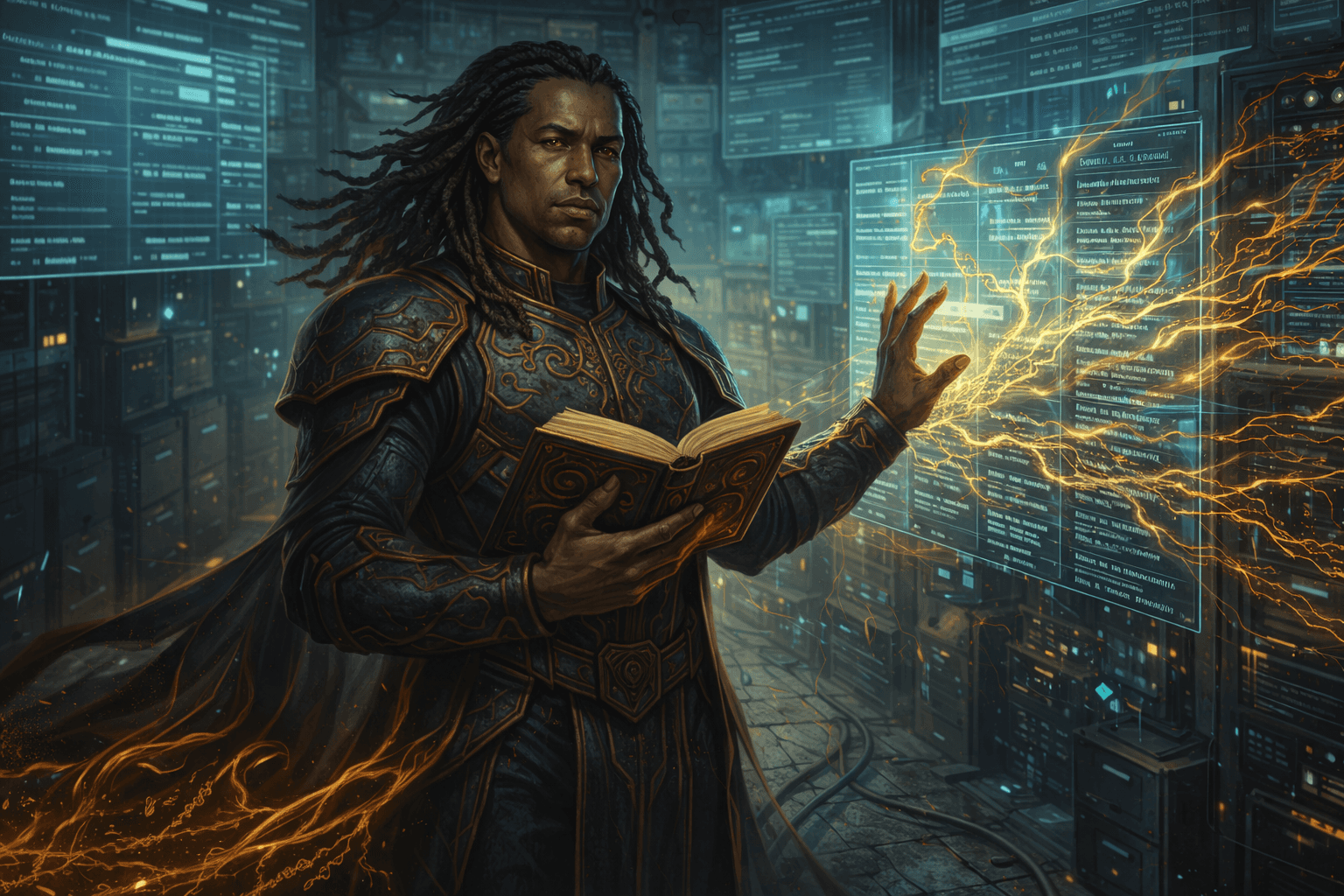
When Amplifier calls Trees, his poem becomes code that moves through rosters, portals, and records, replacing deficit language with dignity. Roots spread beneath systems, loosening harmful rules, but the rewrite only lasts when it grows from lived stories instead of slogans.
Ultimate
Lyrical Rain
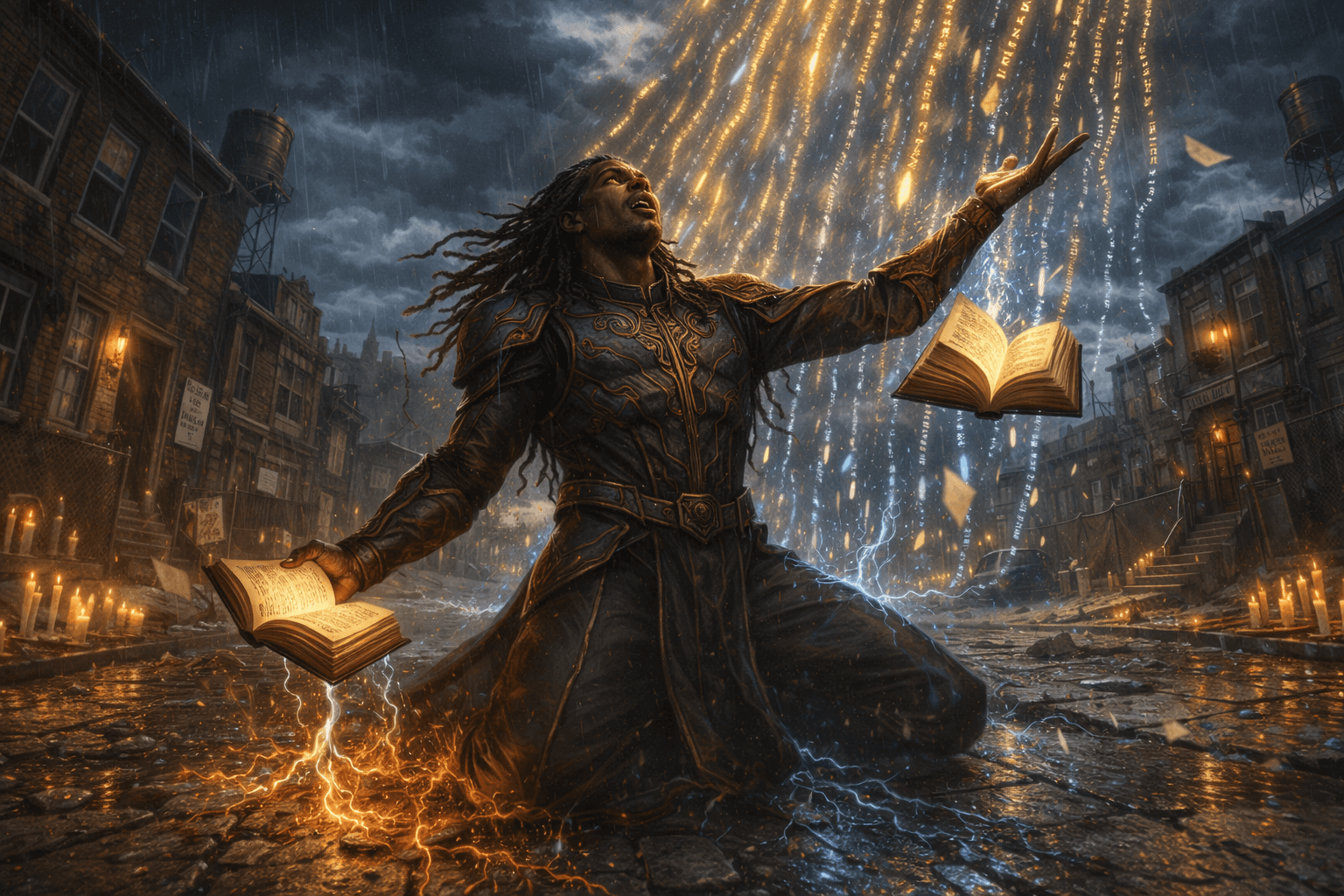
Amplifier opens his notebook, releasing verses that split asphalt and drive roots through buried harm until communities breathe easier. Lyrical Rain is reserved for crisis because it drains him of language, leaving him voiceless until the crowd gives charge back.

After the school incident, the room expected apology, compliance, or collapse. Instead, he asked for paper. His hand shook as he wrote, but once a line landed, the rest came like broken water. The poem named the machinery of labeling so clearly that the auditorium changed temperature. Students who knew the feeling sat tall. Adults who had hidden behind policy went quiet. He did not win because he was the loudest; he won because truth suddenly had shape, rhythm, and witnesses.
When a district portal began flagging students with predictive risk tags, staff defended it as efficient triage. Amplifier entered through Trees, following the poem into rosters, comments, and coded assumptions. He could have erased all of it in anger. Instead, under pressure, he rewrote only what dehumanized, replacing deficit phrasing with language that preserved context and possibility. The system’s authority cracked, and people saw who had been speaking through it.
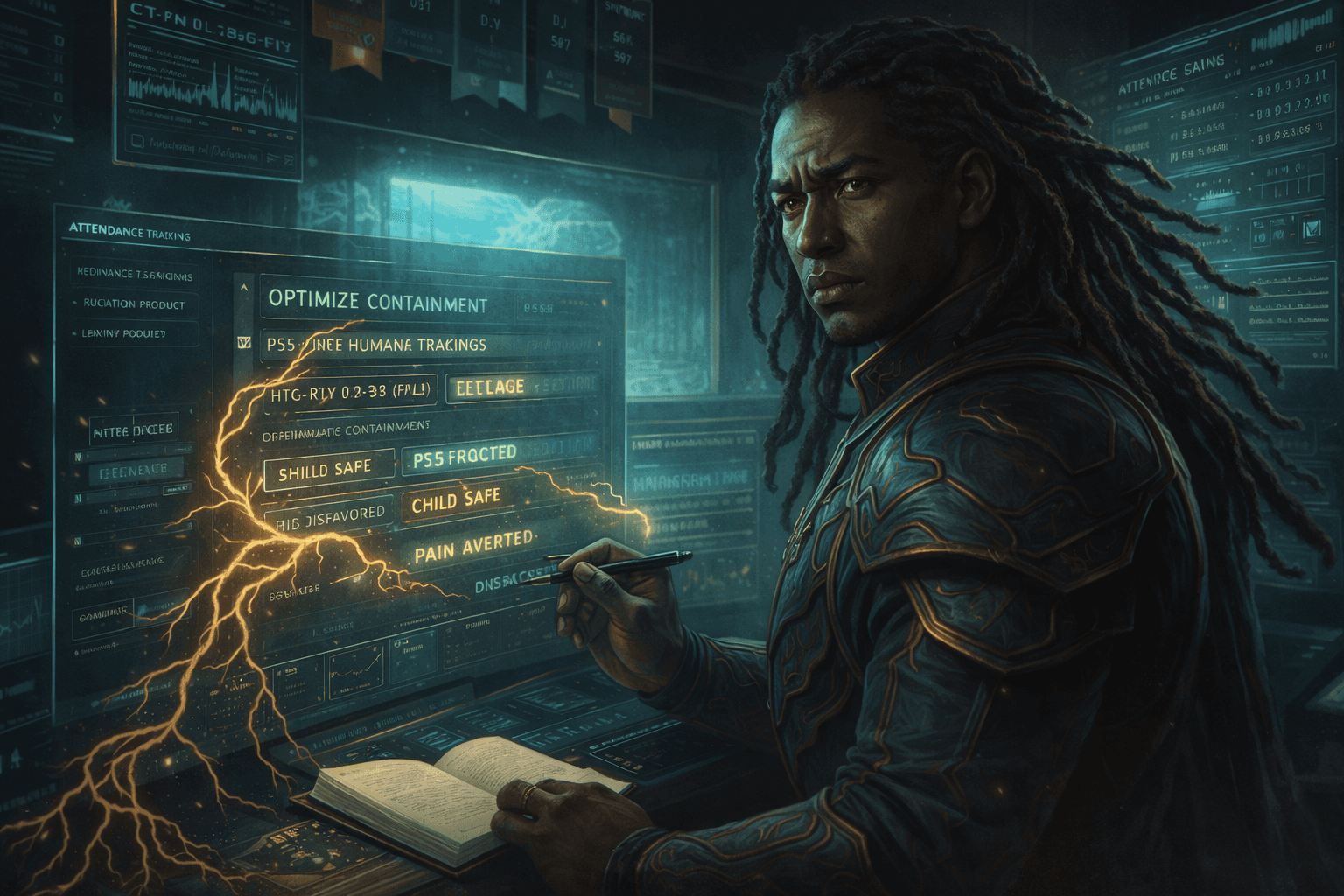

When violence, eviction pressure, and grief converged around the neighborhood, Amplifier knew words would not be enough. He opened his notebook and called Lyrical Rain over the block. Verse struck rooftops like fire, asphalt split, roots surged, and old damage surfaced in public. When the storm passed, he could not speak. The people he fought for answered with chants, stories, and names, sending language back until his silence became shared breath instead of disappearance.
