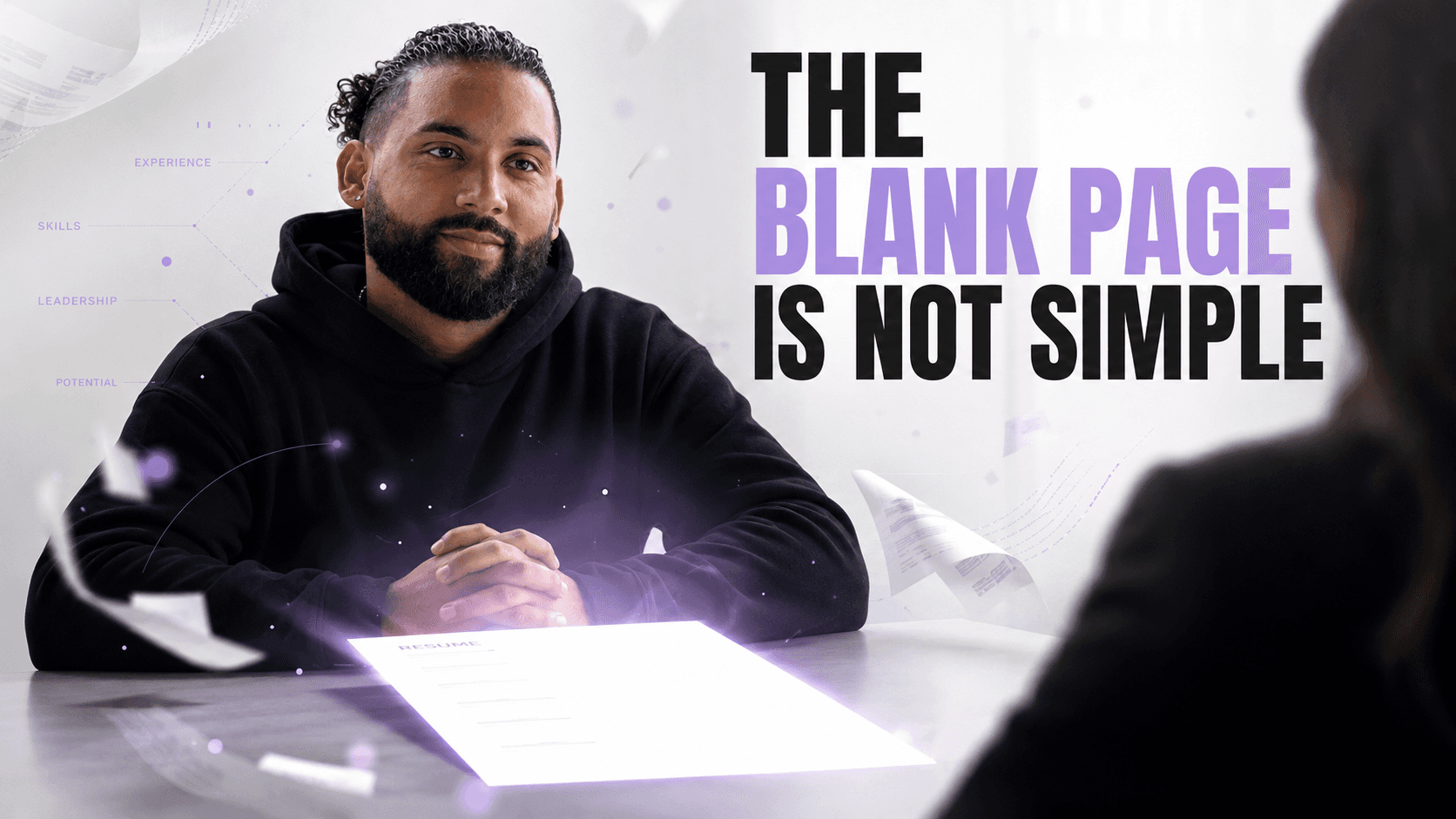
I have sat across from people who had twenty years of experience and still could not get it onto one page.
Not because they were lazy. Not because they were unqualified. Not because they did not have a story worth telling. They just did not know how to turn the work they had done every day into the kind of language an employer would recognize in a few seconds.
That is one of the first things I learned in workforce development. A resume may look simple to the person who knows how to write one. But for a lot of job seekers, that blank document is not simple at all. It is pressure. It is confusion. It is shame. It is the feeling of knowing you have done the work, but not knowing how to prove it on paper.
And that small piece of paper can decide a lot. It can decide whether someone gets called back. It can decide whether they get to explain themselves in an interview. It can decide whether they move closer to putting food on the table or stay stuck trying to figure out why nobody is responding.
That is why I do not look at AI resume support as some cheap shortcut. I look at it as a bridge. For the right person, using the right process, AI can help translate real experience into clear words. It can help a job seeker take what they know, what they have done, what they have carried, and shape it into something an employer can understand.
And let’s be honest. Employers are not sitting with every resume for ten minutes, slowly studying the person behind the page. The Ladders’ eye-tracking research found that recruiters spend about 7.4 seconds on an initial resume review. That is the reality people are walking into. You may have decades of experience, but if the right words are not showing up quickly, you may never get the chance to say the rest.
That is where AI can be powerful, especially for people who are changing careers, coming back into the workforce, or struggling with digital literacy. Some people have the skills but not the language. They have trained coworkers but never called it onboarding. They have handled angry customers but never called it conflict resolution. They have managed schedules, solved problems, led shifts, supported teams, and adapted under pressure, but they do not always know how to name those skills in a way that fits the job they want next.
AI can help with that.
It can take a rough thought and help shape it. It can take a job posting and help a person see what skills they already have that connect to that role. It can help clean up the structure, remove the noise, and make the resume easier to read. That does not mean the tool is doing the work for them. It means the tool is helping them communicate the work they have already done.
I know some people do not like that. They hear “AI resume” and immediately think fake, generic, or dishonest. And yes, that can happen. A person can use AI poorly. They can copy and paste something that sounds nothing like them. They can add skills they do not have. They can walk into an interview with a polished resume and not be able to speak to one thing on the page.
But that is not an AI issue. That is a skill issue.
The problem is not that people are using AI. The problem is that too many people are using AI without being taught how to use it well. A strong AI-supported resume should still be true. It should still sound like the person. It should still be built from real experience. The words may be cleaner, but the story has to belong to them.
And we have to be fair about this. Employers have been using technology in the hiring process for years. Many are now using AI to help write job descriptions, screen candidates, and manage hiring workflows. BCG reported that among companies already using AI or generative AI in HR, 70% use it for content creation such as job descriptions, emails, or assessments, and 54% are using or implementing AI for candidate matching. So if employers can use tools to describe the opportunity, job seekers should be taught how to use tools to describe their value.
I am not saying we hand people a prompt and tell them to trust whatever comes back. That is not AI literacy. AI literacy means you know how to guide the tool, question the output, edit the language, check the truth, and make sure you can stand on every word. The final resume should not just sound good. It should sound like you on your clearest day.
This is why workforce professionals have to stop treating AI like an extra topic and start treating it like part of the job search process. Job seekers are already using it. iHire’s 2025 State of Online Recruiting Report found that 29.3% of job seekers used AI to write or customize a resume or cover letter, up from 17.3% the year before. That number is only going to keep moving. The question is not whether AI belongs in resume writing. The question is whether we are going to teach people how to use it with integrity.
Because when it is used the right way, AI does not replace the person. It helps the person get unstuck. It helps them move from “I don’t know how to say this” to “That is exactly what I meant.” It gives them a starting point when the blank page has been stopping them for years.
That matters to me because I have seen too many talented people lose confidence at the paperwork stage. Not at the work stage. Not at the character stage. Not at the ability stage. At the paperwork stage. And if a tool can help someone finally tell the truth about what they bring to the table, then we should not shame them for using it. We should teach them how to use it well.
AI is not replacing the resume today. But it is changing who gets to write one with confidence. And for workforce development, that is not a small thing. That is access. That is opportunity. That is one more way to help people take the experience they already have and connect it to the future they are trying to build.
