
You have probably felt that split-second rush of relief when you finally hit send on something important, especially when it looks clean, confident, and complete. In this lesson, you are going to walk with a professional named James who delivers a report that looks flawless on the surface, but he learns the hard way that polish is not the same thing as truth or understanding.
The core trap is simple: when a tool can make your work look “done” fast, your brain starts treating the finish line like the goal. Deadlines, pressure to impress, and fear of looking unprepared can push you to value a perfect-looking deliverable over a defensible one, even if you have not fully checked what is inside. That temptation is not a character flaw, it is a human response to stress, and you need a system that protects you from your own shortcuts.
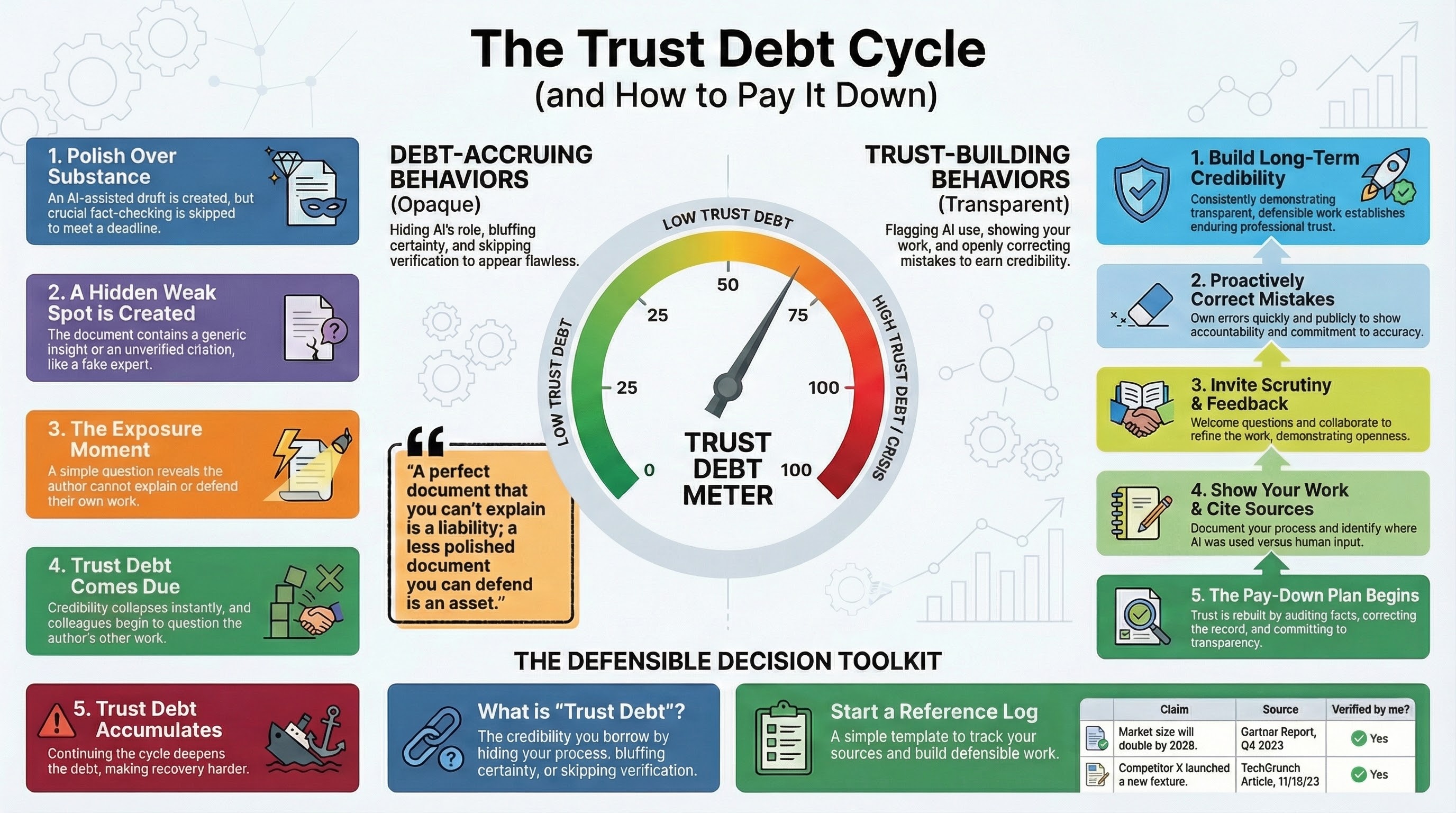
That system matters because AI can produce information that sounds credible while being completely made up, especially names, citations, and “expert” references. In James’s story, the moment of truth comes in a meeting when someone asks about a source in his report and he cannot explain it, because the reference is not real and he did not verify it. When that happens, the room stops trusting the document, and more importantly, they stop trusting him.
This is where the idea of trust debt comes in. Trust debt is what builds up when you hide your process, skip verification, bluff through uncertainty, or present work as solid when you are not sure it is solid. It feels like you are saving time in the moment, but it quietly compounds until one sharp question forces the truth into the open, and the cost shows up all at once in your credibility and relationships.
If you ever do have an “exposure moment,” the fix is not a clever explanation, it is action and transparency. James repairs the damage by going back through the work, identifying what he did not personally confirm, replacing weak parts with real sources, and communicating clearly about what changed and how he will prevent it next time. The point is not to dramatize AI use, it is to restore confidence by showing that you take accuracy and accountability seriously.
Once you understand trust debt, the goal shifts from producing perfect documents to producing defensible decisions. That means you can still use AI to help with structure, brainstorming, or early drafts, but you treat it as support rather than the author, and you make sure your final work contains your reasoning, your context, and your verification. When you include how you arrived at a recommendation and you can calmly walk someone through your sources and trade-offs, you become harder to doubt, even if the writing is less “glossy.”
To make this real, adopt a few repeatable habits that keep you grounded. Before you share work, do a quick internal check: can you explain every section without rereading it, did you validate the claims that matter, and does it sound like you rather than a generic voice. Also get comfortable saying “I do not have that answer yet, but I will find out,” because that honesty often increases respect when it is paired with follow-through, and it keeps you from pretending.
The big takeaway is that in an AI-powered world, polish is cheap, but trust is still earned the slow way through clarity, verification, and honesty. Credibility can drop fast when you cannot defend your own work, so your job is to prevent trust debt by showing your thinking, owning your process, and prioritizing defensible decisions over perfect wording. As you move into your next assignment, aim to submit work you can explain under pressure, not work that simply looks impressive at a glance.