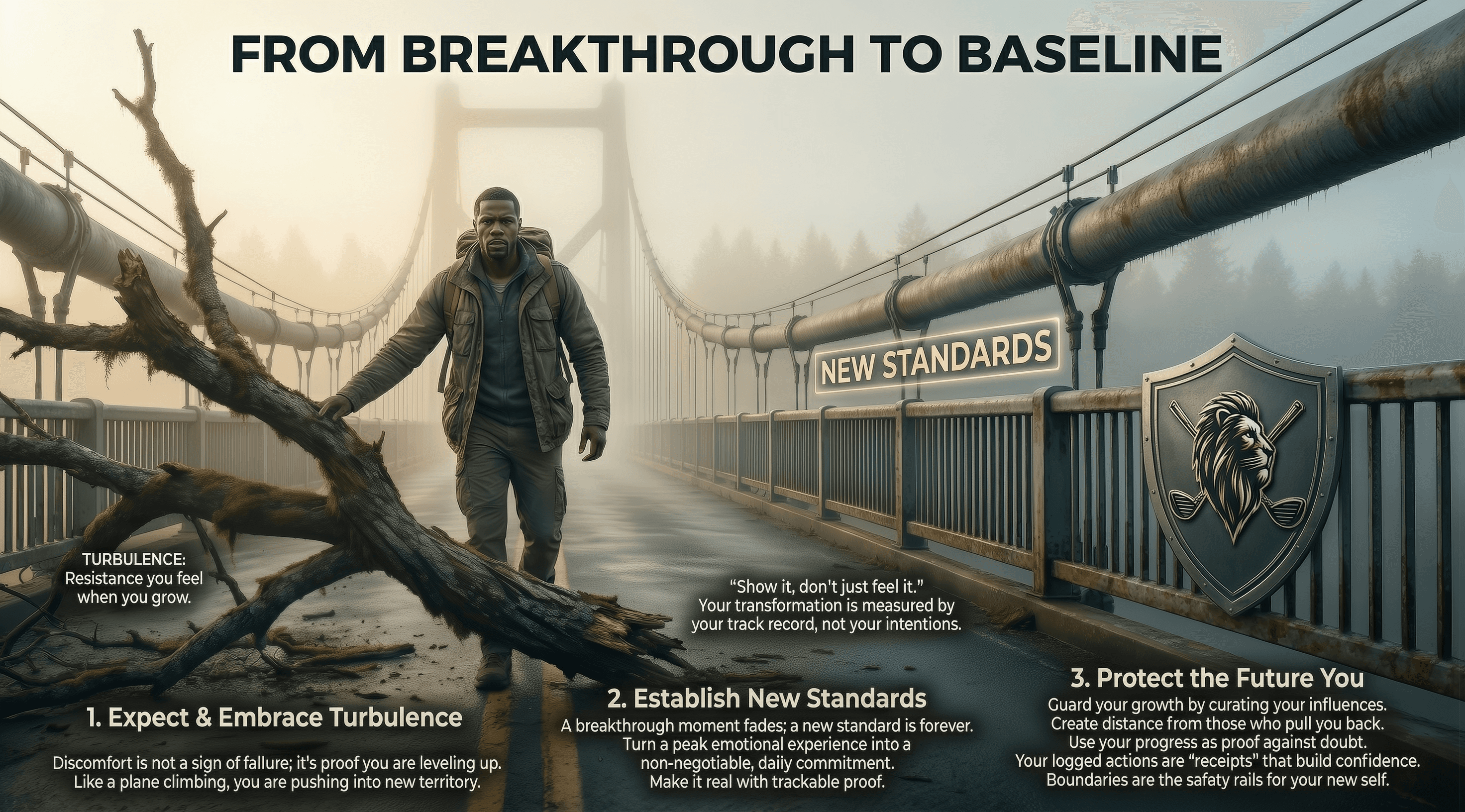

Welcome to a lesson that may feel quieter than your biggest breakthrough but is no less important. You’ve probably had moments that felt like everything shifted—maybe you stood up for yourself, made a tough choice, or finally saw your own worth clearly. Those moments matter, but what comes next is just as critical. Real transformation isn’t proven when you feel inspired. It’s proven when you keep showing up after the feeling fades. This lesson is about what happens after the breakthrough—how to make it real, how to make it last, and how to make it yours.
Growth doesn’t arrive without friction. One of the first things people misunderstand about transformation is thinking it should feel smooth or validating. In reality, it often feels shaky. That’s not a sign something is wrong. It’s a sign you’re moving into new territory. Turbulence shows up as discomfort, pushback, second-guessing, or even silence from people who once cheered you on. Instead of treating that resistance like a red flag, start seeing it as part of the process. When a plane climbs to a new altitude, it hits rough air. The shaking doesn’t mean it’s crashing. It means it’s climbing.
When you start to grow, the world around you doesn’t always adjust right away. People may question your choices. Old habits may pull at you. You might even miss the comfort of your previous patterns, even if they weren’t good for you. That’s normal. Growth costs comfort. It costs denial. It costs familiar excuses. Recognizing this helps you stop taking turbulence personally. Instead of quitting on yourself when things get uncomfortable, you learn to expect it and plan for it. The discomfort becomes a signpost, not a stop sign.
Once you understand that turbulence is part of transformation, the next step is deciding what your breakthrough really means. A high-energy moment, a big realization, a powerful conversation—those are catalysts. But if you don’t change anything after them, they were just emotional peaks, not transformation. To make the moment real, choose one new standard you’re going to live by. It could be a boundary, a habit, or an expectation for yourself. Then define what “proof” will look like in your real life. If it doesn’t show up in your calendar, your choices, or your conversations, it’s still a theory.
Let’s say your breakthrough was realizing you don’t have to say yes to everything. That’s powerful, but how does it turn into a new way of living? You could create a rule: “I won’t accept new commitments without sleeping on them.” That’s your new standard. Then track how often you stick to it. If you’ve said no three times this month and felt relief each time, that’s proof. If you caved and said yes out of guilt, notice that too. The goal isn’t perfection. It’s practicing consistency. Transformation isn’t about having perfect days. It’s about having a clear direction and returning to it again and again.
Protecting your transformation means being honest about who and what has access to your future. Some people were comfortable with the old version of you. They may not support the changes you’re making now. That’s not your fault. It’s not even always about them being toxic. Sometimes they just haven’t started their own growth, and your change feels unfamiliar or threatening. You don’t need to cut everyone off, but you do need to reposition access. Keep people close who respect your progress, and create distance where it’s being denied or disrespected. Your energy is too valuable to waste on proving your change to people committed to misunderstanding you.
Part of that protection is keeping receipts. Not for others, but for yourself. Track your actions. Log your habits. Keep a list of the ways you’re showing up differently. When doubt creeps in—and it will—those receipts remind you that you’re not just dreaming about the future. You’re already building it. They shift your story from “I’m trying” to “I did.” Whether it’s a checklist, a journal, or a calendar with gold stars, the method doesn’t matter as much as the repetition. Confidence doesn’t grow from what you intend to do. It grows from what you keep doing.
As you move forward, remember this: transformation doesn’t need applause. It needs repetition. The emotional high will fade. Not everyone will notice the shift. But if you’ve chosen a new standard, if you’re proving it daily, and if you’re protecting the environment around it, then the work is real. Your future isn’t a distant idea. It’s already here, taking shape through your repeated choices. Keep showing up for it. That’s how confidence gets earned.