

You can study something for weeks and still freeze the moment it matters. You have probably felt that gap before. You read the book, watched the training, took the notes, and even told yourself, “I get it.” Then real life showed up with a deadline, an audience, a tough question, or a moment of conflict, and your body acted like it never learned a thing. This lesson is about closing that gap, because confidence that only works in calm settings is not confidence you can rely on.
The first shift is accepting that knowledge is only the starting point. Understanding is important, but it is not the same as being able to execute. Skill becomes dependable when your brain and body have done it enough times that the right response shows up under pressure. That is why this course emphasizes turning breakthroughs into standards, not collecting ideas that sound good but disappear when life gets loud. In Lesson 2.3, you are going to stop treating learning like information and start treating it like training.
To do that, you will earn it through reps. Think of any athlete, musician, or speaker you respect. They did not become consistent because they wanted it badly, they became consistent because they practiced it often. Reps are how a skill moves from “I understand it” to “I can do it.” That means you need a rep plan that fits your real schedule, not a fantasy schedule. If you only practice when you feel inspired, your ability will come and go, and so will your confidence. When you practice consistently, even in small blocks, your skill starts to belong to you.
Now make those reps real. If the skill you are building is communication, do not just read about communication. Practice sending the email you have been avoiding, role-play the conversation you need to have, or explain your idea out loud in two minutes without hiding behind extra words. If the skill is leadership, practice giving clear direction in a meeting and asking one strong follow-up question instead of staying quiet. If the skill is creative, practice finishing a rough draft on a timer so you learn to produce even when it is not perfect. The point is to create simple scenarios that force application, because application is where learning turns into capability.
As you practice, you also need to use feedback as fuel. Most people say they want feedback, but what they really want is approval. Feedback is different. Feedback tells you what is working, what is not, and what to adjust next, and it often shows up as correction. If you can build comfort with being corrected, you turn experience into wisdom faster. This is what separates people who stay talented from people who become trusted. They do not treat feedback as embarrassment, they treat it as data.
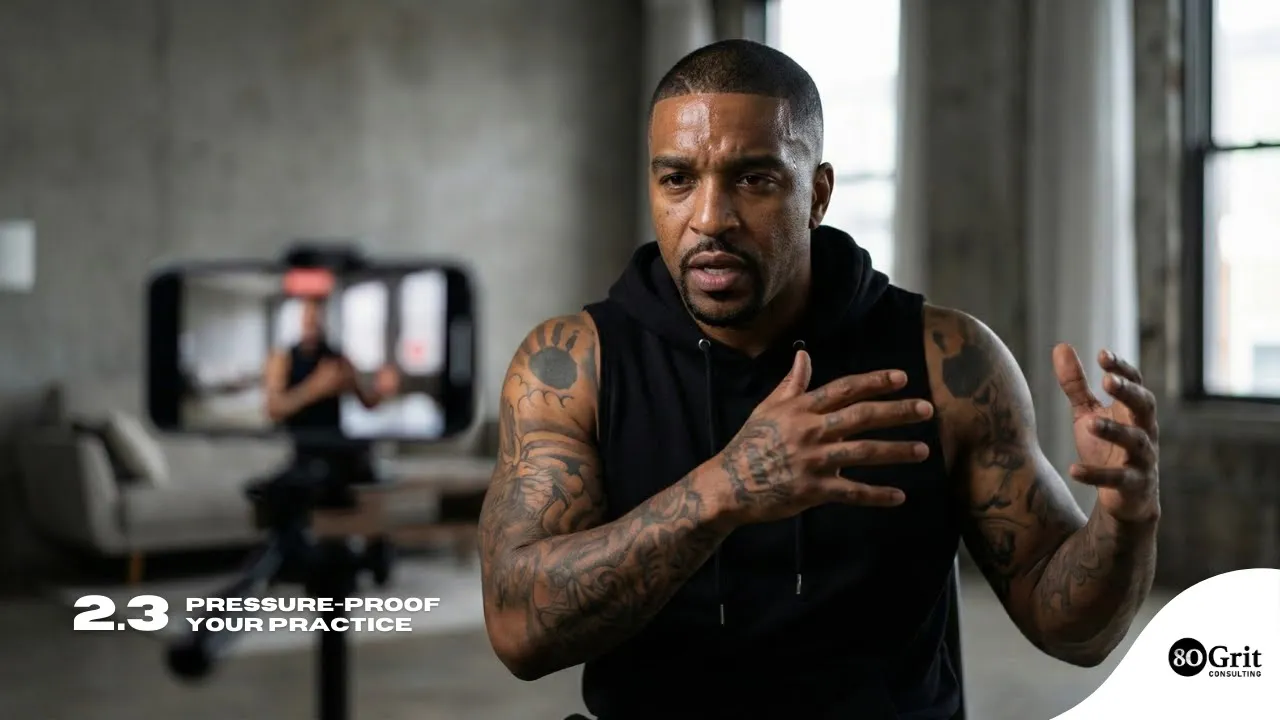
So you will practice a short loop: try, review, adjust, repeat. You do the rep, then you check what happened without making it dramatic. You can ask someone for specific critique like, “What was unclear in my explanation?” or “Where did I lose you?” You can also watch your own performance by recording a practice run and noticing patterns like rushing, avoiding eye contact, overexplaining, or getting defensive. Then you choose one adjustment for the next rep, not ten. This keeps you focused and makes improvement measurable, because you are building progress on purpose instead of hoping it happens.
Finally, you will flex the skill in real life, because pressure is not your enemy, it is your training partner. Skills that only work in one setting will break when conditions change, so you will practice in varied environments and gradually increase difficulty. If you are learning to speak up, practice with one person, then in a small meeting, then in a higher-stakes room. If you are learning to stay calm, practice responding slowly when someone is impatient, then when you are tired, then when you are being questioned. And when you mess up, you will learn to recover instead of spiraling. The ability to reset quickly is part of the skill, and it is one of the strongest builders of stable confidence.
By the end of this lesson, you should remember a simple truth: you do not own a skill because you studied it, you own it because you trained it. Build a rep plan you can keep, practice in scenarios that feel real, and track your reps so you can see yourself improving. Welcome feedback as a tool that sharpens you, and keep your loop tight so you are always adjusting with intention. Then stress-test what you are learning across different situations so you can stay effective when life changes the conditions. Do that over time, and your confidence will stop being hope and start being proof.

