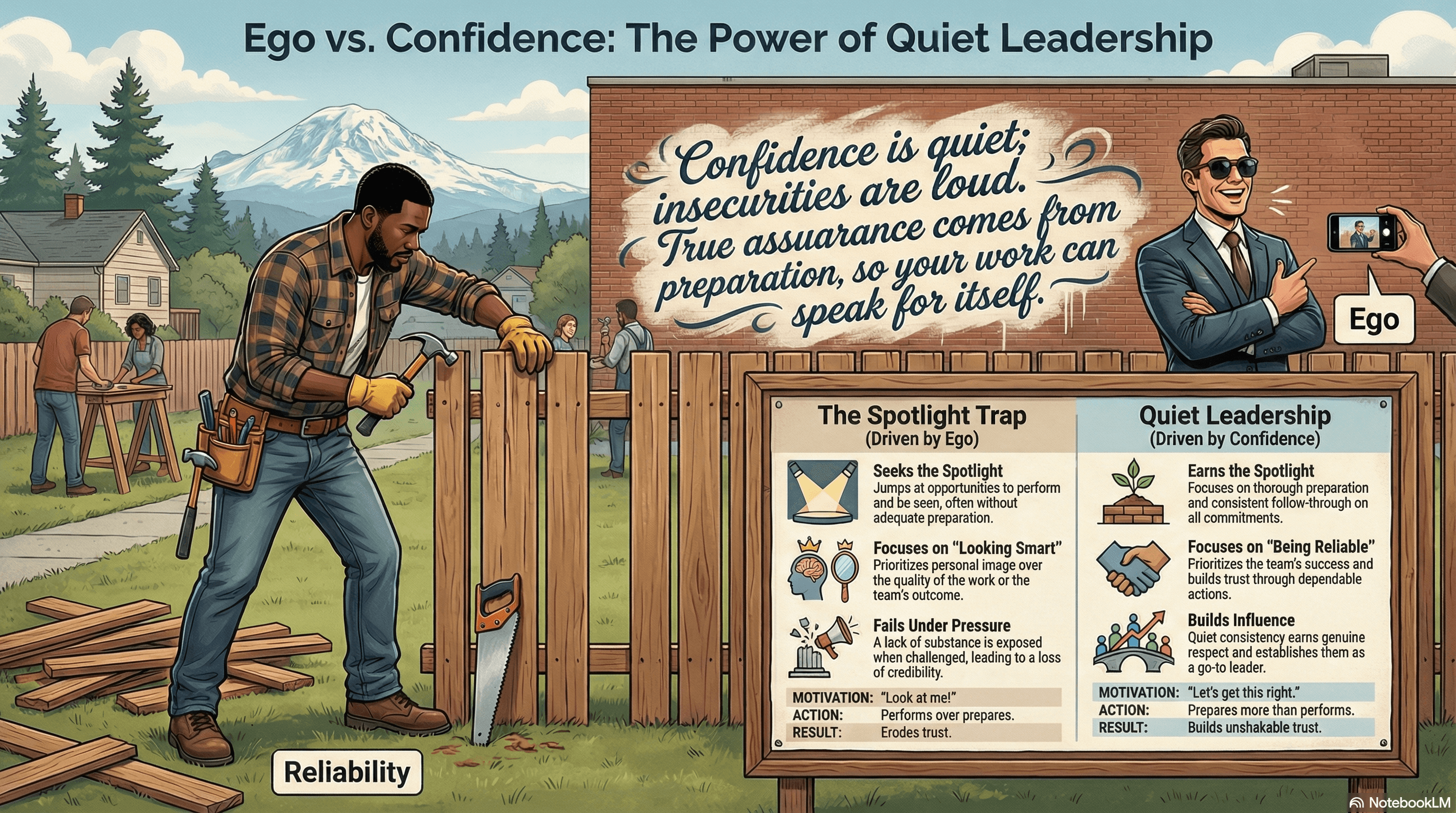

Walking into a room where everyone is talented can feel like the floor shifts under you. Maybe you are used to being the standout, the one people point to, the one who gets the quick praise. Then you join a new team, a new community, or a new level of competition, and suddenly your reputation does not carry the same weight. Nobody is impressed by titles, old stories, or what you did last year. In that kind of room, you can feel a pressure to talk more, prove more, and be seen more. This lesson is here to help you breathe in that moment and lead anyway, without needing the spotlight to feel valuable.
To start, you need a clear line between confidence and ego. Confidence is knowing your value without needing everyone to agree with you in real time. Ego is when your sense of value depends on other people’s approval, attention, or praise. On an even playing field, ego panics because it cannot rely on being “the best.” Ego starts performing, comparing, and chasing a win that is really just validation. Confidence stays steady. It stays coachable. It stays grounded enough to say, “I belong here,” without needing to announce it. The goal is not to get rid of ambition. The goal is to remove the part of ambition that needs to be fed by attention.
Once you understand that difference, you can start catching ego early with quick self-checks. Before a meeting, ask yourself, “Am I about to contribute because it helps the outcome, or because I want to be noticed?” When someone else shares a strong idea, notice what happens inside you. Do you feel inspired, or do you feel threatened? When you speak, listen for the hidden goal. Are you trying to be clear, or are you trying to “win the room”? These moments matter because ego is sneaky. It often shows up as urgency, defensiveness, or the need to have the last word. Confidence feels calmer. It can handle not being the loudest voice, because it is not scared of being forgotten.
From there, shift your focus to what actually separates people when talent is equal. Reliability is the differentiator. In competitive rooms, people remember who follows through, who prepares, and who stays disciplined when nobody is watching. Think about the teammate who always shows up ready, sends the notes, finishes the task, and keeps their emotions steady when the pressure rises. That person becomes trusted, and trust is leadership currency. You do not need a spotlight when people know they can depend on you. Reliability makes you valuable in a way that attention never can.
Reliability is not a personality trait, it is a set of habits you can practice. Start simple. Be on time, not almost on time. If you say you will do something, do it, even if nobody checks. Prepare for the meeting, even when you are not presenting. Finish what you start, even when the excitement wears off. A practical example is when you volunteer for a task and then follow up with a quick confirmation, deliver it early, and include what others need to move forward. That kind of follow-through quietly raises your reputation in the room. It tells people you are not just talented, you are trustworthy.
Another part of reliability is emotional control under pressure. Competitive environments can trigger quick reactions, especially when you feel overlooked or corrected. This is where humility becomes your signature. When you get feedback, practice receiving it without turning it into a fight or a performance. Instead of explaining yourself right away, try saying, “That makes sense. I can adjust.” If you disagree, you can still stay grounded by asking clarifying questions and focusing on the goal instead of your pride. Confidence can handle correction because it is not fragile. Ego treats correction like danger, so it argues, blames, or shuts down. The more you can stay calm and coachable, the more people trust you with bigger responsibility.
Finally, learn how to set standards without shaming. Strong leadership is not ranking people or turning everything into a competition. It is raising the energy by helping the room stay calm, clear, and committed to the assignment. You can do that by asking good questions, like “What does done look like?” or “What is the next clear step?” You can do it by sharing credit openly, especially when a win happens. You can do it by setting expectations with respect, like “Let’s agree on a deadline we can keep,” instead of attacking someone for being behind. This is where the lesson lands: humility is thinking of yourself less, not thinking less of yourself. You do not shrink. You simply stop needing to be the center.
As you leave this lesson, remember what matters in rooms where everyone is talented. Confidence is quiet and steady, while ego is loud and needy. Reliability is how you stand out when talent is equal, because trust is built through consistency, preparation, and follow-through. Humility is what keeps you grounded whether you are winning or overlooked, because you can take feedback, share credit, and stay focused on the mission. Lead with presence, not performance. Walk into the room ready to add value, not chase attention, and you will become the kind of person who does not need the spotlight to be seen.