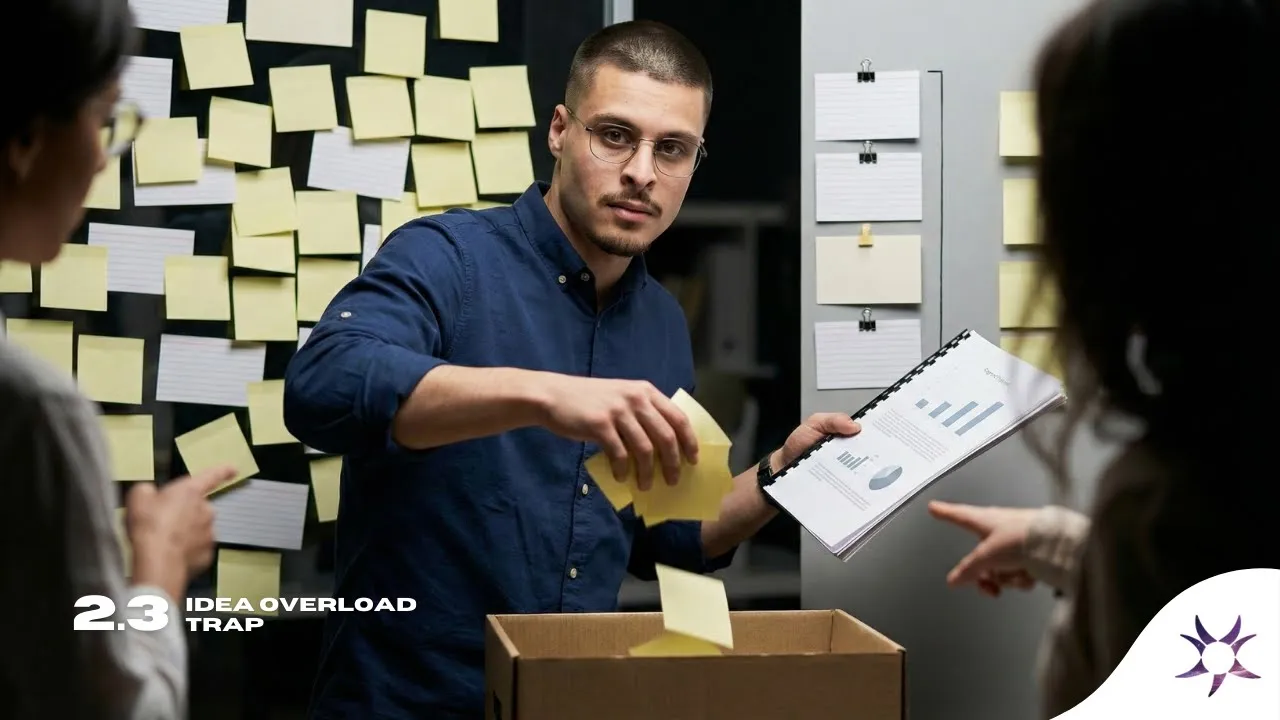

You have probably had a day where you felt busy from the moment you started, only to realize later that nothing meaningful actually got finished. That is the trap this lesson is about: when AI makes idea generation so fast and easy that it starts to feel like progress, even when it is not. If you have ever asked a tool for “ten ideas” and felt a rush of motivation, then found yourself bouncing between outlines and half-starts by lunch, you are in the right place.
To understand the problem, start with a simple truth: ideas are not outcomes. AI can produce options, frameworks, angles, titles, and plans on demand, which can be helpful, but it also removes the natural friction that used to force you to choose. When there is no cost to generating more, you can end up collecting possibilities instead of building results. The brain reads all that activity as work, but the outside world measures work by what you deliver, what you implement, and what changes because you acted.
One clear sign you are stuck is that you keep starting, but you rarely finish. You may have multiple documents open, multiple “drafts” in motion, and a growing list of next steps, yet nothing reaches a state where someone else can use it. This becomes painful when deadlines show up, like a team check-in or a client meeting, and you realize you have great concepts but nothing concrete to share. In those moments, the gap is not creativity, it is follow-through, and that gap quietly erodes trust because people can only rely on what actually exists.
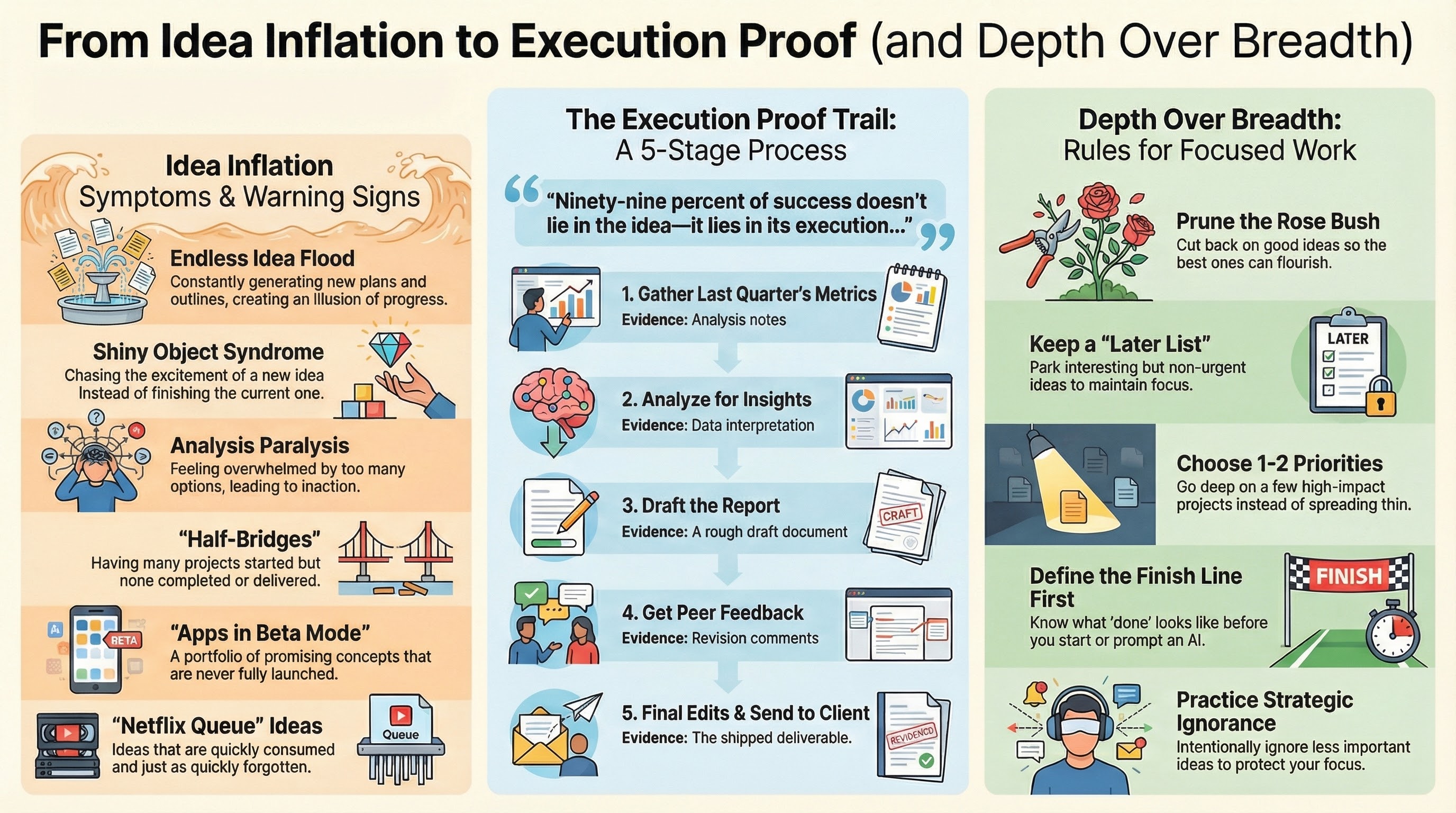
This is where the idea of “idea inflation” matters. When the supply of ideas grows faster than the attention and care required to develop them, each individual idea starts to feel less valuable. You stop treating an idea like a commitment and start treating it like content in a feed, easy to scroll past and replace with the next thing. The danger is subtle: you can feel productive all day while avoiding the hard, sometimes boring part of turning one idea into something real. If you want to protect your credibility, you have to restore the link between ideas and evidence.
That is why this lesson pushes you toward “execution proof,” which simply means visible evidence that progress is happening. Execution proof is not excitement, not intention, not a clever outline, and not a chat thread full of suggestions. It is a draft someone can review, a decision that has been implemented, a report that is being refined, a feature that works, a process that is being tested. The shift starts when you define what “done” looks like before you do more ideation, because a clear finish line forces your energy into completion instead of expansion.
Once you have that finish line, you build a proof trail by moving through real steps that leave artifacts behind. You gather what you need, you make the first rough version, you get feedback, and you revise until it is deliverable. You can still use AI, but only after the goal is clear, and only for tasks that support the finish line, like organizing a section, improving clarity, or generating examples to consider. The key is that the thinking, the choices, and the final judgment stay with you, so your work has your fingerprints on it and your outcomes reflect your competence, not just the tool’s fluency.
To make this sustainable, you adopt “depth over breadth.” That means you prune your list on purpose, choosing one or two priorities that matter most right now and moving everything else to a “later” space. This can feel uncomfortable because you will be saying “not now” to ideas that could be good, but the trade is worth it: fewer active projects means more focus, higher quality, and more finished work. You will still encounter tempting new lists and fresh prompts, but the discipline is to save them without switching lanes, then return to the project you committed to completing.
What you should remember from this lesson is simple: AI can multiply ideas, but only you can create results. Watch for idea inflation, where new options keep replacing real progress, and interrupt it by demanding execution proof you can show. Define your finish line before you ask for more input, build a visible proof trail toward completion, and choose depth over breadth so your best work has room to mature. If you apply one habit immediately, make it this: at the end of each day, ask yourself what tangible evidence you would show to prove you moved something forward, then adjust tomorrow’s work until that question has an easy answer.